Sunday, May 23, 2010

Readers requests: No shock doctrine for the UK

Adam requests that I explain to everyone why they should visit www.noshockdoctrine.org.uk which is slightly cheeky bit of self advertisement as I might not think people should. But I do. So I shall.

In the next few years the political landscape is going to be dominated by how we deal with the economic crisis. While we may be officially out of recession history tells us that unemployment is likely to continue to grow and we are yet to feel what the results of the deficit reduction plans. There's also the outside chance that we may plunge back into recession for another taste, but let's leave the predictions on that one to the astrologers.

The government has made it clear that its response to the gap between the revenue it receives from taxation and the amount of money it spends will be to make some cuts in taxation and immediate and savage cuts in public services. Both Lib Dems and Tories were clear before the election that this was the plan and they are cracking on by outlining the areas where the axe will fall first.

They may promise us that 'front-line' services will not be effected but the scale of the cuts to come in the next few years will certainly hurt services, throw public sector workers onto a growing dole queue and leave us all worse off. As this video from public sector union UNISON explains the cuts will directly effect everyone.


It is my view that investing in job creation would pay for itself long term while stabilising the jobs market. When we are feeling the effects of the recession it is the very worst time to cut back public services that protect the most vulnerable.

It seems to me that there are a number of tasks that we need to get on with in response to approaching cuts. First we need to get specific. Across the country there will be a rash of campaigns to save specific NHS wards, nurseries, and other services - we need to make sure we are part of those campaigns and help to ensure the attempts to cut back are met with real resistance.

This can't be centrally driven but a national movement can support those local campaigns in much the way that the highly successful Defend Council Housing campaign has been able to do.

The government's plans must come at a political price to ensure that these parties are no longer electable, credible as a political force. Each ward, each job loss, each service withdrawn has to hurt the government whether or not we are able to save them.

That also means that once the government have made it clear what their exact plans are we need to scour them with a fine tooth comb and come up with a strong, critical and detailed response that is difficult to refute without appearing to be like Ghengis Khan.

I do think we need to firm up a more accessible version of the alternative economic vision embodied in the Green New Deal and turn it into something like a fighting document whose various demands can be fought for and won. My concern is that getting the balance right between the 'high politics' of the economic strategy and the 'community politics' of the local campaigns is a difficult trick to pull off without becoming either a nimby or indulging in dry political philosophy.

Popularising concrete alternatives to the government's approach is going to be vital so that we can build up a large movement of meaningful resistance rather than a clique of self-appointed radicals on a mission.

That's why sites like www.noshockdoctrine.org.uk are going to be so important in reaching out and building confidence that just because there is a political consensus in the Westminster bubble there is a people's alternative.


Can't Pay Won't Pay: Solidarity with the Greek protests

Date: Wednesday, May 26
Time: 7:00pm
Location: Conway Hall, Red Lion Square, London, WC1
Speakers: Caroline Lucas MP, Tony Benn and a host of others

A few links

Saturday, May 22, 2010

BA-union negotiations disrupted by direct action

The BBC and the Telegraph report that the union negotiations between the UNITE union and BA management have been disrupted by protesters coming from the Right to Work conference. The BBC have particularly exciting footage which shows quite a few people I recognise from the SWP and at least three of them are employees of that organisation.

Now, I might be taking a wild stab in the dark here but there didn't seem to be a single BA worker among the protesters who'd decided to break up the union's negotiations. If anyone is going to make the decision to occupy their union's negotiations with management it should be the BA workers themselves, and not just one of them but collectively making that decision.

I have absolutely no idea what this is meant to achieve apart from making the strike more complicated for those workers who are already on the receiving end of abuse from media and management alike.

Derek Simpson, one of the union's negotiators tweeted that "Unite totally and absolutely condems [sic] the demonstrators who disrupted the talks at ACAS no member of cabin crew were involved". Now, whatever you think of him that seems to be a perfectly justified position to me.

Unsurprisingly Socialist Worker have a report up already where they unintentionally make clear that no BA worker asked them to disrupt their negotiations and that their key (or should that be only) purpose was in "
demanding that activists build solidarity for the BA workers and hold collections to support the strikes."

So that's all about activists demanding things of other activists then without any involvement from the workers who are actually on strike and whose livelihoods are concerned. I don't think this is very cool, in fact I'd say it was the wrong way to help cabin crew win their dispute.

Readers Requests: My Desert Island Discs

Neil asks what my Desert Island Disc choices would be. For those unfamiliar DID is a very long running radio programme where guests are asked to imagine they have been marooned on a desert island and can rescue eight music tracks of their choice, one book and a luxury from their ship before it sinks.

This is damn hard you know! I'd find it much easier to choose eight books - but not much. I'll just bite the bullet and ignore all those great tunes I'm just going to have to miss out, although Natalie Portman rapping or the funky gibbon didn't make the short list..

As it Morrissey's birthday I think we should start with one of his later works which contains the immortal and brilliant line; "You have never been in love before you've seen the dawn rise behind the home for the blind". It contains that Bragg/Pogues romanticism of the urban environment mixed with the miserablism of the Cure. Splendid.


There was always something about Germ Free Adolescent that captured my attention. Constrained and restrained I think the way the sentiment of the music works with the lyrics is slightly hypnotic.


When I first heard Bill Haley singing Rocket 88 on John Peel sometime in the eighties it absolutely blew me away. It hadn't even occurred to me that it might be 'Rock and Roll' which would have instantly consigned it to the dustbin. Once again my stupidity gave me the edge and allowed me to enjoy this glorious song about his lovely car.


Well, we can't have all this jollity so let's switch to Pulp's 97 Lovers, from before they sold out by selling actual records and being able to pay the rent and that. This song is the eighties for me.


Joan Baez was someone I only came to in later life and it was her Diamonds and Rust that first sent shivers up my spine. It still does.


And if we're speaking of spines shivering then we have to include Lennon's working class hero. There are few greater songs that have been made in the last one hundred years than this.


Where would any selection of music be without Kate Bush. I've selected Breathing out of a number of possible tracks simply because it seems to epitomise the ferociously tangental approach that Bush always brought to music.


Lastly I'll go with Tracy Chapman's I'm Ready partly because it's the tune I'd like played at my funeral and partly because it's such an entrancing song.


Feel free to play along at home.

Oh, but before I forget I get to take a book and a luxury too. Well, the luxury has got to be a freezer full of bacon. I could be out there a long time you know!

The book? I think I'll go for the Three Musketeers simply because it's so full of life and fire. It would be a good way to remind myself of the pleasure that other people can bring as I sit in the delicious peace of the lapping waves and bright stars of my little island.

Friday, May 21, 2010

Readers requests

It's been sometime since I've done this but I thought I'd throw open the blog content to readers' requests again. What would you like me to blog on?

Whatever you suggest I'll do my best to fulfill your request with as good a post as I can muster.

This has gone surprisingly well in the past and I've probably blogged a proper post on 80% of the requests that were made previously so fire away!

Thursday, May 20, 2010

Labour Leadership race

In the space of such a short time we've gone from the leadership race being characterised as a Miliband family operation to being swamped by a host of would be leaders of the opposition. This is, of course, a good thing. For Labour to have a proper discussion about the direction it wants to go would mark a great improvement on the last time they selected their leader, from a list of one.

Generally I'll keep my nose out of it, I'm not emotionally involved enough to distinguish between David and Ed Miliband, Ed Balls, Andy Burnham et al. They all pretty much look like caretaker leaders to me anyway.

What does interest me is that there are currently two lefties with their hats in the ring, although we'll have to see which, if either, actually gets on the ballot paper.

The left hopefuls are Diane Abbott and John McDonnell who are two London MPs who have long political histories and who are both members of the Campaign Group. Either one of these candidates would be a real contribution to the political breadth of the leadership debate and would provide an opportunity for left-field ideas to get a wider airing.

McDonnell comes in a straight clear red, softened by his personable and thoughtful style while Abbott is more of a free thinking leftist who often does not conform to type. In other words she's not as left-wing as McDonnell, but then again it would be hard to live up to his impeccable, mace wielding, credentials.

Well, I say impeccable, he's been consistently opposed to electoral reform on the basis that Labour might seats and he's also supported odd EDMs on homeopathy and voted for the Digital Economy Bill but these aside he's as sound as a pound. Not the pound obviously - but a pound.

The objections most often aired about Abbott tend to revolve around two things. First that she's on TV a lot and second that she sent her kid to a private school. Having heard Ed Balls on Radio Four yesterday I'd say that someone who is capable of being in the glare of the media without collapsing into a blubbering ridiculous heap is probably an advantage.

The school thing is less fortunate although quite why this as been elevated to the status it has been as opposed to the way, for example, Jon Cruddas voted for the launching of an illegal war that resulted in the deaths of hundreds of thousands is quite beyond me. I'm pretty relaxed about candidates that are not 100% on message, and I'm certainly repulsed by the idea that to be on the left you have to be a moral paragon.

If we compare the left's challenge this time to last time's dress rehearsal we see differences and similarities. We're obviously seeing a more open field rather than the coronation of Brown. We're not seeing an associated deputy election, at least I hope not. However the attitude of McDonnell's supporters is surprisingly similar.

Last time McDonnell's allies chose belligerence as their coalition building tool of choice. They poured poison over both Michael Meacher, who they described as fake left, and bile over deputy leadership challenger Jon Cruddas who they simultaneously insisted had to back McDonnell. This time it's Abbott who is being accused of being fake left, despite the fact that she backed McDonnell's campaign last time around. I don't think this sort of heat will do anything except make it impossible for McDonnell to get onto the ballot paper - and he deserves to be there.

Whatever the outcome I hope that one of them is on the ballot paper, although I suspect it is extremely unlikely that either of them will be able to make a truly significant challenge for the top post simply because they represent a Labour Party that does not exist - and maybe never did.

Six blogs

A few blogs I'd like to link to;

The silver lining round this government

Now the fact is the three largest Parliamentary parties are not identical. There are shades and nuances of difference and, in a small number of certain areas, there are actual, real disagreements. One of the most painful things about this is that actually this government might actually be better in certain areas than the Labour government that preceded it.

That's partly because it's hard to be as obsessed by passing authoritarian legislation as New Labour, nor are the two new coalition parties obliged to save face by defending policies that the public hated simply in order not to U-turn.

Before I get really stuck into how awful this government is going to be, and Vince Cable's Royal Mail privatisation plans are in my sights, I thought I'd take a little look at some of the areas where Labour was so poor that the new government can seem like a welcome breath of air.

------

ID cards. Gone. Both Tories and Lib Dems were opposed to these and as long as Labour hadn't won they would be abolished. There are still questions to be asked about whether they will be withdrawn for immigrants or not, but we will see the back of the National Identity register which is very welcome.

Bank charges: While I'm skeptical about the noises being made about banking regulation I was pleased to hear that there will be action taken on "unfair" bank charges made against account holders. The banks really do rake it in from over-charging account holders for all sorts of rubbish that costs the banks very little, and it causes real hardship. Any action taken on this would be fine by me.

No third runway: This was always on the cards. Sadly not a commitment to cheap and reliable public transport to provide alternatives to aviation, nor a commitment to restrict the growth of aviation as an industry - however, the battle to prevent Heathrow's third runway has won, and it would be churlish not to smile at that thought.

Asylum: No, really. The jury is still out on how this government treats asylum seekers overall, although we know they'll be terrible on immigration more generally, but they have committed to prevent asylum seekers being deported where they face threats due to their sexual orientation. This will save people's lives. They say they are looking at not locking up kids anymore, but I'm not holding my breath on that one.

Gay rights: Historical convictions for consensual homosexual sex over 16 are to be treated as spent and removed from the criminal records. There are still people around today who have convictions from the days when homosexuality was illegal altogether (and must declare them in job interviews, etc.) it's a very good thing that the slate is going to wiped clean.

-----

There are some other areas which *might* turn out to be a good thing, and feel free to suggest some I may have missed.

For instance they promise to end the centrally dictated policy of closing A&E units, high speed rail, action on dangerous dogs, ban on alcohol sales below cost, restricting interest rates on credit and store cards and the regulation of CCTV, and intriguing maximum wage proposals in the public sector - I'm reserving judgement on these which may be surprisingly progressive, although my inbuilt cynicism is shaking its head sadly and tutting rather loudly.

I'm braced for the fact that the government will occasionally do things I'm happy with, although, frankly, the defining feature of the next few years is likely to be economic austerity measures so I'm unlikely to be going soft on them any time soon.

Monday, May 17, 2010

Court's outrageous decision against UNITE

UNITE union members working at British Airways were due to go on strike from midnight tonight but a court has just ruled that the ballot was illegal and therefore the strike could not take place.

What grievous crime had they committed? Ballot stuffing perhaps? Or had they refused to allow a number of no votes because of ticks rather than crosses? No.

The Sun tells us that "BA had argued a technicality that Unite had not "properly complied" with the requirement to "send everyone eligible to vote details of the exact breakdown of the ballot result". The judge said: "I am unable to say it is sufficiently clear that the union took the steps required by law at the time they were required.""

The "exact breakdown" is code for the fact that they had not told their members of the eleven spoiled ballots of the thousands that were cast. Everyone knew the result, these spoiled ballots had no impact on the outcome nor, in fact, did they have any significant interest to members.

Yet this was enough to call off a democratically decided strike action and cost the union thousands correcting the 'error'. On top of the court ruling against the RMT it's quickly becoming clear that the courts are becoming increasingly willing to prevent workers taking strike action even when they have taken a proper ballot to do so.

And now for some 'what the hell?' news

1. In Texas they've decided to rewrite the school curriculum to end this terrible lefty bias. First to go? Renaming the slave trade the "Atlantic triangular trade"... it's political incorrectness gone mad I tell you! More here...

2. There's a whole bunch of new species have been found in Indonesia that we haven't even started wiping out yet, tut. These include the pictured frog who has an inflatable nose.

Apparently the nose expands when the male is feeling friendly and deflates when he wants some me time. He also likes rice.

3. Finland is a funny place, not only do you have Greens in government there holding the Justice Ministry and Labour Ministry you also have other strange and seldom seen attitudes.

Like Teddy Bear holidays. You heard me. An enterprising company will send your bear on holiday where they will "receive a gift, send a postcard to its owner and be sent home with holiday photos." How useful.

4. According to news sources a Japanese couple have been married by a robot. Sadly the occasion was marred when the cyber-vicar was caught doing unmentionable things to a young toaster after the reception...

5. You have to admit no matter what else they were the Labour government were a bunch of jokers. Well, the hilarity continues as Minister Liam Byrne left a jocular note for his Tory replacement claiming there was no money left in the till.

It's these kinds of lovable high jinx that made Labour the media savey organisation we all came to know and love.

That is all.

Are we going back to the eighties?

Before the election a number of people I knew would shudder and say of a potential Tory government that they "they remembered Thatcher" and didn't want to go back to those days. Never that they remembered Major or Heath or MacMillian (although actually very few would remember MacMillian, he was certainly in power before I was born).

Somehow Thatcher had become the representative of what Tories are like through the ages, regardless of the political and economic circumstances and regardless of the ideological nuances and gulfs that exist between different strands of Conservatism.


It could get a bit wearing sometimes if, like me, you don't accept that all bad things are the same despite all being bad.

Thatcher came to power with a plan, a large majority and a clear determination to take on a powerful trade union movement. So there's three differences straight off with Cameron's government that hasn't really decided what it's for, has been forced to deal with the Liberals and whose main priority is to attack a budget deficit in times when the trade union movement is a shadow of its former self.

It seems to me that the challenges we face in the next five years will not be the same as those we faced in the early eighties - but they could well be harder not softer days.

With no mass membership left of center party to draw on and a far left that is sadly far more confused and pessimistic than that of 1979 the austerity measures may not be met with Greek fire at all, although we can certainly hope.

What's clear is that trying to rehash the struggles of the eighties (struggles that we, cough, lost) is not going to be up to the job. Over the coming months we'll see a good number of trade unionists and leftists trying to come to terms with the new period, that's going to be important work in my view.

If our resistance is going to be both active and effective a solid appraisal of where we are and what the government is concretely going to do is going to be essential. What's clear is that it wont be a historical re-enactment of the battle of Orgreave.

Sunday, May 16, 2010

Events coming up (mainly London)

I'm going to try to get back into a weekly events round-up as currently my previous regular features have gone completely out the window.

  • RIGHT TO WORK EMERGENCY CONFERENCE
Saturday 22 May 11am Friends Meeting House Euston Road NW1. Further info

  • DEFEND WHITTINGTON HOSPITAL COALITION MEETING
Monday 24 May 7pm, Whittington Community Centre, Yerbury Rd, N19. Nr Archway Tube

  • SOLIDARITY WITH THE GREEK PROTESTS
Wednesday 26th May 7pm, Conway Hall, Red Lion Square, London, WC1. Speakers.

  • CAMDEN GREEN FAIR
Sunday 6th June from Midday until 7pm; Details

  • KEEP OUR NHS PUBLIC AGM
Saturday 12 June 10 for 11am, Somers Town Community Centre, Ossulston St, NW1; Link

  • GREEN PARTY CONFERENCE
Friday 10th September to Monday 13th in Birmingham; Details


Feel free to let me know about things I've missed, I'm sure there's plenty more going on out there.

Election quotes

  • In the Guardian on Esther Rantzen; When she spoke of her vision for Luton she liked to drop a few famous names into her comments. "Imagine a town centre with a Jamie Oliver restaurant," she told me. "Imagine Andrew Lloyd Webber, who is a friend, bringing his latest musical to Luton! Imagine the Anton Du Beke dance studio! I have spoken to Anton and he is very keen to do it." (JJ - she didn't win)

  • Charles Kennedy reveals why he did vote for the coalition; "It is hardly surprising that, for some of us at least, our political compass currently feels confused. And that really encapsulates the reasons why I felt personally unable to vote for this outcome when it was presented to Liberal Democrat parliamentarians."

  • Norfolk blogger attended a Lib Dem conflab on the coalition, he was not best pleased; "I was appalled at the way some in our party will resort to personal attacks, blatant lies and selective use of quotes in order to justify their side of the argument, and all those people were on the "We love the coalition" side of the debate." (JJ - who'd have thought?)

  • Sticking with the Lib Dems I was intrigued to read this speech by Nick Clegg made in 2008; "So I want to make something very clear today.Will I ever join a Conservative government? No. Will I ever join a Labour government? No. I will never allow the Liberal Democrats to be a mere annex to another party's agenda."

  • Former Labour Education Minister Kim Howells extends his warmest congratulations to the new government; "There's visceral loathing between the parties in constituencies, no question about it, you know - and the Lib Dems especially. I tell you why it's been rejected by most Labour MPs. Because they know that they're [the Lib Dems] a bunch of opportunistic toe-rags, who'll say anything to anybody in order to get power. And they've done it this time, they've got power. Good luck to them."

Saturday, May 15, 2010

How did the far right do?

One good thing about the squeeze on the minor parties was the way the far right found themselves out in the cold on election night. I took at look at UKIP's election in the Morning Star this week so wont dwell on that here but all in all it was good news for us.

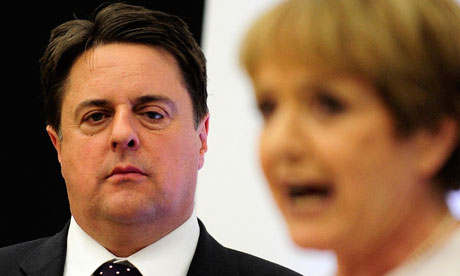
The media's celebrity bugbear and all round oaf Nick Griffin blew his big change in Barking being knocked into third place a long, long way from winning the seat.

This result was followed by a wipe out of BNP councillors on Barking and Dagenham council. This includes high profile fascist Richard Barnbrook whose time on the London Assembly has been marked by... well, not very much frankly.

In Stoke Central their leading member Simon Darby could not capitalise on Labour's dramatic decline in support and found himself facing a number of other hard right factions - a phenomenon that was repeated across the country with the English Democrats fielding large numbers of candidates the National Front popping up here and there as well as a good number of ex-BNP members standing as nationalist independents against their former party.

It's the one time I'm glad to see a number of fascists clustered together - when they're competing for the same small circle of racist voters. Although sadly across the whole of Stoke the far right vote was still far, far too high.

Overall, in fact, the BNP poor performance for their lead candidates masks the fact that they polled over half a million votes, well up from their 192,746 in 2005 which is only partially explained by the fact they fielded more candidates on a higher turnout. This was a defeat for the far-right, but not one based on a collapsing vote.

It's worth remembering this for elections when the turnout returns to normal because, as Londonist says "the reasons they're picking up support haven't gone away."

One large part of the reason that BNP ended up losers despite an increased vote is a more intelligently targeted strategy by the anti-fascist movement and, it must be said, the Labour Party. One of the healthy signs of that movement was the fact that diverse organisations worked in parallel with one another rather than feeling the need to all come under one heading.

I know unity is strength is a great slogan but sometimes you get the best out of people by letting them do what they do best and getting on with your own work separately - as long as you aren't pulling each other down, a plural movement is often better than a monolithic one where some activists find it difficult to fit.

One lesson from this is that you can beat a rising fascist vote if you get your strategy right. This meant concentrating on mobilising the anti-fascist vote in those areas where the far right was a real and genuine threat and bussing people away from those areas where they were less needed.

So in Lewisham where the obnoxious Mayoral candidate Tess Culnane stood anti-fascists did precious little locally, because they didn't have to - her vote was derisory, because she was a paper candidate. However that's not to say Lewisham anti-fascists did nothing - they went to Barking, where they were most effective.

The BNP in fact saved something like 70 deposits across the country, which means in a significant amount of the country the fascist are able to get more than one in twenty of the votes. That's very worrying.

Anyway, what does this mean for the future? In my view two things.

Firstly the anti-fascist model of targeting our strength where it is needed most and allowing for a plurality of anti-fascist organisations and strategies worked and is worth repeating. Life's too short to make lefties who hate each other work on the same team, and it usually ends in tears anyway.

Secondly, we need to tackle why the BNP get their vote - and that isn't tactical brilliance of their leadership or the delightful design of their leaflets. That means, I think, tackling racist ideas in society generally and making real inroads into the disenfranchisement that millions of people feel.

Right now I'm a pessimist on the second point, but on the first there is plenty to be getting on with. The fascist threat is not just about goons tramping up and down the high street, it feeds off the day to day racism in the press, from the government and down the pub - that's where much of the work has to happen over the next five years, addressing the sewer of filth the BNP feed from.

What sort of election did the left have?

How well did the left do at this election? 'Not brilliantly' is the quick answer, and depending upon your party loyalties that could be upgraded to 'disastrous' or even 'abysmal'.

I've already mentioned that the Labour Party did far better than we might have expected and left-wing Labour MPs actually performed very strongly within that doing very well in mobilising their support.

Green victory

The headline for the left is, of course, that anti-capitalist leftoid Caroline Lucas has been elected to the House of Commons making her the first Green MP in British history - but this result does conceal disappointments elsewhere.

Adrian Ramsay performed well in Norwich South almost doubling his vote to 14.9% (up 7.5%) taking almost all of Labour's hemorrhaging vote in the constituency. Tony Juniper also polled well in Cambridge at 7.6% but largely the vote was heavily squeezed in the course of such a momentous election.

This is, of course, partly down to the heavily targeted strategy the Greens pursued as well as the electoral circumstances, but it's disappointing none-the-less despite the great achievement in Brighton Pavillion.

Respect did quite well

Outside of the Green and Labour Parties there were three left results of any note what-so-ever - all from Respect. While Respect may have taken a pasting in Poplar and Bethnal Green they still polled very well with 16.8% in Bethnal Green and Bow (down a massive 19.8%) and 17.5% for George Galloway in Poplar and Limehouse (with the far smaller reduction of 0.7%). These areas also saw a near wipe out of Respect from Tower Hamlets council.

On the other hand Salma Yaqoob performed extremely well in a hard fought election in Birmingham Hall Green more than doubling Respect's vote to 25.1% (up 13.9%). Other results for Respect were not as cheering but should not be allowed to cloud their well deserved results in these three strongholds.

McCann: the boy done good

In Foyle Eammon McCann (who I mentioned previously) polled extremely well in a very polarised environment.

He managed to receive 7.7% of the vote as a 'People Before Profit' candidate up from his 2005 performance of 3.6% when he stood as the Socialist and Environmental Alliance backed, if I recall correctly, by the local Green Party.

This is stirring stuff, particularly when we've seen that the voters in the North of Ireland are beginning to loosen up in their political affiliations and consider alternatives, albeit ones with a solid history - which McCann has.

TUSC et al - poor to piss poor

The Morning Star has printed a little guide to how the left did here which shows that generally we are talking about 1%ers in decline. However Tommy Sheridan provided the Scottish left with their best result in Glasgow South West at 2.9% and Jenny Sutton provided the best London result for TUSC with 2.6% in Tottenham.

If we take a look at the left's electoral trajectory it makes for depressing reading. I was sent an email from the 'Cambridge Socialists' saying what 'a great start' they had made having just received 0.7% of the vote, which did make me feel a little bit like I was being expected to have a five second memory.

Cambridge: Martin Booth who is an excellent, open minded socialist and stood for TUSC got 0.7% of the vote. In 2005 Tom Woodcock (part of TUSC) stood for Respect and got 1.1% of the vote and in 2001 Howard Senter (who is now a Green) stood for the Socialist Alliance and got 1.7% of the result. Over nearly ten years the left vote has declined by more than half in Cambridge.

Coventry: This mirrors a similar picture elsewhere. Dave Nellist, for example, who got one of the best TUSC results of the night in Coventry North East with 3.7% of the vote, received 5.04% in 2005, getting his deposit back and 7.1% in 2001. Again, Nellist's vote has almost halved since 2001.

Lewisham: Ian Page in Lewisham Deptford is often held up as one of the Socialist Party's great white hopes but his result of 1.6% this time was down on his 2.4% in 2005 which itself was down on his 4.6% in 2001. Page polled a third of his 2001 result in 2010.

These are not campaigns which are building up the socialist vote but are demonstrations of the hard left's (temporary?) decline. Feel free to give me examples of a left vote that went up from 2001 to 2005 to 2010 - I need cheering up!

This should make sobering reading for the non-Labour left and, I hope, sparks some sort of calm reflection on where to go from here. These are people who contribute far, far more to their communities and to the left than these small votes reflect and it will no doubt be hard to pick themselves up and keep at it.

Obviously I joined the Greens sometime ago and found it an interesting home for a socialist, although for those who like their socialism full of quotes and by the book I suspect the Green Party would be a hard terrain to negotiate. Others will reassess whether they want to be involved in electoral work altogether, which may well be the right decision for them. Party loyalties aside though I really do hope we haven't seen the last of the likes of Sutton and Nellist whose contributions are much appreciated by me - if not necessarily the electorate!

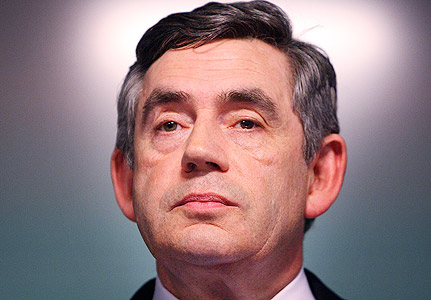
How will history judge Gordon Brown?

This was one of the questions on Radio Four's Any Questions last night and one that's impossible to speculate on sensibly. I only do so now with that caveat.

I suspect that history will mainly forget Gordon. Just as John Major has slipped into the underworld of dead memories people will start to say things like "First you had Thatcher, then Blair and now David Cameron."

For Mr Brown this is a double edged sword. Few people consciously associate him with New Labour's wars despite the fact that he was second in command throughout every invasion, bombing and child murder that the government oversaw. For the British electorate it doesn't really matter how high the stack of foreign dead babies are as long as you don't call them bigots.

They'll also forget the fact that he was widely seen as one of the most competent Chancellors of the Exchequer we've ever had - until the world wide financial collapse that is, when he suddenly got the blame for the lot.

I know I'm in a minority here but I rather warmed to him as a person, if not politically, partly because, as Roy Hatersley said last night, he was "contemptuous of the triviality of politics." This was his strength and one of his weaknesses.

It seems to me that the Brown years were hard ones for Labour Party members as the media accentuated every cock up and the grovelling apologies became ever more obsequious. It looks as if they're going to enjoy opposition a whole lot more than they ever enjoyed their final years in power. If that makes them a more effective opposition then that's all to the good.

Of course the current jockeying for position among his potential replacements looks a little bit like a race between mediocrities at the moment but even so I would not be surprised if in five years time Brown is all but forgotten.

Six new links

Today's linky love.

  • Jane Watkinson's blog that I linked to in the last post has moved here.
  • Which reminds me I've moved my Green Party links to a special page.
  • If you didn't hear Caroline Lucas on Any Questions last night it's well worth checking out.
  • What is the new government plans for the NHS. Tax Research UK.
  • The Guardian on Lib Dem deserters. They don't list themselves.
  • And Caroline Lucas in the New Statesman.
I thought the last link was interesting when Caroline was asked "Who are your allies at Westminster?" she replies "We are a party of the left: as well as environmental policies, the issues we're standing on are fairness and social justice. That said, we will support issues on a case-by-case basis."

Friday, May 14, 2010

Today's selected links

A few more links, a few more posts on the general election over the weekend and then it's back to 'normal' service I reckon.

  • Some Lib Dems are leaving the party in disgust, but where to? BBC and blogger.
  • On a similar topic James, of Two Doctors fame, tries his hand a fair and balanced appraisal.
  • Stoke BNP man Nazi salutes with wrong arm. BBC
  • Splintered Sunrise invites us to meet our new overlords.
  • Scottish Socialist Colin Fox congratulates Caroline Lucas.
  • Richard Osley looks at whether Lynne Featherstone's claims on the new coalition stack up.
On a related note I notice that elsewhere in the world the Greens get air traffic controllers to run for them. Things must be different in Canada - good luck Steven!

Message from No2ID

Before we get all weepy about the Labour defeat it's worth remembering that not everything they got up to was bona fide. No, there was the odd occasion when solid lefties were apprehensive about their behaviour. A murder here, a child detention there - you know the sort of thing.

Earlier today I received a message from the campaign group No2ID which rightly celebrates the culmination of years of campaigning on their part.

Dear supporter,

After six hard years of campaigning, the publication of the Conservative &
Liberal Democrats coalition agreement [1] is a moment to pause and celebrate
what we have achieved so far. NO2ID's success is a tribute to each and every
person who has fought to change the hearts and minds of their friends,
family and colleagues, local and national media, politicians, parties and
government - and to everyone who has given so generously in money to allow
us to run an office, send mailings, and produce briefings and leaflets.

Guy Herbert, our General Secretary, and I would like to express our deepest
gratitude for everyone's continued support and hard work, particularly the
dozens who have volunteered in some way to keep all the invisible parts of a
national campaign running. But I'm afraid we cannot afford to be complacent:
NO2ID's work is far from done.

The database state has insinuated itself into far too many aspects of our
everyday lives for it to simply wither and die, even were some of its more
visible tendrils to be lopped off or pruned back. Even during the election,
despite the parties now in government being skeptical about it, Connecting
for Health was pushing forward with its vast plan [2] to nationalise and
centralise all medical records in England.

The new government's commitment to "a full programme of measures to reverse
the substantial erosion of civil liberties under the Labour Government and
roll back state intrusion" is reason to be cautiously optimistic. But the
promised repeals and reforms MUST be worked out in detail, if they are to
have the necessary effect. Pressure MUST be maintained for them to be
enacted... and properly enforced.

Don't imagine for a moment that Whitehall will give up its pet projects,
empires or agendas without a fight - battles for which we know it has been
preparing for years. Nor should we expect the political, commercial and
media proponents of database state initiatives to stand quietly by. The
official obsession with identity and information-sharing, the very idea that
"personal information is the lifeblood of government" still remains.

Stopping the database state is not just a matter of scrapping a few
high-profile databases - as welcome as this will be. It means changing the
culture of showing "ID" at every turn [3], embedding proper protections in
law, in institutions and technology, and achieving real control over our own
information. The nature of the campaign, too, may change, as it becomes even
more a matter of education and forming public policy and less of organising
direct resistance.

The new government says it will take the first steps towards protecting our
privacy and autonomy, and needs to be held to that. Rolling back the
database state will involve further long and difficult battles, but what we
have proved is that - working together - this is a war that very definitely
CAN be won.

Phil Booth, National Coordinator, NO2ID

Thursday, May 13, 2010

Today's miscellany

A few more election links that people might be interested in;

  • The BBC looks at bloggers' views on the election, including some edited thoughts from me.
  • Left futures on the Liberal coalition narratives.
  • Chris Dillow thinks that the coalition will be a stable one.
  • Jill Rutter asks, which way now for immigration policy?
  • Splintered Sunrise thinks the election result is shit on toast.
  • Gaping silence has an apology to make, and he makes it.
I've been reading the responses of Lib Dems on their new cabinet positions and it makes really interesting reading. There are a number of activists and councillors leaving the party as you might expect, but most activists, even those that I would classify as on the left of the party are accepting the deal. Indeed every single Lib Dem MP has officially accepted the deal.

This stands in strong contrast to many of the people who weren't members of the party but who did vote Lib Dem this time who have been positively raging about the whole thing. On this I definitely do not blame Nick Clegg - he was upfront from the start. Almost the first thing he did in the election campaign was to praise Margaret Thatcher.

Those who voted Lib Dem and now feel betrayed were voting for a party that they hoped existed despite the evidence. The contradictions of the good and bad points of the Lib Dems were there to see, but many of these people decided to only see what they wanted to see. Clegg warned them, and on this was 100% honest - people just didn't want to believe it.

So happened in the UK election?

Well, a week has passed and the government is formed, so it's probably time to do a proper assessment of what happened in the general election. I'll write some separate posts on particular aspects of the results but thought it might be useful to provide a bit of an overview.

Taking a look at the results it seems to me that there was more than one election being fought depending on what part of country you were living in. If you were in Scotland not a single seat changed hands, and whilst there was some slight movement in the polls (with the Lib Dems slipping into second place) it was all much of a muchness - no feel of an historic election there at all.

If, like me, you live in London we saw something quite, quite different. In the central, traditionally Labour areas there was an extraordinary swing back to Labour. These were, of course, already Labour held seats (apart from Bethnal Green and Bow) so the electoral system meant that these swathes of voters coming out to keep the Tories from power did not end up influencing the Parliamentary vote.

What they *did* do is significantly effect the council elections, which were held on the same day. London as a whole saw Labour win back a large number of councils a leap forwards that came at the cost of all the others parties.

If we look at the following list of council seats in London we can see that the Lib Dems lost almost one in four of their councillors on a day that was meant to be their day, the Tories lost out and the minor parties and independents whether Respect, Green or BNP were pretty much flattened.

Labour 873 (+191)
Tory 712 (-67)
Lib Dem 241 (-74)
Assorted Independents/Residents 17 (-10)
Green 2 (-10)
Respect 1 (-14)
BNP 0 (-14)
Christian 0 (-3)
Socialist 0 (-2)

On the edges of London this effect was far less pronounced and the Tories gained seven seats in the outer ring of London where there has been much less of a Labour base to mobilise.

In the rest of England, outside of the larger cities, the story was quite different. There it was the Tories who carried the day, but not with such momentum that they were unbeatable and the Labour vote was still pretty resilient.

Certainly Greens managed to win council seats in new areas like Watford, Cambridge and Reading so the general election pull was far less strong there than in London. Although it should be pointed out that the Green vote proportion at the General was often down from last time around (Norwich and Cambridge are two exceptions that spring to mind).

This is partly down to the political terrain of the election, of course, but also the specific targeted strategy that the Greens have taken over the last few years that said it is better win a seat than get a general raising up of the vote across the board. That first Parliamentary seat is going to be extremely significant over the next five years in a way that an extra 0.3% of the national vote share would not have been, but it's still hard to take if you're not in the winning seat.

In Wales Labour was wiped out in the central more rural areas and was left with the very North and very South of the region. While the results look quite a bit like most English results Plaid, who were lowering expectations long before the results were in, actually gained a seat if not votes managing to benefit during an election that was pretty much about the main two parties.

I'll look at the Irish bit of the election separately as it's interesting but the landscape seems very different.

The overwhelming theme of the election though, perhaps unsurprisingly was who is going to be the largest party. Even the Lib Dems found themselves squeezed in that vice and although people were very open to the idea that the two largest parties are a bit bloody useless last Thursday was certainly about them and nobody else.

The Tories may have got most votes, but their election was not convincing with large parts of the country still a foreign country to them. Of all the parties it is probably Labour who performed the best. This election was always going to be that of the condemned for them - but the scale of their defeat was nowhere near as heavy as it could have been.

Wednesday, May 12, 2010

Where now for progressive Lib Dems?

This just in from the press office: Greens issue "big, open, and comprehensive offer" to Lib Dems dismayed by Nick Clegg’s support of Tories

Following Clegg’s betrayal, Liberal Democrat members are urged to “support the party of change – not the party that changes its mind all the time”

Yesterday evening's announcement of a deal between the Tories and the Lib Dems should be a wake-up call to Lib Dem supporters, said Britain’s Greens this morning – and the Greens issued a "big, open, and comprehensive offer" to Liberal Democrat members and voters to come and join the Greens and campaign for real democratic change, real action to tackle poverty, and real action on climate change.

The offer was made jointly by the Green Party of England and Wales and the Scottish Green Party. Caroline Lucas MP, leader of the Green Party of England and Wales, said:

“The Lib Dems have shown themselves to be not so much a party of change as a party of changing its mind.

“The Lib Dems have made themselves known as a party of dirty tricks in election campaigns. But now Nick Clegg has carried out the biggest Lib Dem dirty trick so far, betraying all those people who voted Lib Dem because they honestly thought it would bring about electoral reform.”
Patrick Harvie MSP said:
"This is an extraordinary decision by the Lib Dem leadership, and thousands of their activists and voters will feel heavily betrayed today. Many explicitly campaigned as the best way to keep the Tories out of power, as a party of radical change and a party of principle, and they have now been completely let down by Nick Clegg and his top team. These members and supporters did not work hard over the last weeks and months to see their party become a wholly-owned subsidiary of the Tories.

"We would therefore like to make a big, open and comprehensive offer to Lib Dem supporters to come now and talk to the Greens instead. Many former Lib Dem members have already found a long-term home with the Greens, including former Lib Dem Councillors. Thousands of Lib Dems will be unable to stomach this decision to put David Cameron's Tories into power, and it's time for them to consider coming home to the Greens.

"On several crucial points we have significant common ground, ground the Tories will never concede through this Westminster stitch-up. We back true constitutional reform, not only proportional representation but also fixed-term Parliaments, a written constitution, votes at 16, limits on corporate donations to political parties, and a whole host of other measures dear to Lib Dem activists' hearts. We support a fairer taxation system too, where those on the highest incomes start to pay their fair share, something the Tories' donors will never permit them to consider. On the environment, we've stood up against a litany of climate-wrecking projects, including those which were approved by Lib Dem ministers in Scotland to the dismay of their members. We're the only political party offering an economic policy which is consistent with environmental politics.

"With the election of Caroline Lucas as the UK's first Green MP, we've shown that radical Green politics can also win popular support at all levels. We are also a truly democratic party, our members set policy in public at conference, and we can be relied on not to sell out. Above all we would never deliver power to the Tories, a party still alien and unacceptable to most Scots. This Lib Dem/Tory deal is the final confirmation that those wanting change will always be shut out by the three big parties at Westminster, and today's decision will be the death-knell for the Lib Dems here in Scotland."
I've lost count of the number of times I was told by Lib Dem activists that a Liberal-Tory coalition was impossible because it would have to go through the members, and they'd never allow it. So much for that theory.

Tuesday, May 11, 2010

Caught in the headlights of a Tory government

Prior to the election there were some on the left who would hold up the ragged scarecrow corpse of Thatcher and wail that we're all doomed if Cameron got in. I went to a Keep the NHS Public meeting tonight and there were a couple of people there who seemed to have the view that we're all doomed.

Now, first of all, if there is a rumble to be had let's not go into it with our head in our hands. That's not the fighting spirit is it?

Secondly, to a certain extent this result makes things much clearer. Cuts and privatisation were on the menu no matter who won this election. The result simply determined the colour of the executioner's hood.

What the result does mean is that Labour Party members, cllrs and MPs as well as some trade union branches will be less 'confused' when the cuts come. It will be easier for them to join in campaigns to save hospital units or protest against public sector layoffs when it isn't "their" government that they are having to fight.

As a campaigner I'd far rather have good Labour Party supporters with me than vacillating on the sidelines looking guilty and sick as they try to persuade me to be realistic as their government obliterates some public service or other.

The potential Lib Dem-Tory coalition will not be as daunting to face off than the 1979 Tory Party with its whopping majority. It wont have the confidence, it doesn't have a proper plan, and there is a real potential to exploit the cracks between the parties, especially as the Lib Dems are likely to be thrown into a crisis with this shoddy decision.

It's not good news. They are a shower of shits. But they are a shower of shits we can beat if we keep it together and keep on fighting for what is right.

More election Misc

A few more spots from out and about on the election;

  • Paul Steadman, Caroline Lucas' campaign manager has an interview in Total Politics.
  • Lessons of Labour wins in London. Dave Hill.
  • Scottish politics, the same but different. Guardian.
  • Lib Dem blogger Mark Pack is a very nice man. He says he's proud of his party. You decide.
  • The Lib Dems are to consult their members on the Tory deal. Gary Gibbon takes a look.
  • UK Polling Report looks at the public preferences on potential coalitions.
So it looks like we're about to get a Tory - Lib Dem coalition. If you're regretting voting Lib Dem now can I just say, Clegg did tell you this was a possibility, you just didn't want to believe it. Too late, but try not to vote for them again, thanks.

The three elections that didn't happen

One of the things this elections shows is that the media is utterly self obsessed and acts as an echo chamber repeating itself so often that it's convinced it must be right. However, there are three clear examples where what the media was telling us clearly never came to pass.

  • The twitter election
This was meant to be the first bloggers' election, but in reality it was not the new media that helped define the election but the old media, TV, and the old style campaigning of leaflets, door knocking and getting party activists out there.

Of all the most excitable memes on twitter 'nickcleggsfault' made absolutely zero impact except to convince Lib Dems that they were heading for a record breaking victory that never happened. It was *fun* but it wasn't effective.

To a certain extent the bigger bloggers are either only talking to convinced politicos already - which is a good audience, but it's a hard one to win over. There was also an element of media bubblery about some of the postings too. Recommending to parties to go door knocking was one memorable instance of hilarity.

These blogs are influential in the long term, and I'm a great fan, but there was no viral video or consistent breaking news coming from the social media election that substantially effected the vote.
  • Clegg-o-mania
Labour was going to come third in the vote and the Lib Dems were on an unstoppable yellow surge remember. Remember? Well, it was a few weeks ago that we were told that this was the Lib Dems' election, but that didn't happen - in fact in London they found themselves decidedly crushed on various councils and moving backwards in seats their leaflets had proudly proclaimed only they could win.

The fact is that Clegg had taken the Lib Dems into a slump in the polls, because he's not a very good leader, and the last minute bump (which did exist) allowed the Lib Dems to climb back to exactly where they were when they had a proper politician in charge. Those were the days.
  • Anti-politics
For more than a year now we've been told that there is a mood of anti-politics where people are rejecting the traditional parties in favour of independent minded dudes and dudettes. However, while there is an interesting shift in public opinion about politicians, the evidence of this election is that quite the reverse took place.

Turnout was up and the vote share of the three main parties together slipped down a fractional 1.4%. It was the fringe right that saw the largest boost to their overall vote, despite not winning seats.

Where were the independents though? Hardly any of note stood at all. Esther Rantzen was the only new one who really impinged on people's consciousness and she didn't even get her deposit back. The most successful new entry was John Stevens in Buckingham who got over 20% of the vote but barely anyone outside of the constituency even knew he was standing.

For information he's an ex-Tory MEP who stood against speaker John Bercow and was ably assisted by a man in a dolphin suit who went by the name 'Flipper the dolphin'. Video evidence. Stevens actually did rather well as he was fighting the well funded campaign of UKIP at the same time forcing them to nosedive into third place.

Of the three existing independent MPs who were defending their seats all polled well but lost out. Hospital campaigner Dr Richard Taylor was defeated by the Tories in Kiddeminster, left-winger Dai Davies in Blaenau Gwent was taken down by Labour and right wing Tory splitter Bob Spink lost his seat in Castle Point.

Monday, May 10, 2010

Review: Four Lions

I was going to make a joke about films bombing, but then I thought that might be in bad taste so instead I'm going to review Four Lions (trailer), the Chris Morris black comedy about a cell of Islamic terrorists whose plans to commit a suicide bombing go hilariously awry.

It's very good.


As a fan of writer and director Chris Morris I expected it to be funny and full of bleak juxtapositions, what I hadn't expected Four Lions so strangely moving at times.

Four Lions beautifully seduces you into the world of the buddy movie, with glorious moments of fun and mundanity like that pictured, when the cell are on the way to commit their ultimate outrage, and joyously sing-a-long to 'Dancing in the moonlight' on the radio. It serves to undermine the idea that terrorists are inhuman, remorseless fiends that have society at their mercy.

But these moments can be shockingly cut short by death, or horror or rage. Or plain stupidity. These are not comic ra-ra-radicals, like Woolfie in Citizen Smith, they intend to really commit murder, and act accordingly. The genius lies in allowing the characters to glimpse their own contradictions, and then carry on regardless.

Morris has described it as the Dad's Army of terrorism, and I think that description fits very well. When their car breaks down it gets blamed on the 'fact' that "Jews invented spark plugs" but the looks of self doubt are enough to give the game away.

One of the great things about this film is that it is a comedy not a thesis on Islamic terrorism. It does not tell you what to think which may come across as amoral or confused to some but I think it comes from the real respect Morris has for his audience.

If you've not seen Four Lions yet, do go, but don't expect it to reinforce your comfort zones. For me the best parts of the films were those that left you unsettled, like when one cell member tells another that he thinks that maybe what they are doing is wrong "but perhaps I'm just confused" or the extraordinary, disturbing ending which leaves you oddly uplifted and yet uncomfortable as you confront the idea that the people who do terrible things are indeed just that, people.

The long shadow of a Tory government approaches

Well, people say they don't like the Punch and Judy of oppositional politics so this time it looks like the game's going to be changed with Cameron playing the Crocodile and Clegg as the string of sausages. Great family fun no doubt.

It's smiling faces all round at the Lib Dem and Tory Headquarters as yet more white men in suits gather round making deals for the country's future. Due to the Lib Dem set up this means they could be having a special conference as early as this week to ratify their cooperation with the Conservatives.

Whether this means a formal coalition or some sort of quid pro quo we have yet to see. We also do not know as yet what concessions Lib Dem leader Nick Clegg may have won from Cameron in return for his support. A commemorative tea towel perhaps.

Oh, and by the way, to those friends of mine who've told me today they regret voting Lib Dem on Thursday... it's too late, you can't take it back now.

Sunday, May 09, 2010

Elecion Misc

A few more items I've spotted that are worth checking out as I get my stats hat on properly;

  • First expenses scandal of the new Parliament. Nadine Dorries.

  • Caroline Lucas says her hero is... Margaret Atwood.

  • Darryl of the Greenwich Greens has some thoughts on his election night.

  • The Independent says Nick Griffin's future is in doubt after the BNP's poor showing.

  • Luna 17 rounds up the results for the left.

  • Some Green council gains; Tess Green gained Southville Bristol, with more than 33% of the vote, after she lost by just six votes in 2007. Jonathan Essex gained a seat in Reigate, as did Adam Pogonowski in Cambridge City. In Reading Rob White won our first seat. In Hullbridge Michael Hoy had a "shock gain" from the Tories and Ann Lovejoy in Watford.
Incidentally, people keep talking about a 'progressive coalition' but surely progressive politics is more than simply being anti-Tory? Do the Greens, for example, *really* share significant economic policy with the Lib Dems and Labour... if not surely an alliance s impossible.

Election maths: N. Ireland

Just to follow up on that last post I thought I'd just flag up what happened in the region that is officially described as Northern Ireland.

So we can see that even in a relatively small region the system acts to favour some parties at the expense of others.

The DUP get the most MPs but did not get the most votes. the Ulster Conservatives and Unionists get more than 100,000 votes yet get no representation at all, while the SDLP who got a little more than them gain three MPs and the Alliance who won less than half their votes do win representation.

This just isn't working for me I'm afraid.

Saturday, May 08, 2010

How our voting system works

There's lots of talk about voting reform at the moment, so I thought I'd take a quick look at some of the numbers at the General Election just gone.

One interesting set of statistics is how many votes it took each party to gain each seat. When we divide the total national vote by the total national seats each party got you get a very interesting chart.

Democratic Unionist Party 21,027
Labour 33,350
Sinn Fein 34,388
Conservative 34,989
Social Democratic & Labour Party 36,990
Alliance Party 42,762
Plaid Cymru 55,131
Scottish National Party 81,898
Liberal Democrat 119,788
Green 285,616

The majority of MPs are elected from parties who all take a very similar number of votes for each elected MP. The average number of votes it takes to elect an MP is 42,554.

That means each Scottish Nation Party MP takes 2.46 times as many votes to get elected as each Labour MP. Every Lib Dem takes 3.59 as many votes to get elected and the Green Party needed a whopping 8.56 times as many votes to get their stars elected as each Labour timeserver.

That doesn't even include all those parties who didn't achieve any MPs at all, for example UKIP got almost a million votes but instead of finding themselves in the driving seat of government instead they find their electoral engines stalling and plummeting to Earth.

It takes more than a quarter of a million votes to return one Green MP,
but only 33,000 to return one for Labour.

If all the parties took as many votes as Labour to get an MP elected the DUP would have three less MPs but the Greens would have seven more, the SNP and Plaid eight and two more respectively, the Tories fifteen more and the Lib Dems would find themselves with an extra 147 MPs knocking around the House.

Perish the thought.

Mind you, if we put it the other way round if it took Labour as many votes to get their MPs elected as the Greens they'd have just thirty. It's funny how the Tories and Labour have never got round to changing the system isn't it?

Some more election links

Before I get to some of the number crunching and other thoughts here's a few more election links I've spotted;

  • What next for Caroline Lucas and the Green Party? Guardian
  • Interesting piece on Lib Dem Voice about the choices ahead of them.
  • Darrell wonders if members are being excluded from the discussions.
  • An interesting look at the elections in N. Ireland. Splintered Sunrise.
  • Susan Press points out that Labour left candidates did quite well.
  • The Daily Mirror looks at the BNP results.

Friday, May 07, 2010

Election links misc

This is not a proper round-up just a few links I've spotted before I trudge off to yet another count...

  • The very best graph of the election. BBC
  • Local election results have started come in. It's Labour who are making gains. BBC
  • Monbiot thinks Caroline Lucas has lifted the Green jinx. Guardian.
  • A message for Nick Clegg. Liberal Conspiracy.
  • Best election picture. Laptop for every donkey.
  • The BNP's results look poor to piss poor. Tory Troll.

Green shoots: a little bit of history

I'm pretty exhausted and my election is anything but over as I have local election counts to attend. It's been an extraordinary election which has been extremely difficult for the Greens. We fought a hard campaign and fought it well, but this election has been defined by the 'excitement' or should that be 'fear' of a change of national government.

The Guardian's facile endorsement of the Lib Dems came to nothing and that Liberal moment was the dog that didn't bark as the yellow surge saw the Lib Dems lose MPs rather than gain them.

However, while the Green vote was squeezed hard around the country (more on this over the weekend) the big news of the night is that the Greens, despite all the odds, have made history with their first ever Member of Parliament.

Caroline Lucas, one of the most accomplished and talented politicians in the country, took Brighton Pavilion. Sadly she will not be joined by the likes of Salma Yaqoob or Dr Richard Taylor but it is now the job of the party to turn that first MP into a resurgent movement that is prepared to stand up for what is right in the face of an incoming austerity government.

Name Party Votes % +/-
Caroline Lucas Green 16,238 31.3 +9.4
Nancy Platts Labour 14,986 28.9 -7.5
Charlotte Vere Conservative 12,275 23.7 +0.4
Bernadette Millam Liberal Democrat 7,159 13.8 -2.2
Nigel Carter UK Independence Party 948 1.8 +0.6
Ian Fyvie Socialist Labour Party 148 0.3 -0.1
Soraya Kara Citizens for Undead Rights and Equality 61 0.1 +0.1
Leo Atreides Independent 19 0.0 +0.0
Majority 1,252 2.4
Turnout 51,834 70.0 +7.7


You can watch Caroline acceptance speech here.

Thursday, May 06, 2010

Dr Suess Selection Box: Day Six

Vote for what you believe in

“You have brains in your head. You have feet in your shoes. You can steer yourself in any direction you choose. You're on your own. And you know what you know. You are the guy who'll decide where to go.”

Wednesday, May 05, 2010

Dr Seuss Selection Box: Day Five

Almost done! Keep it up.

“You're in pretty good shape for the shape you are in.”

Tuesday, May 04, 2010

Dr Seuss Selection Box: Day Four

Keep it up

“I have heard there are troubles of more than one kind. Some come from ahead and some come from behind. But I've bought a big bat. I'm all ready you see. Now my troubles are going to have troubles with me!”

Monday, May 03, 2010

Dr Seuss Selection Box: Day Three

Principles in politics

“Be who you are and say what you feel because those who mind don't matter and those who matter don't mind.”

Sunday, May 02, 2010

Dr Seuss Selection Box: Day Two

Why we're fighting the election.

“I know up on the top you are seeing great sights, but down at the bottom we, too, should have rights."

Saturday, May 01, 2010

Dr Seuss Selection Box: Day One

It's unlikely that I'm going to have much spare time this week for blogging so, just in case, I've lined up a selection of my favourite Dr Seuss quotes to enjoy.


And he puzzled and puzzled 'till his puzzler was sore.
Then the Grinch thought of something he hadn't before.
What if Christmas, he thought, doesn't come from a store.
What if Christmas, perhaps, means a little bit more.