Saturday, April 30, 2011

Guest Post: Steven Agnew on the Green election campaign in the North of Ireland

Steven Agnew, leader of the Greens in the North of Ireland kindly sent me this on the shape of the election campaign there, the Green New Deal and prospects for the future.

The Green Party recognises that in these harsh financial times what we need is Economy for People and Planet.

Resources are stretched and we have to prioritise spending on areas that meet a number of policy objectives. There is no sense in squandering money on projects that may be good economically but environmentally damaging.

Equally we should not be pushing environmental policies that are not good for people. The Green Party benchmarks all its policies on whether they are good for the economy, good for people and good for the environment. We believe government should be doing the same.

In the last Assembly with one MLA the Green Party was able to get cross party support for the ambitious Green New Deal programme. If fully implemented the Green New Deal will provide thousands of jobs while helping to tackle fuel poverty and combat climate change. We need a strong Green Party presence in the next Assembly to ensure the vision of the Green New Deal is realised.

To achieve this, our first objective in the next Assembly term must be to see that the current budget is scrapped and rewritten.

The Green Party opposed the cuts budget in both Westminster and in the Assembly. As it stands the Northern Ireland budget will see our public sector decimated and result in massive job losses. It is not a budget borne out of economic necessity but one that is driven by political ideology. As was clear from Peter Robinson’s speech yesterday, this budget is about slashing the public sector to make way for increased privatisation.

Public services must be provided on the basis of need, not on profitability.

This is a budget which has been supported by the DUP, Sinn Fein and the Alliance Party. The opposition that comes from the UUP and SDLP has more to do with political opportunism than from having any real alternative vision. The Green Party is the only viable alternative to the decimation of our public sector.

In this manifesto we propose that we mutualise Northern Ireland Water and put a moratorium on the building of new roads so that an extra £1.5billion would be available for front line services such as health and education and to fully fund the Green New Deal insulation scheme.

What the current budget offers is a Green New Deal pilot scheme. Why do we need a pilot when we know that invested in insulation creates jobs, reduces home heating bills and reduces carbon emissions? By insulating 500,000 homes we can provide employment for up to 15,000 people.

In the next Assembly we will oppose plans to increase fees for students that would see our young people burdened with crippling debt – this is an unacceptable price for university education which benefits our whole society. I myself have a £16,000 debt from my university days. I will not condemn the next generation of students to the burden of debts of up to £40,000.

The other parties are happy to blame Westminster for the cuts to higher education funding - we will not let them hide behind this smokescreen

We need to Invest in NI. We need to invest in our young people and in the small local businesses which are the backbone of our economy. Small businesses are being ignored by an economic policy that seeks the quick fix of Foreign Direct Investment. Other parties want to gamble with our economy. They are proposing putting £300million of our money on the corporation tax cut in the hope of landing the FDI jackpot. We entice these companies in with huge grants and the promise of cheap labour and lax environmental regulations. However they soon leave again once the money has dried up – taking their profits with them.

Instead we should be protecting the businesses we have and helping them to grow. We need to build the economy from the ground up to ensure that it is sustainable and resilient in times of global economic uncertainty.

The Green Party enters these elections in better shape than ever. Our European election result showed our vote had trebled in the space of five years. In these elections we are looking to translate that growth of support into seats in the Assembly and in local councils. We have young candidates that can bring a breath of fresh air to Northern Ireland politics and the experience and expertise of Green Parties across the globe to draw upon. While others dwell in the past it is the Green Party that has the vision for a brighter future.

Holyrood Election Advent: Five days to go

Friday, April 29, 2011

The other Wedding stories

  • Met Police issue statement which includes: "Let me make it clear. This is a day of celebration, joy and pageantry for Great Britain. Any criminals attempting to disrupt it - be that in the guise of protest or otherwise - will be met by a robust, decisive, flexible and proportionate policing response...

    "We have been working closely with officers investigating recent demonstrations in London and as you are aware bail conditions have been imposed on over 60 arrested people, including that they will not be allowed to enter [central] London on the day of the wedding.

    "I can also confirm that as part of the investigation into the TUC demonstration and the subsequent disorder that took place, since 18 April six people have been arrested for a range of offences. The work of the investigation team continues and as you would have seen over the last few days further images of people we would like to speak to have been released to the media."

  • There have been a number of 'pre-crime' arrests by the police whose powers appear to be out of control.

  • This includes three Republican street performers. Arrested for planning to say we should live in a modern democratic republic. Wow.

  • A Cambridge activist who was planning to voice dissent peacefully.

  • Seven arrests in Hove.

  • And more disturbances in Bristol around the Tesco-ification of the town.

  • There is a fair pay for Royal Cleaners campaign from the union PCS.

  • There was a not the Royal wedding street party in Red Lion Square as well as a number of similar events organised by different organisations up and down the country.

  • Today is also the day that a swathe of radical facebook groups have been purged from the site in one fell swoop.

  • Meanwhile Bright Green are crowd sourcing any bad news that might get buried today under the avalanche of Wedding ephemera.

Holyrood Election Advent: Six days to go

Thursday, April 28, 2011

Independent YES campaigners

While the official YES campaign has been piss poor from the beginning, others inclined towards voting yes but understandably frustrated by the official campaign have begun to produce their own materials, and who can blame them?

Take this wonderful example of cat / geeking / political propaganda combo. What could be finer?


In a similar vein the coffee / beer image doing the rounds is a thousand times more convincing as an explanation than anything the yes campaign has produced, relying on that tired combo of moaning about the other side whilst talking a load of bollocks.

It really takes some chutzpah to insinuate everyone thinking of voting no was somehow a bit like Nick Griffin or that tactical voting would be abolished or that a winning candidate has to get more than 50% of the votes cast to win (which doesn't attract me anyway even if it was true, which it isn't). But let's not pretend that no campaigners have been pure as the driven snow, as this Australian blogger points out, I'm juust a bit tired of hearing yessers claim the no side are always lying without ever acknowledging the yes camp has continually made factually untrue statements.

Incidentally, I really wish that both sides would stop exclusively using examples where someone who did not come first under the first preferences wins the final round. Although the purpose of AV is to introduce exactly such a possibility it is in fact normally the first placed candidate who wins. AV doesn't actually change that much and both camps have together created an impression that the second placed candidate (or even third placed, or lower) would win quite often, which a lot of people don't like the idea of.

It's exactly the exaggerated claims on both sides that have been such a turn off, as web of evil so brilliantly satirises. There are thoughtful things to say about AV (see for example Keith Flett, Hilary Wainwright, Gowers) or simply fun and funky things to say - but the Yes campaign just didn't want to say them.

The abolition of the dire Lib Dem bar charts would be a welcome advantage of AV but the Lib Dem staffed yes to AV campaign doesn't seem keen to highlight this advantage.

Personally one of the strongest arguments for AV is the undermining of tribalism in politics. I would love to see the end of the idea that if you like one party you must want all the others to expire. Only the most tedious party zealot thinks such things. If you don't have preferences between a specific Labour, Green, SNP, Lib Dem and Tory candidate in a constituency, for example, then I suspect your brain may have been replaced by a fossil and you're little use to anyone.

A politics without such firm borders between parties would, I think, be more honest, more thoughtful and more habitable for those people without the 'my way or the highway' instinct of many career activists. AV at least encourages us to think more in shades and nuance than the black and white of the us and them. That's partly why so many Labour people will be voting no trained as they are to regard their voters as their property by right.

At the end of the day there are good reasons to vote either way, and bad ones. A vote for or against because you think it might favour your party in the next election is a pretty vacuous and unprincipled reason to choose a system that we'll be using for decades to come, just as punishing either Clegg or Cameron when both care far more about how many of their party colleagues are elected on May 5th seems a bit pointless. A vote for or against because of how shit either campaign has been is also a pretty bad reason to decide when really the choice is between two, similar, electoral systems regardless of who their advocates are.

I'm glad to see more optimistic and fun messages coming out from the yes side, particularly after that dreadful TV ad where wankers with megaphones stood and hectored people about stuff AV would do fuck all about. I'm also glad the yes campaign have stopped their damn whining about the no camp having suddenly realised that it's the electorate they need to be thinking about, not their rivals.

At least the last week of campaigning might actually throw up some more laughs and real discussion, something that had been sadly lacking in the first months of the campaign. It's a shame most people will have gone to sleep on the subject by now.

Selected items

In the absence of any coverage of the Royal Wedding (I mean this is important! Why aren't the papers covering it?) we have some selected items from the internet;

  • CORRECTION: I previously said that this was the Welsh Greens election broadcast, but in fact it was a a web info-film on the how the voting works. Still lovely, but the actual broadcast is completely different. The greedy beggars have got two great election films under their belt.

  • Two new Green bloggers; Hearts and Mines, and Green Politics Sustainable Futures.

  • Monsters and Critics look at the pragmatic new German Green premier.

  • The end of Communism in West Bengal. From Pickled Politics.

  • Socialist Unity have a shocking transcript of some Lib Dem telephone canvassing.

  • And finally after the great union march against the cuts Martin Wicks asks where we go now?

Holyrood Election Advent: Seven days to go

Wednesday, April 27, 2011

Green Policy on the monarchy

I thought people might be interested in the official policy of the Green Party of England and Wales towards the monarchy.

  • No person should acquire the right to any office of government by inheritance.
  • The monarchy should cease to be an office of government. The legislative, executive and judicial roles of the monarch should cease.
  • Peers and members of the royal family should have the same civil rights and fiscal obligations as other citizens.
  • We think a settlement of property held by the current royal family should be made, to divide it between that required for the private life of current members of the family and that to be public property.
No guillotines it seems, just pay your taxes and get your nose out of government.

BBC on the Scottish polls

The BBC have been explaining how the Scottish Parliament elections work here. As you can see they predict that, if current polls are correct, the Lib Dems will come a well deserved fifth. Interestingly, they appear to be saying the English Greens will achieve eight seats which is all very jolly as they are currently busy fighting local elections south of the border... the struggle to keep our broadcasters on brand continues it seems.


Note: polls may in fact be bullshit, but might not be either.

Holyrood Election Advent: Eight days to go

Sunday, April 24, 2011

The polls shine on the Scottish Greens

There's always a danger that polls can mesmerise, hypnotise and discombobulatise the political class. As the saying goes, there's only one poll that counts and that's on election day. You could drive yourself mad playing with Scotland Votes, you could. However, whilst the barometer may not be the same thing as the storm they still give an indication of what's happening on the ground outside the fetid party HQs and squalor of the news rooms.

Today's Scottish polls build on the steady results the Greens have been getting throughout the election that we should be doubling or tripling our representation - which would be very welcome, if replicated on the day. In today's polls it puts the Greens on 7 MSPs, equal with the Lib Dems, which brings closer the tantalising thought that we could shove the yellow devils into fifth place.

For more on the number crunching see Jeff Breslin and LPW but Jeff reckons that today's polls would mean 62 for the SNP, 38 Labour, 14 Tory, 7 each to Greens and the Lib Dems and 1 independent.
  I'm not counting my chickens before they hatch, particularly because the national vote has to be spread the right way across the regions for us to get the best possible result. We have eleven days to go and I'd be happy with any increase in MSPs, although if we were to hit, say, the magic number eight I wouldn't send any of them back for a recount.

In fact the poll shows two 'nice' things for the Greens. One that we're doing well enough to see a likely increase in representation and two that the gap between the SNP and Labour is looking unbridgeable - which means any third party squeeze shouldn't be too significant a factor on the day. Iain Gray is likely to resign as Scottish leader of the Labour Party directly after the election (shall we pencil in Monday the 9th for that?) as much of the blame for Labour's poor performance has been laid directly at his door, which is probably unfair even if understandable.

Certainly those who usually vote Labour (or Lib Dem for that matter) for leftist reasons would be making good use of their second vote by lending it to the Greens at this election without it going to waste.

The Greens are explicitly pushing progressive taxation, where we expect the greatest contribution from those most able to pay, renationalising the rail, retaining Royal Mail in public hands, a focus on affordable, warm housing including tackling fuel poverty with a large scale home-insulation scheme, investment in public services rather than cuts and we're even talking about fan ownership of football clubs. Not policies any Labour vote will get you anyway, no matter how left leaning your intention.

With Patrick Harvie still excluded from the leaders' debates (sign the petition) it's all down to the last leg of the campaign on the ground now. Certainly the feeling out on the streets is good for the Greens and we're a distinctive voice among the shades of grey that are the other parties. Let's see what we can make happen on May 5th. If you live in Scotland feel free to get involved with the Scottish Greens campaign.

Friday, April 22, 2011

Tavish faces up to the Lib Dems' Cleggacy

For those to the south of the Scottish border you may not have heard of a gentleman by the name of Tavish Scott. He's the leader of the Scottish Liberal Democrats who are, it appears, heading for an inglorious drubbing at the polls this May.

Here Scott is quizzed about his party's prospects on the Scottish Newsnight, or Newsnicht as they say in these parts. Car crash TV in its purest form.


Tavish does a number of things here. First of all he tries to pretend that the Scottish Lib Dems are quite separate from their southern cousins. This despite the fact that Clegg was warmly welcomed at their recent conference and that the Lib Dem MPs returned from Scotland have an identical voting record as all the rest of them.

The same broken pledges, the same attempts to blame everyone except themselves for their own actions and the same dismal poll ratings. It simply feels incredibly dishonest to try to disown a government that Lib Dem MPs in Scotland are enthusiastic members of.

Tavish also manages to say that even their plans for Scottish Water (a plan to refinance debt for a short-term cash sum paid back with interest by the tax payer) which are the centre piece of their campaign is something that they'd ditch at a moment's notice if someone, anyone, would only go into coalition with them.

I think Lib Dem voters deserve something better than this.

In fact it's the failure to take responsibility for any policy or decision that I think is the worse thing of all here. This is exemplified by the way that the closure of A and Es is blamed on Labour, even though the Lib Dems were in coalition government with them and supported the policy at the time.

Tavish then says that although Lib Dem policy is now different, the fact that Labour have changed their policy as well is some kind of disgraceful U-turn. It's one of the most incoherent defences of a party's position I've ever seen.

Some people are thinking that a No vote in the referendum is the best way to punish the Lib Dems for their shoddy coalition. I don't agree. The best way to punish them is to make sure they are beaten by the Greens on the list vote. That is where it will really hurt the Lib Dems, lost seats round the table, after all no one really gives a damn about AV anyway.

Tescopoly goes to war with Bristol estate

Economy tanks, replete with the trademark blue stripes, have moved into the sleepy estates of Bristol. Residents last night saw a riot unfold in front of them as aggressive police tactics against a peaceful protest escalated.

Pic h/t Bristol resident Ian Bone
A two year campaign against Tesco moving into this area of Bristol culminated this week as Tesco moved in despite the desires of residents.

It appears that heavy handed policing including the use of dogs and riot police against a peaceful protest led to injuries and arrests that need never have happened.

Three eye witnesses to what then happened are really worth reading. There's the Indymedia report, an account on Our Kingdom, and at Neuro Bonkers. It's also worth checking out Ian Bone.

The press seem remarkably reluctant to report these incidents although the local paper could hardly avoid it.


There's one group of people who can really create a riot where none was before - and that's the riot police

Further reading: Adam's facts about Tesco. Sam Allen on why the council should support the community.

Selected items

Wednesday, April 20, 2011

Charges dropped against Tunisian policewoman

Months ago a simple event, a common place event even, led to a series of world historic uprisings across the Middle East and North Africa. A Tunisian fruit vendor, Mohamed Bouazizi, was humiliated by a policewoman. Not only did she confiscate his wares, because he supposedly did not have a permit, she also slapped him.

For Bouazizi this was not the first time the police had stopped him earning a living, nor the first time they had treated him like dirt. This time would be the last time though because Bouazizi had had enough. He took himself to the local municipal office in his small provincial town and set himself on fire. Three weeks later he died from his terrible injuries.

This extraordinary act of immolation from a man who could simply not cope any more led to snowballing protests against police corruption, unemployment, poverty and the state. So powerful did that movement become that the President himself fled the country in fear. The fruit seller took down the dictator.

Bouazizi's family had put in a complaint against the policewoman who's casual acts set in chain these vents but, according to Al Jazeera, they have now dropped the charges as "a gesture of tolerance and an effort to heal wounds suffered in Tunisia's upheaval".

It's a generous act aimed at helping the country move forwards and one that should command great respect. His family did not choose to be at the centre of a revolution but it is quiet acts like these that can help construct a better Tunisia.

Tuesday, April 19, 2011

The far right and May 5th

The Labour years saw a steady increase in the vote of the far right, a rise that took the BNP to historic levels of support and unprecedented, if modest, success at the ballot box - predominately in Labour "safe" seats where the electorate had been taken for granted and ignored for years.

However, by the time our new coalition overlords came to power the BNP's momentum was well and truly broken as the organisation fell into infighting, expulsions and paranoia. Other groupings like the English Democrats and the National Front have made life extremely uncomfortable in selected areas, but as organisations are abject failures.

Sadly, this does not mean that the mood which spawned these far right organisations has disappeared. In fact the last general election saw a record vote for the BNP and with UKIP's more, cough, eccentric approach attracting many of the right's stability challenged individuals we have a movement that has been beaten organisationally but not psychologically.

Of course that doesn't stop the BNP's chief Mussolini impersonator Nick Griffin from being a bugbear used to frighten the children.

For example, the Yes to AV people have been playing heavily on the fact that Griffin opposes AV and if the black shirted devil thinks something we can't possibly agree with him. That rather ignores two obvious things.

Griffin is also for renationalising the railways and opposed the Iraq War. Are the millions of people in this country that do the same somehow capitulating to fascism? Of course not, no more than vegetarians are similar to Hitler. Griffin will hold a host of views, some political some not, that are not the defining feature of his politics. Yet somehow this political irrelevance is being used to give the moral high ground to all those who are voting Yes on May 5th.

It also ignores the fact that Nick Clegg is far more hated than Griffin (because more people actively think hate-y thoughts about him more of the time) so it might not be wise to start playing the "You can't agree with him" game. It makes no more sense to "vote Yes to oppose the BNP" than it does to "vote No to annoy Nick Clegg". Well, it actually makes less sense.

I digress. The electoral prospects for the BNP are dismal at best as they are standing fewer candidates than for years and some former strongholds have no BNP candidates at all. This is all very satisfactory and people in those areas can concentrate on averting the global catastrophe that is mainstream politics free from the distractions of goose-stepping uniform fetishists.

Of course, organisations like Hope Not Hate are working hard targeting those council wards where the BNP can be driven out once and for all. The BNP are defending eleven council seats this year, in particular in Stoke on Trent, and if fail to keep these seats that will be half their remaining councillors gone and the organisation's spirit broken for good. This is where the battle is.

It's frustrating to see in Edinburgh posters up advocating  us to "vote to keep out the BNP". It's frustrating because the BNP don't have a hope in hell of winning an MSP anywhere in Scotland, nor even of coming close to winning one. This election isn't even remotely about the BNP and the only people going into the polling station thinking of the BNP will be the genuinely tiny number of people who will be voting for them.

It's also frustrating because this tactic of mobilising the vote against the far right has a real use under particular circumstances. The classic example is that of Derek Beackon, a BNP member who won their first ever council seat back in 1993, the same year Stephen Lawrence was murdered. The anti-fascist movement came out in droves to get Beackon out and the next year he was out of the council again.

However, whilst inspiring it is worth noting what, specifically, the anti-fascists achieved electorally. Leaving aside the added confidence in the area to those opposing the right, the BNP's vote actually increased from the '93 by-election to the '94 full council election where Beackon gained more than 2,000 votes in his ward (over 28%) but the Labour vote was also dramatically increased as the obvious candidate to beat the BNP.

In the context this was an incredibly useful strategy, but in areas where they have no chance of winning this tactic (which inevitably increases the far right vote) serves simply to advertise the presence of the far right in areas where they do not have the man-power to make their presence felt themselves. In other words in places like Edinburgh ignoring them in elections where they don't have a chance is the best and most effective anti-fascist tactic even though banging the drum might make you feel better and allow you to recruit to your organisation.

The only people going out of their way to let the people of Edinburgh know they can vote for a Nazi this May are the small group of anti-fascists, and the only possible result of their activities is that the BNP's impact in the area is increased. I'd also say that this tactic is less well suited to proportional representation elections (which the second vote is) anyway, because concentrating the "not fascist" vote into one party doesn't stop them getting elected.

The BNP is dying on its arse. In those remaining eleven council seats it needs to be squashed out of existence, but everywhere else the very worse thing we can do is to make out they are still a significant force in UK politics, because frankly the only thing that could save them now is if people start to believe that.

Monday, April 18, 2011

Selection Box

Sunday, April 17, 2011

Hustings report: Edinburgh Southern

It was a beautiful sunny day today, so what better place to spend it than in a church hall listening to politicians. Glorious. This time it was the Newington Churches Together hustings for Edinburgh Southern and we had Andrew McPake from the SSP list, Gavin Brown the Tory constituency candidate, Jim Eady the SNP constituency candidate, Margo MacDonald the respected independent, Mike Pringle, the outgoing Lib Dem MSP and Paul Godzik Labour's constituency candidate.

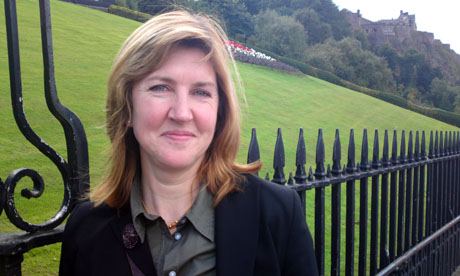
Alison Johnstone for the Greens (pic from here)
Oh, and Alison Johnstone for the Greens who was the best of all of them (pictured).

I'm going to be nauseatingly pleasant for a moment and say I thought they all came across well, in terms of speaking style and personability. In other words there were no 'duds' on the panel, but there was a great deal to disagree with. I wrote sporadic notes throughout but wont attempt to give a blow by blow account, just a flavour.

Alison (Greens) started off and managed to set the agenda of the initial discussion by raising the cuts, whether they are actually necessary and the amount of social harm that they will do. She praised groups like UKUncut for their sterling work against corporate tax evasion and talked about the need for tighter legislation to ensure even the richest companies and individuals have to pay their fair share of tax. As she said the private sector will not fill the jobs gap when public sector workers have been laid off.

Andrew (SSP) said how we used to have a colourful parliament. Full of different parties that represented different view points and this was good for democracy. He hoped to see a 'rainbow parliament' again, with SSP members in it. Like Alison he railed against the cuts and felt that in order to tackle tax avoidance we needed an 'independent Scotland with teeth'. We didn't need cuts but increased taxation revenue, and that was to come from the rich.

Gavin (Conservatives) listed all the money the Tories were giving to various small business schemes and market organisations. For me this came across as hand outs for businesses and we'll close your library. Later he also said that the cuts were *not* savage, but more a gentle rebalancing of the books.

Jim (SNP) was a competent speaker but lacked detail I thought. So for example he said the cuts weren't necessary but I was never sure why he thought that, unless it was his comment about using the wealth oil would bring in - which I'm pretty sure is not a sustainable model. Certainly though he came across as a steady social democrat, but I did drift off a bit when he was speaking. Sorry.

It was good to hear Margo (Independent) in the flesh as I'd heard nice things about her. I was very disappointed then when the main thrust of her opening address was on how essential the cuts were, and that they needed to be deep. She claimed that the politicians (including herself) did not understand the current situation (which I took to mean she didn't) and that we needed to get the election "over with as soon  as possible". Frankly I think the date is set at May 5th and it would be a bit of a hassle to change that now.

Mike (Lib Dems) agreed with Margo about how necessary the cuts were but that his priority at this election was police numbers, and opposition to the merger of the Scottish police forces. He stated very clearly that he was against free prescription charges and opposed to a council tax freeze (at least I can agree with him on that last one).


Paul (Labour) made quite a motherhood and apple pie introduction talking about protecting jobs and "frontline" services, although he was opposed to getting extra revenue from taxation. I wondered how he was going to achieve this, well, "efficiencies" in the "backroom" (where clearly nothing useful happens because the public can't see them) and "Scottish solutions for Scottish problems". In particular he wanted further efficiency savings in the police, fire-service and health. That's all sorted then, job done, no harm to anyone.

Of the highlights of the debate I'd say there were three. First on crime. The Lib Dem and Margo MacDonald both came out against mandatory sentencing for carrying a knife and although the Labour guy tried to defend it he just sounded like someone who likes locking people up and doesn't mind if they deserved it. It was Andrew from the SSP who took it up a  notch getting very impassioned about the low conviction rate for rape in Scotland and noted that it was time we thought about lowering the evidence threshold on rape. I'm not for that, but it was a strong point well made.

The Conservative, Gavin Brown, felt that we weren't sending enough people to prison and that we were letting them out too soon. I should have heckled that Ken Clarke didn't agree with him, but was too lazy.


The second was on renewable energy. Now this is an area which I think is difficult for the Greens (at a hustings). Everyone expects us to be good on this, it's our topic as it were. So if we shine - well, that's as it should be - and if the others all say they like turbines, sun and wave (as they all say they do these days) it's harder for us to be distinctive on this unless we're prepare to really hammer the record of the other parties.

So we had a few comments about how windy and wavy Scotland was and that the SNP were going to make us 100% renewable powered. Then Alison stepped in and, I think, blew the others out of the water. It's all very well arguing for new wind turbines, she argued, they're ok I suppose, but the key problem is that we're using too much energy, not simply that we're producing it in the wrong way.

If our home insulation scheme was rolled out properly (unlike the half hearted scheme the SNP proposed) it would have a phenomenal impact on our energy *needs* as well as making the poorest households warmer. Without tackling waste and reliance on oil fancy renewable technologies wont take us nearly far enough. I thought that was great, as it challenged the idea that green ideas are something you can just buy in and carry on as normal.

The last highlight (there were lots of other questions) was on what party the panelists would be a member of if they couldn't be in their own. It's a great innocent sounding question that is an incredible minefield for all the parties, but especially the Greens.

SNP Jim got in quick with his "The Margo MacDonald Party" which was promptly banned as an answer for further panelists. Then Labour, Lib Dem and the SSP candidates all said they'd be in the Greens (the SSP candidate pointing out that many members of his party had actually been expelled from Labour so might find it hard to go back).

Alison for the Greens, faced with all this love, had to do some quick thinking. She basically ran through the fact that we like some of the policies of other parties and work with them (for instance the SNP and nuclear) but would have real problems digesting some other policies (for instance SNP and road building). In the end she plumped for the Green Party of England and Wales - which in no way answers the question, well dodged that woman.

That only left the Tory who made some weird remark about Solidarity... but I don't think he was considering joining them.

Anyway, those were my impressions. I'm sticking with the Scottish Greens for the list vote, as you might expect, but you'll have to wait and find out who I vote for in the Constituency list where the Greens aren't standing.

Saturday, April 16, 2011

Guest Post: Relocating London

This is a guest post from Douglas Coker, and absolutely rock solid Green in Enfield. A great start to the discussion on what climate change means for our cities.

London is under threat. Key parts of central London are built on a flood plain. A stretch of the South Bank, including part of Southwark, and Docklands are examples. The extent and timescale of the threat are difficult to predict exactly but at some point in the future low lying parts of London run an increasing risk of being flooded.

The North Sea flood of 1953 in which thousands of lives were lost in the Low Countries and Suffolk and Essex was a warning. This prompted the building of the Thames Barrier during the 1970s. It became operational in 1982 and has been used with increased frequency over subsequent years. Currently the Barrier protects billions of pounds of infrastructure including buildings, parts of the underground network and electricity distribution facilities. Some experts expect it to be fit-for-purpose until 2030, others say 2060 or later.

Now global warming and rising sea levels are increasing the threat. Add a repeat of the 1953 event with a storm surge bringing huge volumes of water up the Thames and the Barrier failing. In addition consider this. The Thames catchment area extends as far as Basingstoke, Swindon, Banbury and Luton. Imagine exceptionally heavy rainfall in this area and the subsequent large volumes of water travelling downriver to London just as the storm surge arrives from the sea. You don’t want to be strolling along the South Bank or travelling in a tube under the Thames when this happens! OK enough scary stuff. What do we do about this?

Big cities need big infrastructure and these projects should last for hundreds of years. Take Bazalgette’s sewer system. The combination of the Thames being used as an open sewer and an unusually hot summer in 1858 gave rise to the Great Stink so awful that members of the House of Commons considered relocating upstream to Hampton Court. Joseph Bazalgette was commissioned to build a substantial London sewer system to carry the offending effluent down river. We still depend on this today in part due to Bazalgette’s deployment of the precautionary principle. He doubled the size of the sewer tunnels to future proof them. What an example he set. His sewers will have a lifetime measured in hundreds of years.

Bazalgette could not have been expected to know about global warming back in the 1850s. But we are all too aware now. Why are we continuing to construct large civil engineering projects, including infrastructure and buildings in vulnerable areas? I question whether we should be building, the Thames Gateway project, the Olympic Games site, Crossrail and the Super Sewer. Huge amount of concrete and steel will go into these projects with all their attendant CO2 emissions and all or part of these projects are in areas of London increasingly vulnerable to flooding. Projects which should last, not mere tens of years, but hundreds of years should surely not be built in areas which within 50 or maybe 100 years will be inundated with water.

The London Thames Gateway development has the insurance industry worried. They are reluctant to insure homes and shops unless extra measures are taken to protect against flooding. Maybe the buildings should be built on stilts! The Olympic Games site is in the Lea Valley an area which has experienced flooding in recent decades. Measures have been put in place to prevent flooding of the site but will they prove to be adequate?

Crossrail is intended to transport commuters at high speed from Maidenhead in the west to Stratford and Canary Wharf and other places in the east. Putting aside the question of whether this is a good idea in principle this huge civil engineering project will run through and to parts of London vulnerable to flooding at some point in the future. Whether in tunnels or on the surface how is this to be protected?

Finally the Super Sewer, or more correctly the Thames Tunnel, is intended to extend for 20 miles from west to east to help prevent sewage entering the Thames when we have increasingly heavy rain (caused by climate change) overwhelming the Victorian sewage system (built by Bazalgette). All this diverted sewage is intended to end up in a sewage works at Beckton which, situated on the north bank of the Thames estuary, is right in the firing line of a surge of flood water heading up river for London! Surely a better plan is to remove all impervious surfaces in front gardens, car parks and similar places, install soak-aways and encourage the maximum use of water-butts and other storage containers before boring a huge tunnel under the Thames.

Global warming and climate change have received less attention than warranted as we experience an economic depression. But let’s not forget the economy is a sub-set of the environment and business-as-usual thinking needs to be challenged. We should not be pursuing developments which take little if any account of the prospect of London and the Thames estuary flooding. We need a new planning regime which sets strict criteria informed by a proper understanding of the risks to London from a rise in sea-level and large volumes of water. We need to plan to give places back to the river and sea as they are ultimately not protectable.

Relocate London? We need a plan for relocating vulnerable parts of London on a timescale which will prevent foreseeable disasters.

Wednesday, April 13, 2011

Today's selection box

  • How the ancient Romans made MSG. Yum?

  • It appears the number of BNP candidate numbers has plummeted, and the Lib Dems are also having trouble. Oh dear.

  • Australian Green Cate Faehrmann tries to learn lessons from the recent NSW elections. Hmmm.

  • Short video from Israelis who say they defy the ban on protest. Yes.

  • Just because it's a council house doesn't mean it's not yours. Right on.

  • Natalie at the Third Estate talks about my third favourite topic. Autonomism. Oh yeah.

The AV campaign videos

We now have both YES and NO to AV campaign videos and frankly my unimpressedness continues unabated. First we have the No camp making their case;


I'm slightly confused about the three films in one thing from the Noers here. While three separate short films is fine, splicing them into one reel feels rather clumsy and confused - a bit like their arguments I guess.

Certainly it's funny, although the concept that people can get in even though no one votes for them or that AV would lead to permanent coalition is utter tosh. The horse race part is clear and powerful, probably the strongest part of the broadcast and is all the more robust for relying on an honest preference for first past the post rather than simply attacking AV.

Having said that the final part, which we might as well label "AV is confusing" is also a pretty strong message. It relies on the gnawing doubt in many people's subconscious that voting is complicated. I find it slightly frustrating because it essentially makes out that the voters are going to have to conduct the count themselves, so the issue becomes whether it is simple to count (and it's obviously slightly more complicated to count than FPTP) rather than whether it is simple to vote, which of course it is. In fact it might even be simpler to vote in an AV election because you don't need to predict who the winners might be before marking your X.

Now to the Yes video


Sadly we have more tosh.

AV will make your MP work harder will it? There's absolutely no evidence for this at all. More than a third of seats at the last general election were elected with more than 50% of the vote. The handful of seats that would have changed hands at the last election had it been under AV were all marginal anyway - so it's hardly likely to solve the expenses problem (which is as bizarre a claim as any the No camp are making).

However, while the arguments are as weak as the No camp's the video itself is far, far weaker. It essentially paints Yes campaigners as hectoring twats. This may well be an accurate description of the Lib Dem cadre that make up the core team of the Yes campaign (which also explains why the campaign has managed to combine smugness, bullying, pathetic whinging and a host of mis-guided missiles) but it's hardly true of the majority of pro-AV people.

There are many good arguments you can make for AV and yet the Yes camp seems determined to paint the campaign in the Lib Dems' image - self-satisfied, dishonest bores whose idea of a conversation is dogmatically insisting that they have no choice but to vote the way they want you to. I believe this may well become a classic case of crash plus burn.

Currently the No camp appears to be seven points ahead in the polls but I can't believe that support for either side is on the basis of the official campaigns.

Monday, April 11, 2011

Banning peaceful parties - whatever next in our ‘democracy’

This a guest post from a Camden resident: Way back in January the campaigning group for an end to the British Monarchy and for ‘a democratic alternative’ started organising in earnest for a big street party for the Royal Wedding day.

It was billed as ‘providing a family friendly public space away from the hype of the Royal Wedding’ with food, games, entertainment and to celebrate democracy and people power - An alternative for those people who are not big fans of the monarchy. It seemed like a perfectly inoffensive and fun way to protest without being ‘spoil sports’

Republic supplied an event management plan to the police, and received an approval from the planning authority: Camden Council as shown here: http://bit.ly/efkqNg

And so they began publicising the event.

But there has been a very sudden and disappointing turn around as Camden Council has today withdrawn the approval.

The Cabinet Councillor for the Environment, Cllr Sue Vincent has written to those objecting and stated that local residents ‘are concerned rightly or wrongly that this event could attract people who wish to take advantage of the cover of this event’ and that the local residents bore some brunt of the recent anti-cuts anarchic bad behaviour!

This is a poor excuse and panders to the ignorant view that Republicans are Anarchists or Leftists. Many are on the left but Republic states regularly that they have members across the political spectrum and more to the point; all their demonstrations have always been legal and not disruptive in the slightest.

The Police did not consider the event to be a problem and certainly not an event with a potential to cause disorder as shown here in their emails: http://bit.ly/dTxqn3

Contact Councillor Sue Vincent at Camden Council and explain why this event should be able to take place in a street like everyone else’s street party on 29th April. Email: sue.vincent@camden.gov.uk and also Rachel Stopard, Rachel.Stopard@camden.gov.uk (Head of Camden Council Culture and Environment)

Compared to the many other ‘not the royal Wedding’ Events taking place in other parts of the country. Republic’s central event is possibly the least provocative.

Poor Camden is the odd one out. Here are some other events where celebrating republicanism is being allowed: http://yhoo.it/fwT7Qg

Republic are currently considering legal action but the event will definitely take place, if not in Covent Garden then elsewhere.


Camden Council, a Labour run Council has made a gross error of judgment, in denying a sizable community the right to hold a street party the same day that so many other street parties will be taking place. And let’s face it, the vast majority are doing it to bring people together for fun (as are Republic) rather than to celebrate a wedding of two very remote people.

Fabricating Clegg

Although I'm sure I slip now and then I'm very unkeen on the demonisation of individuals in politics. It always seems to play into a tribal and unthinking approach, where the baddies do bad things because they're bad and, because we oppose them, all things we do are somehow by definition good, even when they're counter-productive or rubbish.

Clegg: second from left
However, along came Clegg and he does make it bloody hard not to hate him as an individual. He just seems to lack any moral center what-so-ever. There are Lib Dems I have respect for David Howarth and Bob Russell to name a couple, but it's true that their yellow standard is so tainted I find the organisation hard to stomach.

Last week he was interviewed by Jemima Khan and the man was unable to tell the truth about even the simplest matters. When asked about his personal relationship with his boss, David Cameron, he said “We don't regard each other as mates and actually I don't think it would be a particularly healthy thing if we tried to become personal mates".

What a thing to say about one of your work mates? Especially when you've said you don't disagree with them on anything. No wonder the Tories are annoyed at the way the Lib Dems seem to be attacking their coalition partners even whilst agreeing with all of their policies.

However, on hearing that Clegg  has a purely business relationship with the big man and thinks getting close to him would be unhealthy, she expresses surprise and asks don't they play tennis together? Clegg replies "No, no – well, er, I think we've played one game of tennis. Of course we meet from time to time but it's always basically to talk about what we're doing in government."

What an oily little tic. Disowning his friends in public because he thinks they might make him unpopular (note to Clegg: Cameron is more popular than you, not less), pretending he only meets them for work and then when he's pulled up on it his first instinct is to deny it. Only when he realises he could easily be caught out lying does he change tack and own up.


These little things are the mark of what kind of man someone is. There are no two politically closer individuals in politics than Nick Clegg and David Cameron - at least have the honesty and integrity to stand with your friends, even if everyone else thinks you're an idiot for it.

Monday selection

Welsh Green Party broadcast

Hot on the heels of the Scottish Green broadcast, here's the Welsh version. A lovely combo of Ivor the Engine and election geekery.

Sunday, April 10, 2011

House of Lords selection results

If the Greens are actually given seats in the House of Lords they'll be the only people sitting there who were actually elected (not correct, see comments) and will be tasked, among other things to replace the institution with a body with more democratic legitimacy. I've just spoken to our ERO and the results are public so here they are.

In  order; Jenny JONES, Emma DIXON, John WHITELEGG, Shahrar ALI, James HUMPHREYS, Rupert READ, Alan FRANCISand three reserves. The first preference votes were as follows (the order changes due to James Humphreys gaining more second and third preferences than Rupert read).

First preferences for the candidates are as follows (you'll have to forgive me skipping the complexity of the entire STV count).

Jenny JONES 692 25.5%
Emma DIXON 439 16.2%
John WHITELEGG 335 12.3%
Shahrar ALI 328 12.1%
Rupert READ 202 7.4%
James HUMPHREYS 180 6.6%
Jessica GOLDFINCH 94 3.5%
Alan FRANCIS 78 2.9%
Rebecca JOHNSON 72 2.7%
Larry SANDERS 50 1.8%
David AHERNE 49 1.8%
Stuart JEFFERY 46 1.7%
Nic BEST 44 1.6%
Hazel DAWE 31 1.1%
Tony SLADE 27 1.0%
Stephen PLOWDEN 19 0.7%


  Re-Open Nominations 27


 Total Valid Vote 2,713


Of course, due to the extraordinary sub-feudal system we may well not get any places in the Lords it's all down to the government's largess. Roll on democracy - that's what I say. Oh, and congratulations to all those who stood of course.

Scottish Greens Election Broadcast


Because from Scottish Greens on Vimeo.

Once you've watched this go look at this http://scot.gr/because/

Friday, April 08, 2011

The AV safe-o-meter

Someone pointed me towards the site Voter Power which purports to "demonstrate the increase in voter power that AV would bring." So I popped in the details for Lewisham Deptford, where less than year ago I spent a tough General Election.

This was the result;


Now, I'm grateful for the stats and all but I do think the the idea that my "voter power would increase by 33%" is slightly misleading as it goes from "fuck all influence" to "still fuck all influence". If you live in Lewisham Deptford your vote doesn't make any difference under either system. An increase of 33% makes it sound like there's be a meaningful change, when there hasn't.

This is the key problem with single constituency elections (and Presidential elections) in that it is a combination of winner takes all and a postcode lottery. Under both systems the votes of those who live in Lewisham Deptford simply do not give the people the same say as those who live in marginal constituencies - and even they, generally, are only getting a choice between two parties to misrepresent them.

Under proportional representation every voter's vote is of equal weight - no matter where they live. It also means that in Parliament every political position with significant minority backing has a voice. For me that's what democracy should be about, people's voices being heard - not one where only the biggest tribes are allowed to speak.

School strikes over staff safety

You'll have seen the news about the school that went on strike yesterday over 'pupil behaviour'. An impressive seventy staff members attended the NUT / NASUWT picket line of the smallish Darwen Vale High School.


The Head commented that "I am disappointed that the trade unions have chosen to take this action. The vast majority of pupils at Darwen Vale behave well and take their education seriously. We are in discussions with the unions and with the staff around how we can best resolve this situation so that staff feel well supported when they do need to deal with behaviour issues."

For me this totally misses the issue. The staff are *not* taking strike action against the behaviour of the kids, they are taking action against *management* behaviour which has led to any allegation, no matter how flimsy, leading to staff suspensions - more than 6% of staff members over the last year. It's the management eagerness to suspend staff that's the problem, not the fact that a minority of pupils are not well behaved.

While the head talks about staff feeling well supported it appears that she has pursued a policy of consistently taking action against staff members and making it impossible for them to enforce, for example, the no mobile phone policy.

The Independent writes that "The striking staff members claim the arrival of £80,000-a-year head Hilary Torpey has resulted in the sudden deterioration in relations between management and staff." This seems like an important point to me as much of the press are playing up the 'bad kids' angle, but surely the emphasis has to be on the 'ruthless management' part of the equation.

Simon Jones, National Executive Member for the NUT, said:

"Members are taking strike action as a last resort because of the head teacher’s continued denials that there is a problem with pupil behaviour in the school and her refusal to engage properly with staff and unions to find effective solutions to these challenges. Staff and unions have been raising concerns for the last two terms but the Head has rejected repeated requests for earlier meetings to try to resolve this dispute informally.

"We regret that this industrial action is necessary and recognise that it will affect pupils’ education for a day. However we have timed the strike to avoid disrupting any examinations taking place and in the long run we believe resolving these behaviour management issues will benefit all the staff and pupils.

"Negotiations are due to resume after the Easter holidays and it is hoped that further strike action can be avoided provided the Governors take the necessary steps to ensure teachers have the support they need to manage pupil behaviour effectively".

Thursday, April 07, 2011

Discussing AV: Rupert Read and Darrell Goodliffe

In the interests of broadening the discussion I asked Labour blogger Darrell Goodliffe and Green Rupert Read to set out the case for each side of the AV referendum. I asked them each to lay out their case either for a yes or no vote and then gave them a right of reply.

Rupert Read: There’s a good old saying: If it ain't broke, don't fix it. But BRITISH POLITICS is BROKEN. Our electoral system is unfit for purpose. (It was designed for a two-Party system: it can’t cope with a multi-Party system.) We need to fix it: Ergo, vote #Yes2AV: http://www.yes.greenwordsworkshop.org/

So: What’s the case for voting NO? These are the two lines I hear:

1) ‘AV is good for extremists’.

Simply a lie. See me recently on ITV, from 8 minutes in, here. AV is the worst of all possible systems for extremists such as the BNP. Which is presumably why the BNP are vigorously opposing it... AV, a system in which voters can ‘gang up’ on unpopular Parties, will help ensure that the BNP never gets elected to Westminster - and moreover, if introduced in local government elections, would lead to the defeat of virtually all their Councillors. AV would drastically reduce the bane of ‘tactical voting’ that’s a necessary evil for voters when a multi-party political system is squeezed into a two-party electoral system. In the process, it would shut the door on the electoral prospects of the BNP... But if you want Nick Griffin to wake up with a big smile on May 6th, then vote NO...

2) ‘To hurt the LibDems, vote NO’.

The NOtoAV campaign, understandably (given that they have no constructive arguments to offer) are trying to turn the AV referendum into a referendum on Nick Clegg. This is a cynical way to treat a hugely important constitutional question; but there’s another reason, less obvious, why it’s wrong: Nick Clegg's Party will not benefit from AV. Under AV, you can give your first preference to whoever you want to win. The Lib Dems might gain votes in areas where they are weak, under AV, as they will no longer be perceived as a "wasted vote" in those areas. But they will lose first preference votes in areas where they are strong, as people will no longer be compelled to vote for them tactically in order to cast a vote that is not "wasted". Losing votes where you are strong loses you seats; gaining votes where you are weak does not. (See Liberal Conspiracy, Rupert's Read). ...It simply isn’t true that AV will be good for Clegg’s Party!

…Look at those who are in favour of AV: Virtually all the ‘progressive’ elements in Labour, including of course the Milibands and Compass plus Hilary Benn, Jon Cruddas, John Denham, Sadiq Khan, Michael Meacher, John McDonnell, Joan Ruddock…; the Greens; plus most of ‘civil society’ including notably organisations such as Operation Black Vote. Look at those who are arraigned against AV: the entire right-wing press, the Tories, BNP, Taxpayers Alliance, a bunch of ultra-right-wing businessmen and climate-deniers who are funding NO… and the most tribal, uninspiring elements of Labour: Prescott, Beckett, Blunkett… Darrell, do you feel happy in the company you keep: Griffin, Cameron, Hague (Open Democracy), Murdoch, Dacre, Guido Fawkes (Rupert's Read) and Matthew Elliott?...


Why I am NO to AV....

Darrell Goodliffe: Cards on the table time; I support electoral reform (to AV+ or a Additional Member System). However, a change to AV is the wrong change to make and since that is what is on the ballot paper it's AV compared to First Past the Post we have to discuss; not FPTP v our dream system.

A Yes Vote will not lead to further reform: Labour AV supporters overwhelmingly favour a stance of 'AV and no further'. The Liberal Democrats are facing an electoral apocalypse; whichever system the next election is held under and the Conservatives, well we all know what they want. Also, the Yes camp 'upselling' AV as something it isn't; proportional in any way shape or form, means that if it triumphs, people will rightly ask what's the point of another change rather than clamour for more. I am sure comrades reading this will pipe-up 'what about the Greens'....which leads me to my next point....

AV and smaller parties.... AV does not increase the chances of more MP's from smaller parties being elected. This is due to both the 50% threshold and the preference system. I am a member of Labour. I would under AV happily cast my second preference for the Greens. This would however, be pointless because my second preferences wont matter a jot; Labour will not be eliminated before a conclusion is reached where I live. However the preferences of the smaller parties under AV are unfairly weighted because the smaller parties are most likely be eliminated. It is inconsistent to claim AV will benefit the Greens and not the BNP in the same breath; the BNP's vote nationally is much higher than the Greens (sadly!)and therefore its their preferences that will need to be chased more often. Preferencing without proportionality is undemocratic and gives the second preferences of small party voters an unfair weight and makes some votes more 'equal' than others.

AV won't end tactical voting.... All it will do is shift the site of the tactical battle to peoples preferences, especially those people who vote for smaller parties. This is exactly what happened during the Labour leadership election where supporters of the three candidates who were never really in the running were assiduously targeted by the camps of both the Milibands.

AV doesnt ensure MP's elected by 50% of the electorate... Again, the Yes camp wants to have its cake and eat it; it says, 'Don't worry, AV is just like FPTP because you don't have to use your preferences'. However, if people don't then MP's will be elected by less than the magic 50% because those votes will simply stop being counted in the later rounds. This destroys another argument; that AV ends wasted votes. In my example above, all my subsequent preferences were wasted because my first choice wasn't eliminated and if somebody doesn't cast all their preferences then their vote isn't counted if their first choice Party is eliminated so theirs is too.

Change cannot just be for changes sake. It has to be the right change and the brutal fact is that AV is the wrong change; above anything else that is why I will be voting No on May 5th....
 

Rupert's response to Darrell: 

Let me take Darrell's arguments in turn:

"A Yes Vote won’t lead to further reform": Irrelevant. The question is whether AV is better than FPTP. As I've shown, it is. …But furthermore: is further reform MORE likely if AV is voted down? If anyone agitated for PR during the next generation, after AV had been defeated, the answer would come back clearly: ‘Britain has rejected even the modest move to AV; so it is POINTLESS offering voters PR’…

"It’s inconsistent to claim AV will benefit Greens and not BNP": Plain wrong, as I’ve shown. The BNP oppose AV because they are HATED – hated extremist Parties hate AV for good reason… Meanwhile, it’s AV that has enabled Greens in Australia to get their first MP elected.

“AV won't end tactical voting”: Duplicitous wordplay. AV enables voters to vote for who they want, from 1st to last. It will end tactical voting as we know it, in which people vote only for the lesser of several evils.

“AV doesn’t ensure MPs elected by 50% of electorate”: Technically true, but deeply misleading. Under AV, virtually all MPs WILL be elected by a majority of voters; under FPTP, most MPs are elected by a minority.


Darrell's reply to Rupert:

I certainly would’t deny Rupert’s point that British politics is broken. Nonetheless, we have to ask a little more than if something is broken. It would be a poor doctor that just proclaimed a patient to be sick and not even offer a cure or, potentially even worse, offer the wrong kind of cure. My submission is that AV is not the right medicine for British politics.

I deal with Rupert’s first line-of-attack in my main text so won’t expand on that. Regarding AV and the Lib Dems; AV will objectively help the Lib Dem right, as most leftish Liberal Democrats have de-camped to either Labour or the Greens. So, Orange Bookers will use AV to cement their alliance with, and electoral dependence on the Conservative Party - AV is shown once again to weaken the left as a whole and strengthening the right, which will be the net effect of its introduction in other areas too.

Nonetheless, we have to judge AV on its merits as a system; the only effect that should be decisive is on our democracy and here its my submission that this ’miserable little compromise’ is deeply damaging and should be opposed.

Thursday selection

  • Lovely picture from the Scottish Election on STV. A new generation of MSPs take the baton.

  • We have a useful PR tip for the nuclear industry here.

  • Luna17 has 6 blind alleys and 6 ways forward for the anti-cuts movement.

  • Happy blog birthday to Paperback Rioter - one today.

  • HarpyMarx was at the Ian Tomlinson inquiry and has written a comprehensive report.

  • Alisdair Thompson writes against social mobility. I'm with him on this - if slaves can become slave masters it doesn't mean you've challenged slavery, only justified it. We have to be for equality and justice - well, that's my view anyway.

Wednesday, April 06, 2011

Today's Selection

  • A video on why you should take part in the High Speed Rail consultation. Ignore the low tech levels and listen to the step by step arguments.

  • Talking of videos, there's a nice little video on why the cuts are the wrong answer.

  • Channel Four have an interesting article on whether AV would make any difference to election results in this country.

  • Brighton Politics takes a look at why Labour are trying to paint Caroline Lucas as an evil witch.

  • Congratulations to the new leader of the National Union of Journalists. First time the post has been held by a woman, although Jeremy Dear will be a hard act to follow.

  • Lastly, Reuben at the Third Estate has a nice little piece on the state of blogging today.
.

Monday, April 04, 2011

Today's Selection: French edition

Readers in the Home Counties reassure themselves that there will be no pictures of black people in this post.

  • There's an excellent debate on the hijab between Salma Yaqoob and Yasmin Alibhai-Brown here, where Yasmin utters the incredible phrase "The French are racist" for doing something she agrees with but for the wrong reason.
  • The burka ban is about to come into force and Islamophobia Watch have noted the criticism Sarkozy is getting for trying to broaden the debate.
  • The European Union has rapped France over its immigration policies.
  • The French local elections have seen a massive shift away from Sarkozy. Comparing the 2011 results with the 2008 results we see the Greens vote double to 8.2% putting it higher in the polls than the Communist Party or the other left regroupments. Sadly while Sarkozy's vote dipped the far-right vote rocketed from just over 4% to over 15% as their new leader has tried to detoxify the FN.
  • Red Pepper says we should look to France for strategies to beat austerity.
  • And lastly Air France have revealed how aviation could be greener. No, they have.

Saturday, April 02, 2011

We're all in this together

What's happening in Australia?

Last week saw two events in Australia that should give all right thinking people (ie people who agree with me) a little chilly shiver. The first was barmy, the second much more substantial.

The Liberal leader Tony Abbott chose to back and speak at a major anti-government rally. Not against cuts, as here, but against taxes - carbon pricing to be exact (pdf) - an imperfect measure intended to aid the fight against climate change.

Unlike the UK where climate change is often seen as an issue for people far away in Australia they *are* far away and have seen bush fires, droughts, floods and disasters over the last ten years on a really frightening scale. They've even had record hail storms.

There really is no excuse for anyone to be a climate denier in Oz, but the main opposition Liberals (read Tories UK people) had a mini-coup last year deposing one leader who was seen as too reasonable on climate with an out and out denier.

However, under pressure from the right Labor has taken it's traditional position of buckling. This has led to Labor's leader, Julia to issue instructions to the troops to distance themselves from their Green partners, even as the Greens are welcoming the deal both partners just signed. As per usual the electorate have scented weakness and signalled that they just don't respect it.

Meanwhile in the New South Wales state election we saw a massive swing to the right giving the Liberal/National Coalition seats they never dreamed they might win. Of course, the small crumb of comfort here is that the Greens also achieved their best ever result including electing their first ever representative in the NSW lower house (who's from the midlands). However, in the context of an incredible swing towards the climate denying right that win is a very small chink of light.

At least we know there is a growing audience for left and green ideas as Labor's failure to deliver a progressive agenda becomes more and more apparent. Right now they're lost and in government, a terrible combination. Here's the results.


Swing  Seats  Change
Liberal  38.6 +11.7 51 +29
Labor  25.6 –13.4  20 –32
National  12.5 +2.5 18 +5
Greens  10.3 +1.3 1 +1
Independent  8.8 +1 3 –3
Other  4.2 –3.1  0 0
   Total  93

For the geek minded I thought I'd also compare percentage seats to percentage vote under AV, just because it backs up the contention that AV accentuates trends which can, sometimes, lead it to less proportional than First Past the Post. That's by the by though.


Vote Seats
Liberal  38.6% 54.8%
Labor  25.6% 21.5%
National  12.5% 19.4%
Greens  10.3% 1.1%
Independent  8.8% 3.2%
Other  4.2% 0.0%

What's clear is thatthere is a space for a clear left progressive party in Australia, despite the growing vigour of the right, and that Labor's capitulation to the right's agenda does not just signal a lack of principle but is going to cost them dear over the next few years.