With it being census time it's somehow fitting to look back one hundred years to the 1911 census that was subject to a controversial boycott by the Suffragettes. Writing comments like “If I am intelligent enough to fill in this paper, I am intelligent enough to put a cross on a voting paper” or “No votes for women, no census” thousands of activists for women's suffrage protested the census.
My favourite story of the year is, of course, that of Emily Wilding Davison who, census night, hid herself in a House of Commons cupboard so she could legally say she resided in Parliament on the census form. Emily famously died two years later under the hooves of the King's horse.
Many struggles for women's equality have not been won but we do generally accept that women did win the vote and we don't want to go back. I don't think that's controversial is it?
So I was interested to read that in Saudi Arabia they've decided that they aren't quite prepared for women to be voting - literally. There are municipal elections due in Saudi next month and women were scheduled to be able to vote for the first time. Sadly this is not to be.
"We are not ready for the participation of women in these municipal elections," said the head of the electoral committee Abdulrahman al-Dahmash, while at the same time renewing promises that authorities would allow women to take part "in the next ballot."
He said that "Participation of women in elections took place in most advance countries gradually," which does not explain why no women will be allowed to stand or vote in these elections. There were steps along the way to, for example, equalising the age of suffrage between men and women but the first step was not cancelling the right to vote at all.
Considering Saudi troops are currently in Bahrain keeping the democratic forces down there it seems of a piece that they should postpone any democratic reform at home too. Indeed recent decrees in the last two weeks have declared that anyone criticising senior clerics are to be 'untouchable' and must be severely punished and protests have been banned.
For most of us in this country we see votes for women as an established fact, yet in many parts of the world governments that are our business partners and friends deny the people even this basic democratic right. Of course in Saudi women can't drive let alone vote but there are nascent movements for women's equality and for democratic reform.
Caught between the inspiration of the uprisings around the Arab world and fear of their repressive government those movements must feel themselves on the cliff edge, unsure whether to jump off and fly, or perhaps hurtle to ground.
Monday, March 28, 2011
When will women get the vote?
Sunday, March 27, 2011
German Greens continue to advance
The results of the important Baden-Württemberg election are rocking Germany. In an area that has been Tory (CDU) since the fifties we are due to see their historic first Green President as a Green/SPD coalition rolls into power.
The Greens were the only party (bar the Pirates who hadn't stood before) to increase their vote share. Incredibly they doubled their vote to just under a full quarter of those who voted.
This comes as the Greens have been riding high in the polls for a while - what this spells out for the next general election though it is far too early to tell.
| Party | Vote % | Change | Seats | Change |
| Christian Democratic Union (CDU) | 39 | -5.2 | 60 | -9 |
| The Greens | 24.2 | 12.5 | 36 | 19 |
| Social Democratic Party (SPD) | 23.1 | -2.1 | 35 | -3 |
| Free Democratic Party (FDP) | 5.3 | -5.4 | 7 | -8 |
| Die Linke | 2.8 | -0.3 | ||
| Pirate Party | 2.1 | 2.1 | ||
| The Republicans | 1.1 | -1.4 | ||
| All Others | 2.4 |
Mini-march round-up
A few bits and bobs on yesterday's march;
- Madame Miaow has pictures and thoughts. As does Harpy Marx, Cath Elliot and Mary Hamilton.
- Political Dynamite carry a report from the bike block.
- UKUncut explain why they targeted Fortnum and Mason. You can also watch footage from said event. Plus Alex Pinkerman on CiF.
- A few Green Party reports from Green Christian, Flesh is Grass, Stockwood Pete, Derek Wall, Adrian Windisch, Caroline Lucas, Jeff, Green Sheen (Belfast) and probably loads I've missed (comment and I'll add them, as per usual)
- The press give their views Paul Mason, Al Jazeera, Nick Cohen, Guardian.
- Groovy medic Tajasel gives her unique report of the day.

Saturday, March 26, 2011
March 26th: a political turning point?
It seems that today saw one of the five biggest demonstrations ever in British history. While most of those protests were against Labour administrations, who didn't take a blind bit of notice, this one makes a nice change in that it is against the Liberal Democrats and their coalition partners, and has the backing of the official opposition (pic tweeted by Richard Mallender).

Ed Miliband addressed the crowd from the end platform despite having written Labour's cuts Manifesto for the last election and Labour councillors up and down the country voting, en masse, for cuts budgets.
In a move designed to annoy the Daily Telegraph UKUncut occupied Fortnum and Masons and there were a number of other peaceful direct actions, mainly against banks, and Anne Summers' windows were smash in a targeted strike against, um... shops? This led some wags to comment that police were looking for "hardened protesters" and that this was the "climax of the demonstration".
However, while the smashed windows seem pointless and, frankly, unrepresentative of the feelings of most of those turning out, the continuing direct action, which led to a number of protesters being arrested despite being completely peaceful, are a real benefit. Unlike the Iraq War march where the focus was simply on size it is very good to see that this protest was not just big, but lively and edgy too, with many people reporting a carnival atmosphere.
The TUC had come in for criticism for taking so long to organise this demo, but part of me feels this turnout is a vindication of that decision. There have been very well attended protests all over the country which have helped build this march and it seems unlikely that had this been called in January, for example, we'd have had anything like this turnout.
It does call into question where we go from here. I've seen various people talking about the next monster demo (and "let's make it bigger", etc.) but this feels slightly unimaginative and disregards the fact that these protests lend moral weight and confidence to the movement against austerity but cannot, of themselves, change government policy.
Right now, according to YouGov, the majority support the aims of the march (52% to 31%) but in order to get the government to change direct we need a viable strategy that goes beyond moral force. The next step is public sector strike action.
The prospects for industrial action that is coordinated across the public sector seem far closer now than at any other point in my lifetime. While Thatcher took on unions one at a time this government has taken on the entire country all in one go, banking on the weakness of the trade union movement. For the trade unions this is now life or death, if they let this moment pass without real action they are in danger of being snuffed out of any meaningful existence what so ever.
Of course, if they allow their links to the Labour Party to hold them back once again they will find their members out of work and/or demoralised by the end of this government. Thankfully unions like the PCS are not linked to Labour and are far more free to act effectively. Whether other unions can take the lead with them is another matter - but this march today shows that there is an enormous public mood against the cuts, let's not piss it away.
Thursday, March 24, 2011
Some more misc.
- Sarah Palin's popularity - state by state. Oh my.
- The Scottish Greens launched their campaign today. Oh good.
- The London Greens have some interesting poll news. Oh La La.
- At Top Soil they're taking Monbiot to task over nuclear. Oh boy.
- Esta vivas looks at alternatives to the dominant agricultural model. Oh Oh.
- Good luck to Ali Dizaei today. Oh you're going to need it.
Tuesday, March 22, 2011
Ex-Israeli President Jailed for rape
You have to go back to 2006 on this blog to see the last mention of this, but never let it be said I let a story drop. The ex-Israeli President Moshe Katsav has finally been jailed for rape.
He's been sentenced to seven years in jail some large fines and, when he emerges from prison, will face other legal penalties for the actions he took while he thought he'd be immune from prosecution as President.
The fact it took such a monumental act of political will to bring him to book for raping state employees does not speak well of the legal system, although it is indeed good news to hear that he has at last been brought to justice for these crimes, if not the murders that took place under his authority while.
There is of course little chance that anyone will be tried for the deaths of children in Gaza over the last couple of days. These are a fact of life that we are expected to forget soon enough, as we look to other tragic events around the world.
Monday, March 21, 2011
Edinburgh Central: Climate Cafe
Tonight I attended a Climate Cafe for the Edinburgh Central constituency in my ongoing attempt to decide how to use my constituency vote at the upcoming Holyrood elections. All five parties were in attendance and after much careful thought and consideration I decided I'd vote for Greens on the list. They are paying me after all.
The Climate Cafes are a really nice alternative to hustings where voters sit in groups and the candidates rotate round, speed dating style, for fifteen minutes face to face with each group. It's less confrontational and more intimate and everyone attending should get a good chance to ask their question of at least some of the candidates.
It also looks like the candidates prefer it to the all answer in a line approach, which always has the problem that someone answers first and someone last, skewing their ability to look fresh or comeback on other candidates.
I'll make a few comments about each candidate in turn, which were my personal impressions, I'm sure others in the room had a quite different cafe experience.
Labour's Sarah Boyack was first to our table. On some levels she gave the best performance of the five but having had a non-response to my email questions from her I've since discovered a whole number of locals who have found it impossible to get her to reply. If she doesn't listen to her constituents she doesn't get my vote, end of.
Her responses were pretty steady and competent, which always goes a long way and her comments about the reliability of tidal power, despite its early days in the research and development stages were interesting. I think she was the only candidate to mention (unprompted) local energy production, which is another fruitless plus.
Next up was Conservative Iain McGill who appeared a little nervous I thought. In his introduction before the cafe bit started he mentioned how his party was in coalition with 'Alex's Party' which was particularly cruel as I'm sure the Lib Dem Alex was hoping we'd forgotten that, he certainly winced at the time.
Iain took control of the table and directed it from the moment he sat down, which was in contrast to the other four candidates who all allowed the table to direct how the questions got asked. He also talked quite a lot which might have been nerves, or possibly a strategy to reduce the number of questions he got asked.
I asked him how we were meant to be meeting environmental targets if all the regulating bodies had been abolished in the bonfire of the quangos. He replied that the conservatives were not anti-regulation but were in fact for extra regulations, but they would be enforced in a different or new way. I happen to think this is completely untrue, but it was a nice try.
One thing he said that I liked, gasp, was to change the taxation on aviation so that each flight is taxed, not each passenger. I think that's quite a good idea, although admittedly small beer.
Alex Cole Hamilton for the Lib Dems came next who was appropriately enough asked about what he was going to do about all this junk mail. He replied he was on a 'sticky wicket' on this one as he'd be out of the race if he stopped the deluge of paper, which had the ring of honesty about it. He was the only candidate to have canvassed one of our table, which caused a frisson of excitement.
He did say that at a time when "we are cutting back on front line services" (note: this is not the line, the line is front line services will not be effected by the cuts, bad candidate!) councils producing lots of waste paper was one area we could happily cut without tears.
One thing he said that I liked was that it was not currently feasible for us to meet our renewables targets because there was no political will to do so. He said "the political class and the public at large are in second gear on climate change" and I always like to hear candidates slag off the public. I do! The public might not, obviously, but I think it demonstrates a bit of integrity. He then topped it off by saying the Lib Dems were willing to take unpopular decisions - that's one Lib Dem pledge I doubt they'll break!
Marco Biagi for the SNP was up next. He's currently the front runner for my constituency vote, but I'm still open to persuasion. The first question he was asked (not by me) was "Who are your preferences for a coalition partner?" to which he replied "Green, then Labour, then Lib Dem, then Margo MacDonald, then the presiding officer, then, um.... move to Ireland."
He was asked about new coal and he had a particularly dispiriting answer which was there is no need for it, but because of UK law it would happen anyway. While the Scottish government can use planning regulations they are bound over what arguments they can use and climate change is not one of them.
He also put the emphasis on renewable energy technologies, and all but said that we could not afford a massive home insulation scheme even though it is "vital". He is "100% behind it, but where's the cash?" That's not really good enough to be frank, but again it was shot through with honesty.
Green candidate Steve Burgess was last to our table. I'm entirely biased on him so won't bang on, but I thought he came across well with a quietly spoken and mild, thoughtful manner. He was the only candidate to attack oil, talk about moral obligations to other nations (this was a cafe about the climate after all) and the only candidate to talk about the role of the unions.
Things livened up a little when he criticised growth and was asked which industry's workers he was planning to lay off. For me this really underlined how even with a clear job creation plan at the front of our policies our critique of 'growth' needs a lot more refining, especially in the way we articulate it, otherwise it just sounds like we're arguing for a deeper recession - which we aren't.
Steve handled the question well I thought but we're not always there, face to face, to deal with these questions and, for me, all these phrases like steady state economy and zero growth need a lot more work before we fit them neatly into our Green New Deal approach. Anyway, I found it helpful, so thought I'd pass a report on.
Saturday, March 19, 2011
EDM 1565: Libya, North Africa and the middle East
It's my view that the current situation in Libya is not the kind of clear cut ethical question that some people, on both sides of the debate, would have us believe. For me whether we come down for or against military intervention rests on an assessment of whether our proposed actions will work (rather than simply making us feel like we're doing something) and whether the wider impact of the action will not work to the detriment of the revolutionary process taking place across the Middle East and North Africa.
The moral certainty that has been displayed by some when debating this question has made me feel rather uncomfortable, particularly when many seem unable or unwilling to provide supporting evidence for their claims.
Whatever happens now it is likely there will be a humanitarian disaster in Libya and it is up to us to ensure we are helping these democratic upsurges across the region for the chance of a long term solution, as well as taking stock of the immediate tragedy as it unfolds.
On balance I'm opposed to the proposed military intervention, but I recognise that others take a different view for perfectly legitimate reasons. I'm sure this discussion will continue over the coming weeks and you can still vote in the poll (right) which seems pretty evenly split at the moment.
I am backing EDM 1565 on this issue proposed by Jeremy Corbyn and seconded by Caroline Lucas. If you also agree with it you may like to encourage your local MP to sign too. It reads as follows;
That this House does not believe that Western intervention in Libya or elsewhere will bring about the peace, justice and democracy that is being sought by millions of people in North Africa and the Middle East; and calls for a rethinking of British and European foreign policy and a more concerted effort to apply international law and its human rights clauses in any negotiations or actions relating to the historical process that is now taking place.As the air strikes pile in we've moved a long way on from talk of a no fly zone. The days and weeks ahead will no doubt see news that supports both sides of the argument, but it will only be the long term impact that will truly make it clear whether this was the right course of action.
Saturday selector
- Jenny Jones has been selected as the Green Party's London Mayoral candidate, she will also head the Assembly List. Bright Green has the Mayoral numbers.
- Collective resistance asks what is a general strike?
- Danny Chivers looks at Tesco's week of environmental action.
- John Harris wrote an excellent piece in the Guardian on Labour's tribalism.
- Bea Campbell points to her documentary on the Morning Star.
- Former Camden councillor Alexis Rowell writes on why new nuclear was a mistake.
Friday, March 18, 2011
The new Arab revolts continue
As Libya continues to, understandably, dominate the news I thought I might take a quick tour of what's happening with the inspiring revolutionary process that kick started the whole thing. Although, perhaps more accurately that's a tour of the repression that's currently taking place.
- In Yemen 35 protesters have been killed when troops opened fire on them. The government have now declared a state of emergency.
- In Iraq gunmen torched a TV station for showing protests, police allowed armed men to beat and stab protesters in Bagdhad, while journalists who reported the demo were arrested, as they were in Basra, in Anbar province security services shot five protesters dead, Al Jazeera have pictures of police shooting at protesters in Falluja.
- In Iran they are cracking down on web activists,
- There are mass demonstrations in Jordan.
- Strikes closed 300 factories in Oman and the ports.
- Clashes in Syria have left at least three people dead in pro-democracy protests.
- In Bahrain Saudi troops have come in to restore order, and Kuwait is sending its navy (!), all to reinforce the status quo against the protests. This is while they enforce their own ban on protests. The Bahraini authorities have smashed a monument symbolic of the movement as the state rounds up the opposition.
- In Djibouti opposition leaders have been arrested and there have been widespread calls to boycott next month's elections.
- In Egypt the repression continues, with attacks on women marchers, as the wrangles over the constitution look set to leave the revolutionaries out in the cold.
- While the inspiration of these liberation movements in taking hold in Africa, a place not so seperate from the Arab world.
More Scottish Crunch: Glasgow Kelvin 2007
When you're an emotionally one dimension political hack like me you tend to do strange things for fun, like analyse spreadsheets in your spare time. I did think about taking up a hobby, like a sexual deviance, to break things up. However, I heard that rubber can chafe and I didn't fancy the taste of wee, so instead I've taken a look at an unusual Scottish constituency in the 2007 Holyrood elections.
What made Kelvin interesting was that unlike most constituencies, where only four Holyrood parties stood (Labour, Lib Dems, SNP and Conservatives) there was an array of candidates, including the Green Party's own force of nature Martin Bartos - who danced past both Tories and Lib Dems to take third place.
This, for me, is particularly interesting because the Lib Dems beat us to fourth in the regional list *in the same constituency* so we have Lib Dems voting for Martin on the First Past the Post ballot instead of where you might expect them to favour us, on the list. Mind you, this could simply be an extra argument for only standing in the list seats to prevent voters casting their Green vote on the "wrong" ballot paper.
This gives us an interesting contrast to Edinburgh Central where the constituency candidates were drawn from a far smaller pool. This time I've chopped off quite a few lower placed parties from the regional list, for the sake of sanity, if nothing else. Regional lists are along the edge, constituencies along the top;
| Region | Kelvin Constituency candidates | |||||||
| Tory | Christian | Lib Dem | Green | Ind | Labour | SNP | Total | |
| Labour Party | 0.84% | 0.47% | 2.29% | 2.96% | 1.18% | 84.41% | 1.71% | 7016 |
| SNP | 1.14% | 0.56% | 2.25% | 5.34% | 1.74% | 3.98% | 81.67% | 6742 |
| Liberal Democrats | 1.11% | 0.39% | 70.85% | 8.19% | 4.69% | 9.59% | 3.36% | 2796 |
| Scottish Greens | 0.95% | 0.23% | 9.56% | 64.27% | 4.38% | 11.35% | 8.11% | 2625 |
| Conservative | 76.58% | 0.72% | 3.67% | 1.86% | 3.88% | 7.39% | 3.26% | 1934 |
Once again the Labour Party voters are the most consistent/tribal with Lib Dems and Greens most likely to split their vote. For those who did split their vote the Greens were the most likely option for Labour and SNP voters, and a whacking 8.19% of those who voted Lib Dem in the list voted Green in the constituency. Only the Tories shied away from the Green vote, which is only fair as the feeling was mutual.
For those who voted Conservative on the list but split their constituency vote I was surprised to see they were twice as likely to choose Labour than Lib Dems. I do wonder if there is something interesting, if anecdotal, brewing here about what AV might really mean for the Lib Dem vote - particularly at a time when the yellows are seen as the dishonest half of the Coalition.
While many commentators seem to the think that AV will 'naturally' favour the 'center' party the evidence does rather point to the idea that AV accentuates existing trends and a low first preference turnout for the Lib Dems may well signal a low second preference rating too where Labour and Tory *voters* choose both parties as their first two picks. We'll see soon enough I suppose.
As always you can find the figures for yourself here (xls) and my ongoing gratitude to the Peat Worrier for bringing this up in the first place.
Thursday, March 17, 2011
More on Edinburgh Central: 2007 data
Time for a little more data analysis. Courtesy of Lallands Peat Worrier it has come to my attention that in Scotland they record comparisons of how people vote in the list and constituency votes. That means we know how many Tories, in a specific seat, voted for, say, the BNP on the list. And they have this for every seat in Scotland - Glorious!
So obviously I've taken a look at Edinburgh Central, which is where I'll be casting my votes in May. Last time round while Labour won the vote for the constituency, it actually came second to the SNP on the list vote from within the same area.
The table shows the total votes cast for each list (right) and the proportion of those votes that were cast for each of the four choices we had for the constituency. It's worth bearing in mind this was in 2007 before the Coalition, for example.
I've cut off those parties who did not out poll the BNP, partly because xl is being quite, quite insolent tonight and I had to do some of this by hand;
| Tory | Labour | SNP | Lib Dem | Total Votes | |
| Scottish National Party | 2.05% | 3.71% | 82.05% | 7.77% | 6876 |
| Labour Party | 1.42% | 88.56% | 0.98% | 4.37% | 6756 |
| Liberal Democrats | 2.16% | 6.62% | 1.56% | 87.69% | 4621 |
| Conservatives | 85.37% | 4.89% | 1.10% | 6.31% | 4107 |
| Scottish Green Party | 4.59% | 26.80% | 17.13% | 47.06% | 3619 |
| Margo MacDonald | 18.06% | 27.55% | 20.17% | 31.18% | 1844 |
| Scottish Senior Citizens Unity Party | 17.78% | 30.28% | 22.22% | 23.61% | 360 |
| Solidarity | 4.29% | 26.29% | 39.14% | 20.86% | 350 |
| Scottish Socialist Party | 1.53% | 25.46% | 37.12% | 25.15% | 326 |
| British National Party | 34.72% | 18.13% | 24.35% | 10.88% | 193 |
Out of the voters for the four main parties on the list the SNP appear to be the party that voters were least likely to switch to and the Lib Dems the most likely. By the same token those who voted SNP on the list were the least likely to stick to their list choice in the constituency - whilst Labour were the more consistent / tribal.
However, it's actually the other parties who yield the most interesting results because they actually couldn't stick to their list choice, even if they wanted to.
BNP voters followed by voters for Margo MacDonald were the list voters most likely to choose the Tory candidate. The Senior Citizens were most likely to plump for Labour. Solidarity and SSP voters were those most likely, proportionally, to choose the SNP and the Greens were most likely to choose Lib Dem.
Of course, it's just as easy to see it in reverse and that a large portion of Lib Dem voters (for example) chose to lend the Greens their second vote whilst staying loyal in the constituency. The figures alone couldn't tell us which way round was the most sensible way to interpret the numbers.
There are some interesting little tit bits in their too if you look. For example, those voting for Solidarity on the list were more likely to vote Tory in the Constituency than even Labour, Lib Dem or SNP voters. Bizarre.
Tonight's Misc

- National polling on Libya and AV out.(Also good Green polling in Germany)
- Better Nation have a hustings of Edinburgh Central. Unlike for mine Labour actually spoke to them. Favouritism!
- In Australia a polling company has been caught distorting the figures against the Greens.
- Tomorrow lecturers are on strike. Alasdair Thompson explains why.
- Nick Clegg has been found alive and well. All is forgiven.
- Did the Romans really build roads in ancient Briton?
Wednesday, March 16, 2011
Japan: a couple of discomforts amidst the horror
The numbers of death and the level of destruction in Japan is hard to get your head around. Two minor pieces of news I heard today made me uncomfortable at the world we live in today.
First, Japan's stock market suffered an historic crash. This is unsurprising - those who exist in the markets do not make moral decisions, nor worry about how their actions effect millions of people. Nothing new there.
However the Bank of Japan this week has pumped $300 billion into the markets since Monday, dwarfing the generous donations given to the Red Cross and other NGOs who hope to help the hundreds of thousands of victims of this tragic situation. Our priorities do seem skewed.
Second, the UK rescue team who travelled to Japan to help with the crisis management only to be turned away because of paperwork.
The British Embassy refused to sign their documents for fear that they would then be legally responsible for their actions whilst in the country. Since when has legal responsibility outweighed moral responsibility? Probably always, but it doesn't get any better.
Sunday, March 13, 2011
Poll: should we support military action over Libya?
I've already set out my case against the no fly zone over Libya here and Richard and Claude have put the alternative case.
Opinions seem divided so I thought I'd set up a poll to guage opinion on this important issue. If you allow your eyes to drift to the right you'll see you have eight options and I've set the poll up so you can tick multiple boxes.
If you 'don't know' or want to explain your answer feel free to leave a comment.
Odds and sods
When I was a child I thought the expression was 'odds and socks', somehow this still seems to make sense to me.
- It's the end of an era in Norwich as leading Green councillors decide not to restand.
- Check out the Scottish Blog Round-Up, very good.
- Colin Fox writes of ousing and Edinburgh Divided.
- Hangbitch on the myths of benefit privatisation.
- Richard disagrees with me on Libya's air space.
- Scientists have been studying swan's bottoms. Frankly what they get up to in their own time is their business and I fail to see why we should put up with this sort of tabloid shock journalism.
Saturday, March 12, 2011
The case against a no-fly zone over Libya
After some consideration I've come to the opinion that a no fly zone over Libya would be a serious mistake for a number of reasons.
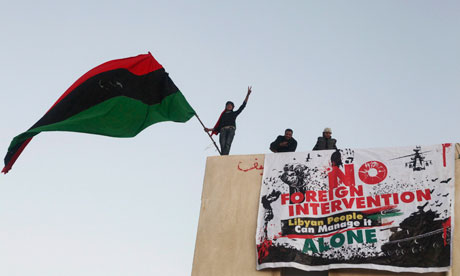
Secondly, it's a response to current, awful, events not a long term plan. The longer term impact of military intervention is not even part of the thinking behind this scheme. For example, who exactly are we backing? I'm for the rebels against the regime, obviously, but Western intervention inevitably means strengthening the hand of one faction over others. I'm unconvinced we know what we're doing, or that if we do, we have the best interests of Libyan people at heart.
There are some forces in Libya who are calling for a no fly zone and others who oppose it. By enforcing military action on the say so of one group of rebels over another we are having a far more wide ranging impact than just doing what has been asked of us 'by the rebels'.
Thirdly, will it do any good? My understanding is that the Libyan air force is a tiny part of its military strength, which lies mainly in ground forces. So we would be throwing an air invasion into the mix without significantly depleting the regime's capacity to murder its own citizens. Indeed we would be strengthening that ability.
The siren calls to stop the murder are understandable, but a no fly zone *wont* stop the murders, only intensify them and in the eyes of some waverers in Libya legitimise them.
Fourth, what would the wider impact of military intervention in the revolution mean? In Tunisia, Egypt, Iran, Saudi Arabia or Yemen the political implications of Western interference in what feels like a very home grown series of revolutions would be significant. The population of Saudi know that the West backs their dictators and to see their willingness to use military might, just as they did in Iraq, could hold back those struggles.
We are propping up corrupt regimes in Iraq and Afghanistan with the use of lethal force. To give the stamp of legitimacy on an extension of the right to use lethal force in any oil rich country we choose is dangerous. We are not the world's policemen, and even if we were it would not give us the right to stop black nations in the street and demand to know if this is really their country. *
However, the Arab League have backed a no fly zone, so does this mean it is legitimate? Well, the Arab League is a collective of 22 dictatorships who all buy weapons off the West and are scared shitless of their own populations taking the kind of action we have seen in Libya, Egypt and Tunisia. So it cannot be regarded as the authentic voice of the Arab people, only of their dictators.
If you look at the list of member states of the Arab League you will see almost all have been rocked by protests in the last month. Of course they want their arms dealer friends flying war planes overhead, it gives them a sense of security. What better way of locking down those forces within their own countries who may be considering deposing them?
So am I in favour of doing nothing? No. I am in favour of our governments restraining their natural instincts to see killing someone as the way to solve an issue. I am in favour of the rebels continuing their brave fight to overthrow the Libyan government, just as others have done in recent times. I'm in favour of yet more Libyan servicemen and women laying down their arms or defecting with their equipment. Hardly a Utopian position.
What it does mean is having a little bit of steel in the belly. Bad things are happening, but that is no reason to make them worse or to do the first thing that comes to mind just because it is doing 'something'.
It also means having the tiniest bit of humility and understanding that the West can't just step in and sort out the problems in an African country by killing a few Africans. We may find that not everyone is as grateful for our help as we thought they might be.
In order to be true friends of these revolutions we have to accept that these are not our revolutions, but indeed revolts against regimes we have spent many years doing business with. The bullets and shells Qaddafi uses to rain down on his own citizens were manufactured here, and frankly many people in the Arab world know it to their cost.
Is Question Time Biased?
Every week on BBC's political panel discussion show Question Time we seem to have one, or more, utterly rabid right wing fiends. The spawn of Melanie Philips, as well as Shelob herself, stalk menacingly into the studio cackling as they go. At least that's how it feels to me.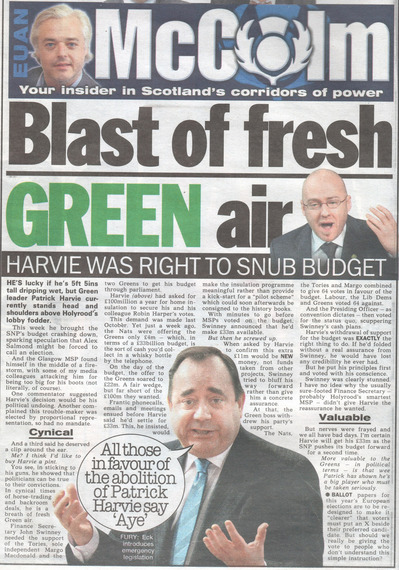 It turns out that the right think it's infested with Communists, a claim so unutterably off the wall as to literally make my head spin round. No, hold on, not literally.
James Dellingpole rails against "the appointment of Vladimir Stalin – or “Nicolai Gentchev” to give him his current SPECTRE agent name – as Question Time’s new editor", an appointment caused by its imminent move.
Now I've met Nicolai Gentchev who is, or was, a Trotskyist and a very nice bloke. He also came across as someone who is professional, and more than capable of objective distance. I miss hearing his name as an editor of the Today Programme but I'd not noticed references to deflected permanent revolution in any of John Humphrey's pieces during his time there. More's the pity.
Personally I think if Gentchev's appointment means less Melanie Philips' and more David Mitchells I think the audience would heartily approve, but it may well not signal a noticable change of direction.
As the exception that proves the rule this week saw Green MSP Patrick Harvie's first ever appearance on BBC QT despite the Scottish Greens having been represented at Holyrood from its inception in 1999. This prompted twitter to cry "Who's this bald bloke? He's rather good."
Even Working Class Tory paid grudging tribute to him saying "The Green guy, Patrick Harvie, rambled on at several points, but the audience seemed to like it. He was the most left-wing panellist they've had on in about three years. He even looked like Lenin."
I'm not sure if he actually is the most left-wing panellist they've had in three years seeing as Bob Crow, George Galloway and Salma Yaqoob have all appeared in that time, and they're *almost* as Lenin-esque as Harvie. However, I know how to take a reflected compliment - so thanks!
However, what is clear is that the Greens provide a distinctive and interesting voice expressing a significant current of thought in this country. They should be part of the mix more often rather than as the occasional after thought when Melanie can't make it. As it happens her eminence Caroline Lucas will be on QT in two weeks time, they're like buses you wait all year for a Green on TV and then two come along at once.
There is a real problem that as the three main parties have come closer together politically (with two of them currently fused) mainstream politics is simply too shallow a pool to draw an interesting panel from that can represent the real political views of the country. One reason to support Jeff's petition to include Harvie in the upcoming Scottish leaders' debates.
Of course, I wouldn't be for excluding the professional ideologues of the right wing press. These off the shelf, bought and paid for opinionbots are part of the political geography of the country, but the same is just as true of those to the left of Labour and no matter what the right think they are simply far too scarce on QT leaving a good proportion of the audience tearing out their hair and feeling unrepresented.
Friday, March 11, 2011
Japan Swept by Natural Disaster
I'm sure everyone who's watched the unfolding events in Japan has been just as horrified as I have. The earthquake and tidal wave that followed are a stark reminder of the power of the planet we inhabit.
Hundreds dead, thousands missing and an as yet unknown long term toxic an polluting impact across a highly populated area. Trains, planes, ships and cars have been swept away like so many toys.
The Fukushima nuclear power plant was caught up in the catastrophe raising the possibility of leak as cooling systems shut down and the station switched to battery power. We certainly wish the authorities the best of luck as they battle to keep the station safe. It is rare for these kinds of events to effect nuclear power stations but, particularly in an increasingly unstable climate, the impact o such a disaster d not bear thinking about. (I was talking about tis the other day on pod delusion).
The good news, if that is the right word for it, is that the wave seems to be dissipating and is unlikely to significantly effect Australia, Indonesia or vulnerable Pacific Islands. It's also true that the numbers of dead are currently far lower than they could have been due to good building standards.
A poorer nation would have been obliterated by these crushing events. Never the less Japan must be reeling, my thoughts are with them.
Wednesday, March 09, 2011
Your Current Misc
Let's have a Scottish Green round-up to celebrate the fact that Patrick Harvie MSP is going to be on Question Time (BBC 1, 10.35pm) tomorrow. Good luck Patrick!
- First to Glasgow where intruders entered the Free Hetherington Occupation claiming to be Young Greens. Their claims were made bolstered by the fact that three of them were naked. Oh yes.
- Robin Harper, the Green Party's first MSP, has had some fantastic coverage in the Scotsman today under the headline Jolly Green Giant. He does poke fun at the left though, so brace yourselves!
- Lalland Peat Worrier takes a look at Green tactical voting in Glasgow Southside.
- Scottish Liberal discusses drugs, the Greens and being fair to each other.
- The third poll in a row puts the Greens set to triple their MSPs and hold the balance of power in Holyrood. Blimey. Mind you, it'll only happen if people vote that way. Front page Headline? Green Coalition could hand Labour Power.
- Finally I'll point towards the campaign for a 'Warm Scotland'. Utopian dreamers the lot of them.
Placebos
I was interested to see the reports that half of German doctors prescribe placebos. Presumably not all the time no matter what, only when they feel appropriate.
These doctors say the treatments often work, and I cautiously believe them, particularly when they were used instead of anti-depressants. The placebo effect is a documented fact, even if we don't quite know how it works - but it raises interesting ethical and legal dilemmas.
Is it right for a doctor to 'trick' their patients, even if it may help their condition? Is the doctor immune from prosecution if he or she prescribes a placebo and the condition worsens?
These placebos even include injections and sham surgeries, which seems a bit much, but I'm probably being squeemish.
The German equivelent of the BMA advised that better training should be given on the use of placebos and, most importantly, for international guidelines on their use. That seems quite sensible to me.
Tuesday, March 08, 2011
A disturbing vision of our free market future
Let no one tell you that the Lib Dems are the cuddly part of the Coalition. Some would have you think they are the grizzled fur rather than the yellowed teeth of this rabid dog, but when it comes to the number one issue of the day, public services, the parties are of one mind. Take a look at Vince Cable's recent Trade and Industry speech at Mansion House. Once he was the darling of the liberal establishment, what's he got to say about his achievements so far?
Well, he begins with the things he's really proud of " We have succeeded where our predecessors failed with a clear programme to stabilise and privatize the Royal Mail. We have put in place unprecedented higher education reforms. I could go on." But we hope you don't Vince.
He chillingly then outlines what his plans for government are; "We know business wants action, not words. That is why... we embarked on a Growth Review, an exercise every bit as rigorous and challenging as its spending equivalent. It has challenged every department to get behind the growth agenda, critically examining every policy that might get in the way or hold back our vision for private sector recovery."
So every government department has been challenged to harness itself to the needs of the private sector rather than, say, delivering a good service to disabled people or teaching kids to read and write. So the Department for Health has to get behind the 'growth agenda' ensuring it doesn't hold back 'our' vision for private sector recovery... glad no one is getting sick these days then.
He wants to "encourag[e] what Keynes called the “animal spirits” of entrepreneurs." That's quite interesting as I had a vague feeling I remember something about this, so I quickly dug up the Keynes quote...
"Even apart from the instability due to speculation, there is the instability due to the characteristic of human nature that a large proportion of our positive activities depend on spontaneous optimism rather than mathematical expectations, whether moral or hedonistic or economic. Most, probably, of our decisions to do something positive, the full consequences of which will be drawn out over many days to come, can only be taken as the result of animal spirits - a spontaneous urge to action rather than inaction, and not as the outcome of a weighted average of quantitative benefits multiplied by quantitative probabilities."In other words Cable explicitly endorses something Keynes thought helped cause instability and was a product of 'optimism' rather than analysis. I wont dwell on this, he wont be the first, nor last politician to find a natty phrase regardless of its actual original meaning.
So let's move on to regulation. Most thinking people agree that the financial sector needs to have firmer regulation to prevent another financial sector crisis, or at least ameliorate it when it comes. They also happen to see that Barclays pay just 1% in Corporation Tax and think "Bloody hell, literally the richest are paying the least." So, what does this progressive have to say about regulating these loose dogs?
"Successive governments have made ritual commitments to reducing red tape but have added to it, inconveniencing businesses large and small." and then...
"Within my own department I have already taken action, to remove regulations which impede the ability of businesses to expand and take on people. This includes a review of labour market regulation specifically to stop cases reaching employment tribunals without a prior attempt at reconciliation and restricting access for unfair dismissal cases to the employed for two years rather than one."
So restricting workers access to employment tribunals and reducing their rights at work. How progressive of that cuddlesome Mr Cable! He goes on " Another useful step forward has been the steps we have taken to stop “gold plating” EU regulations and fight damaging regulatory impositions from the EU like the Working Time Directive."
He then talks about planning regulations being a barrier to growth, and how in the finance sector "My first priority was to ensure that the rapid deleveraging should not choke off, or make prohibitively expensive, the supply of credit to good British companies, especially SMEs."
This Growth Review he's outlining sounds more like the driver of a runaway train putting his foot on the gas. At the very time when the public have started to demand better regulation, and for business to pay its way Cable's emphasis is to advocate liassez faire capitalism without addressing why the crash happened in the first place. In fact he himself summarises his approach as "robust and unsentimental withdrawal of Government from unnecessary interference."
Jeezo.
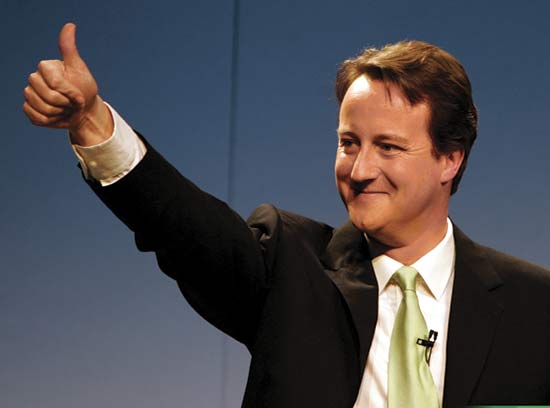 So Cameron must be saying something even worse. Nope. He's singing from exactly the same hymn sheet.
 At the Conservative spring forum he launched an attack on public sector workers in Whitehall and town halls who were the "enemies of enterprise". He denounced the "the bureaucrats in government departments who concoct those ridiculous rules and regulations that make life impossible".
When it comes to commissioning goods and services Cameron says we'll be "throwing open the bidding process to every single business in our country – a massive boost for small businesses, because we want them to win at least a quarter of these deals".
Competition in the NHS is just the tip of the ice burg it seems.
Meanwhile the CBI and the City are lobbying to pull down regulation and end high taxes for the richest. the head of the CBI "urged Vince Cable's Department for Business and Skills to scrap unnecessary regulations and make good its plans to boost exports with the offer of credit guarantees and loans."
I'll end with the Cameron's speech on his arms sales to dictators trip;
He boasts about "loading up a plane with business people"? I thought he was spreading democracy, no? At the very least I assumed he'd say it was a coincidence but he's right out there implying they maybe didn't even want to come and he's there "loading" them onto the plane, he's forcing them to sell their guns and bombs to people who really, really may need them very soon."Here's another thing I've personally been doing. Selling Britain to the world.
"You know some people are disdainful about that. They see me loading up a plane with businesspeople and say - that's not statesmanship, that's salesmanship.
"I say: attack all you want. But do you think the Germans and the French and the Americans are all sitting at home waiting for business to fall into their lap? ...
"So let met tell you: while there are contracts to be won, jobs to be created, markets to be defended - I will be there ...
"I'll be there not just because it's my job, not just because it's my duty, more than that - because I passionately believe - no, I know that this country can out-compete, out-perform, out-hustle the best in the world."
He passionate believes that we can "out-hustle" the best in the world. I agree, but think we must be stopped. This vision for UK PLC where every public body is chained to the needs of business is utterly horrifying to me and frankly I think would be an historic crime if allowed to happen.
Guest post for International Women's Day
This is guest post by Jessica Goldfinch for International Women's Day. Thanks Jessica.
How I wish that this 'day' didn't have to exist, sadly it does and it needs to exist.
Women still earn in the regions of 17% less (full time work) and 36% (part time work), than their male counterparts for the same job descriptions. My union, 'Unison', regularly sends out reminders to get you pay level checked.
Looking at our televisions women are depicted as superfluous and fickle. Like male characters, this might be alright for mutual comic or near true-to-life depiction purposes, but when it seeps into every pore, I get angry. Women are only good for dodging chocolate muffins in the street getting confused over which damn yogurt to eat, musing over pebble shaped air fresheners and also the most important job of all - holding "compare-your-shopping-receipts-parties" - I must do that next week!
I get angry at having to buffer my daughter at every turn: at the corner shop, supermarkets, petrol stations, newspaper stands - so-called Lads mags, Sunday Sport, pornography and fickle displays of women are everywhere. What are boys and girls supposed to make of this?
The first time my daughter exclaimed in a petrol station queue, she was 5 years old: "What are big jugs mummy?" The queue members looked at me as if I was some permissive lax parent. I found the courage to point out that it was the shop that was wrong and that my child and I should have a right to buy a pint of milk without having to have the producers of milk thrust in our faces. I now challenge and have managed to get numerous shops to consider their responsibilities and change to dust covers and appropriate displays.
Women's bodies are for consumption everyday and in every conceivable way. Increasingly, this is now becoming a problem for boys and men, but not any where near to the same extent. If we saw men depicted in the women are in local shops etc., there would be uproar.
Pornography: porneia - the lowest class of whore in ancient Greece; graphico/graphia - graphic depiction.
So, we have it: The Graphic Depiction of the lowest class of Whores, every day in every way. Think about what that means for a moment; it's truly horrible.
I am not so naive as to think that the porn industry or the depictions of women as fickle will disappear, but I do believe that each and everyone of us should consider our part in these depictions. Our daughters, our mothers, our girls, our women and increasingly boys - we should have their backs at every turn and demand a 'public' space in which we can all feel safe.
Sunday, March 06, 2011
Thinking aloud
This Friday I'll be missing the funeral of a friend of mine. Not because I can't make it, although it would be difficult to get there all things are possible if you put your mind to them, but because I don't think I could bear it. Possibly cowardice, but more likely because I feel like I'd explode with hypocrisy if I attended. He was a kind and generous man, softly spoken and cautious with his emotions. A real pleasure to be around and, in the intimacy of a one on one conversation, thoughtful and gently funny. He was also ready to talk about wrestling with his mental health issues in a self deprecating and darkly humorous way that always blunted the sharp edges of the topic.
We enjoyed each others' company and, once we lived in separate cities, would occasionally keep in touch with the odd text here or email there. But no more than that. Frankly we drifted apart. He wasn't even on Facebook or Twitter for goodness sake!
One drawback of being an emotionally self-sufficient introvert, which I am, and not requiring much from my friends is that, of course, those friendships can so easily remain at arms length and detach into nothingness. The upside is that if I never saw another human being in my life I'm not sure I'd be that bothered (as long as the shops still opened obviously).
If it's emotional sustenance you need I'm really not your man. Although I'm happy to discuss personal and emotional subjects, like right now, even then it will be in a cool analytic way without the visceral rawness of the hormonal tide that might actually be sweeping through me.
When I heard that my friend had killed himself last week I found myself gasping for breath. It was a moment we'd explicitly talked over and how his (then potential) suicide would effect his friends and family. I know I was pretty hard on him about it at the time, that it was his decision and his responsibility, no-one else's. Now it's real I'm less sure.
My thoughts soon turned to the friendship we'd shared and, well, the inadequacy of what he received from me. I'll be honest, those feelings of indirect culpability have been troubling me over the last few days.
Although I'd told him he alone was responsible for this decision, that he had yet to make, the fact is we are our brothers' keepers. We can make a choice as a society of individuals how much we're going to look out for one another, how connected we're going to be, and that decision has a real consequence.
I didn't put a rope around his neck, but I might as well have watched and done nothing. At least those closer to him tried, at least they were there for him and let him be there for them. I know in his heart he felt he was unneeded in the world and, as one of those who did not need him, in any real sense, I let him drown and he didn't even know I wasn't there.
We can't be there for everyone, but we can let people be there for us. The greatest thing you can do for another person is to let them help you. Their self-worth depends upon it.
Friday, March 04, 2011
Guest Post: High Speed Rail
This is a guest post from my friend Cathryn Symons who blogs at Camden Kiwi After the debate in Cardiff on High Speed Rail I thought it would be good to get someone who knows about it to explain the problems with HSR2. (See also Caroline Lucas in the Guardian) High Speed Rail poses a dilemma for many Greens. We are in favour of public transport, but also have concerns with the proliferation of long-distance commuting because of the impact it can have on towns and communities which become dormitory places for the mighty metropolis.
We know that rail is one of the most cost-effective and environmentally friendly modes of transport, both for people and for freight, but are also concerned at the environmental damage and carbon emissions caused by large construction projects and aware that rail can be a major energy user. Many Greens are also concerned about the impact of high speed rail on local people and their environment.
The recent government proposals to build a high speed rail link from London to the North, starting with a dedicated London-Birmingham line called HS2, have led to strong debate in the party. It is a debate which was finally resolved in Cardiff last weekend, when conference agreed the Green Party does not support the HS2 project as it stands, and will only support high speed rail when it is clearly shown to be part of an overall policy which reduces demand for travel, CO2 emissions and energy use.
So far, much of the opposition to HS2 has come from local groups who are, quite rightly, concerned about local impacts. HS2 would pass through areas of outstanding natural beauty and disrupt many attractive areas in the Chilterns. In my local area of Camden, there is concern about the loss of social housing as Euston station is expanded, and the effect of tunnelling under Primrose Hill. These are issues which could be sorted out if the project's backers wished to do so - routes can be changed, social housing replaced and even tunnelling work managed to be less disruptive. The fundamental issues of ever increasing demand for travel, high energy use and CO2 emissions are far harder to deal with.
The HS2 proposal will be, at best, neutral in terms of carbon emissions. The first London-Birmingham leg will not be available until 2026 by which time we will need to have severely reduced emissions, and for a major project like this to not contribute at all seems unreasonable. In fact, the project's backers have barely even tried to establish the carbon budget for the project.
Perhaps the most severe impact of HS2 comes from its dependence on enormous levels of growth in domestic travel over the coming years. As with building roads, there seems to be a 'predict and provide' approach, which simply indulges unnecessary and expensive travel. Birmingham will become part of the London commuter belt, in the way that Peterborough, Cambridge, Milton Keynes and Brighton already are. It is hard to see where that kind of growth will stop, or what use it is. Although claims are made that the line will reduce the North-South divide, and help to regenerate the North, there is no evidence given for this.
HS2 is not a sustainable project. It is possible that, in this small, densely populated country of ours, high speed rail will never really be sustainable. The onus should be on those promoting these projects to show that they benefit society and the environment.
So far, most of the resistance to HS2 has been local and risks being labelled 'nimbyism' and so dismissed out of hand. But there are wider issues here, which the Green Party has now acknowledged. Campaigning against this damaging, wasteful project needs to embrace both these wider environmental and social issues and the concerns of the Chilterns householder who finds a railway line planned for her living room.

A few links and that
- This Saturday the 6 billion ways conference takes place in London. If you can go, go.
- Research Professional covered the Green Party conference science progress.
- Bristling Badger says climate camp is dead, long live climate action.
- Harpy Marx has an excellent Carnival of Socialism up now.
- Camden Green Party on the big hoo ha in the streets at budget setting time this week.
- Adelaide Green Porridge Cafe has a great vid the chain of fools.
Thursday, March 03, 2011
Edinburgh Diary Dates
If you know of other funky lefty things going on in Edinburgh let me know and I'll add them.
- Saturday 5th March
11.30am - Edinburgh City Council Chambers, Cockburn St.
Then moving on to some of our favourite banks.
Courtesy of Edinburgh Uncut
Demonstrate at the Scottish Lib Dem conference
Perth Concert Hall (not Edinburgh)
Assemble 11am
- Sunday 6th March
From noon to 11 pm
Teviot bar, Bristo Square
£4 entry
- Tuesday 15th March
Queens Hall, 85-89 Clerk St
EH8 9JG
0131 668 2019 for tickets
Bernado's Political Book Sale
45 Clerk St. EH8 9JQ
6.30 - 8.30 pm
- Friday 25th March
Bannermans, 212 Cowgate, EH1 1NQ
Admission £8
Wednesday, March 02, 2011
Meet the Edinburgh Central candidates
It's hustings central here at the Daily (Maybe) at the moment, although this one is a change of pace from all that Green Party stuff. I'm based in Edinburgh at the moment and in the upcoming Holyrood elections the Greens stand on the second, proportional representation, ballot paper but not in the First Past the Post constituency lists.
This presents people like me, who'd naturally vote Green on any ballot paper put in front of them, with a dilemma - which of the other main parties to vote for? I could, of course, spoil my ballot but I've never been quite that tribal. While there are disturbing similarities between the parties some candidates are always going to be better than others.
To help resolve this conundrum I wrote to the four candidates for Edinburgh Central with three simple questions. They're busy people so an in-depth questionnaire was unlikely to get any response.
The SNP and the Liberal Democrats (in that order) got back to me really quickly with very friendly emails. I heard nothing from the Tory, even after a follow-up email, although in fairness his answers would have had to have been pretty damn good to get on my short list!
Labour's candidate didn't get back to me but someone else did with a terse email asking for my address. I'm not quite sure why that was necessary but I supplied it anyway - that was the last I heard from them. My vote's clearly not worth very much to her then, at least not as much as knowing my address is.
Anyway, thanks to Marco Biagi of the SNP and Alex Cole-Hamilton of the Liberal Democrats for their responses. Here's what they had to say, both really interesting I thought - for different reasons.
 1) The cuts are dominating the headlines at the moment. Are you in favour of using the Scottish Parliament's tax raising powers to off set job losses and protect public services? If so please do give a specific example.
I support fair and progressive taxation. The existing income tax power is neither. As Holyrood can only change the base rate the burden would fall on virtually all those earning. A 1p rise in the Scottish Variable Rate would mean a £60 per year for a full-time minimum wage worker - and frankly people working for £5.93 an hour 40 hours a week should be paying less tax and not more.
Even using the full 3p of the power would not have been enough to cancel the £1.3bn cut happening just this year. The SVR was intended never to be usable and its designers did their job well. Don't even get me started on Council Tax. It was invented by a Conservative Party who were trying to go as little distance as possible from their beloved poll tax and is even more regressive than VAT. Freezing it is progressive but I'd rather replace it entirely.
The Scottish Parliament's tax raising powers however also cover business rates. In the SNP policy team I helped conceive the Large Retailers Levy as a way of trying to find ways to raise revenue from sources who could even now afford to pay a bit more. Unfortunately this fell under yet another alliance of convenience of the other three big parties.
Other revenue options at a local level are worth exploring, such as scaling empty business relief. Personally I also think we should be courageous and make use of the provisions to introduce a carrier bag charge under the Climate Change Act, provided the money goes straight to green jobs schemes. I'd also like to see money that is Scotland's by right - like the Fossil Fuel Levy or consequentials from the London Olympics - coming to Holyrood. Unfortunately when it comes to enforceability the Barnett Convention isn't worth the paper it isn't written on.
2) I received a free education, my Dad was in the same job for almost all his life and it seems that everywhere I look services, like local libraries, are being closed down. are we moving backwards as a society?
There's a trap here of falling into a giant postmodern discussion about the meaning of progress. Yes, there are fewer libraries in the country than fifty years ago but there are more nurseries (as just one example).
Services change based on the demands of the public and their willingness to pay, and many things the government provides now weren't even thought of back then. Employment has changed almost unrecognisably too - more fragmented and less unionised yes, but also with better rights in workplace safety and minimum pay.
Movement though isn't something that should happen *to* people, it should happen because of them. There can be a better future if people are willing to engage and be part of it - and if people go against those who present dystopia in the language of progress (not that I'm thinking of any Big Society in particular).
The SNP restoring free education by abolishing the Graduate Endowment was the embodiment of a group of motivated people choosing to put one their principles into action and reverse a direction of travel - towards ever more charging - that until then had seemed unstoppable. We chose party politics.
Some people prefer to lobby politicians through interest groups, but it's a lot easier to win an argument with an elected representative if that elected representative agrees with you in the first place. And, incidentally, when it comes to free education, wild horses couldn't shift me - no tuition fees. End of story.
3) I'm voting Green on the list. How would you pitch for my vote on the constituency paper?
That question is a bit of an elephant trap and it would be very easy to be cynical. I'm standing for the party that ended PFI, froze an unfair tax, increased the police to record highs and took class sizes down to record lows, restored free and funded higher education, abolished prescription charges, and focused our support for industry on small business and the new, emerging low carbon technologies.
We've done a lot and we'll do even more if and when we're able to make more of the big decisions about the economy, jobs, pensions and our relations with the rest of the world from here in Scotland. That's the same list of achievements I'd give to anyone on a doorstep, and I'd be doing you a disservice as a voter if I did otherwise. We have an environmental record that is second to none, and I'll expound it any time and anywhere you want. But that's not what you asked.
My answer in a nutshell? I think you should vote SNP on both.
 1) The cuts are dominating the headlines at the moment. Are you in favour of using the Scottish Parliament's tax raising powers to off set job losses and protect public services? If so please do give a specific example.
We live in unprecedented times, the UK's structural deficit was costing us £120 million a day in interest payments alone, that's the equivalent of ten new primary schools a day going straight into the pockets of international financiers. So whilst I didn't get into politics to make cuts, I recognise that in this instance something had to give. Labour have a nerve when they suggest that the cuts the coalition are making are deliberately targeted at the poor and vulnerable.
By their own admission, they were going to cut public spending by 16% whilst renewing trident and keeping ID cards, the coalition are only cutting 19% but not renewing trident and scrapping ID cards, so under Labour vulnerable groups would have suffered just as much, because they depend disproportionately more on public spending.
With regard to raising tax in Scotland to offset the need to cut public spending, I'm not convinced. With inflation at 4% and the cost of living soaring as a result, the last thing hard up families need is to pay more tax. I do agree however that the poorest should in fact pay less tax. That's why I'm proud that Lib Dems in government in the UK are moving the income tax threshold to £10,000 meaning that over 90,000 Scottish families will soon pay no tax at all.
I think we can be more sophisticated in Scotland about where the cuts fall and it doesn't have to mean job losses or service closures. Public sector pay is a major area that could provide a saving, I think it's outrageous that hundreds of public sector bosses earn more money than the First Minister and with no accountability. Similarly In think that by delivering services in partnership with the voluntary sector, we can do a lot more, more efficiently and for less money.
2) I received a free education, my Dad was in the same job for almost all his life and it seems that everywhere I look services, like local libraries, are being closed down. are we moving backwards as a society?
A lot of the problems we face are being experienced in many developed countries around the world, but they are worsened in the UK by the size of our deficit and the burden of debt repayment we face. But everywhere I see reasons to be cheerful- in the determination of community groups and charities pulling together to get through these difficult times. Sometimes adversity brings out the best in people and you can see that in local campaigns springing up, like the successful campaign to save Dalry swim centre.
We will come out of this slump with a greater sense of community and an understanding that we need to be more responsible with public spending in the future, to me that suggests we are in fact moving forward as a society, despite the problems we face.
With regard to free education, Students in Scotland pay no tuition fees, because the Lib Dems in Government in Scotland scrapped fees after Labour first brought them in. We intend to preserve free education in Scotland as it should be a right and not a privilege.
3) I'm voting Green on the list. How would you pitch for my vote on the constituency paper?
As a Quaker, a voluntary sector worker and a committed environmentalist, I have always had a great deal of sympathy with the green movement. Our manifesto for the forthcoming elections is packed with policy to make our country and our economy more sustainable and cognisant of our responsibilities to the world around us.
This includes a dramatic refocusing of our economy towards the renewable energy sector, something which, if done correctly, could provide thousands of new jobs. We are also committed to the full implementation of the Climate Change Act. The Liberal Democrats were the only major party consistently to argue for the 42 per cent reduction in emissions by 2020, and we are proud of the role we played in securing the inclusion of cumulative emissions, sectoral targets and tough annual targets within the Act. Concerted effort is now required to meet those targets, and we recognise that sustained, early action over the course of the next parliamentary session is crucial.
 Annie Leonard and co. (
 Adrienne Mayor (
 Ed Howker and Shiv Malik
 Floella Benjamin (
 Mark Watson (
 Tim Jackson (
 David Wilson (
 Clive Lord (
 Nickie Roberts
