Sunday, March 29, 2009

Weekending: carnival time

It's been a light blogging week for me - but you can rest assured that weekending will be the last to go. Or the first. Or somewhere in the middle.

Video of the week is an old Party Political Broadcast from the Greens... but there's not a single PPB out there like it. This is a very fine thing indeed.

Saturday, March 28, 2009

Tens of thousands of protesters greet the G20


Award for best placard of the day (above). I'll do a proper report later, promise.

In the meantime take a look at the BBC coverage which says that the police estimated 35,000.

Friday, March 27, 2009

Green Ink - no thanks!

The internet is well suited to the green ink brigade of incandescent fury. You don't need physical courage to spout bile at people, and there are so many outlets where you can express yourself that, unlike in real life, no one can shut you up except you.

An added aspect to this is that the technology is constantly developing so shared understandings of what the proper etiquette have difficulty keeping up. Most people probably have a good idea of the etiquette when commenting on blogs for instance, and when they break those norms they know they are being dicks, rather than being dicks unintentionally.

But what about friend requests from people you don't know on Facebook? If someone you didn't know came up to you and said "be my friend" you may feel awkward or uncomfortable but if you choose not to take them up on the offer you'd be unlikely to lose much sleep over it, but somehow the webnet adds new dimensions of uncertainty, and even if you think you know what the done thing is there certainly is no guarantee that the person you're interacting with agrees.

Which brings me to this excellent post by Dave Gorman. Of course it's the post that's excellent not the experience he describes of being harassed online simply because two of the 21,453 people who've chosen to follow his twitter "tweets" were mortally offended by the fact that he didn't follow them back.

Their behaviour began at peevish, swept through juvenile and sprinted straight to disgusting harassment and criminal behaviour in less than twenty four hours. All because they felt slighted by someone quite reasonably choosing not to pretend to follow tens of thousands of people and opting to have more meaningful interaction with a manageable subsection of the online masses.

I recommend reading his post on this as it's genuinely interesting and brings up a lot of themes about the net that are well worth discussing. I promise it isn't just a long whinge about how some people on the internet were horrid to him, although Christ knows we've all been there and even if it does go with the territory it doesn't make abusive behaviour right.

These charmless fools are obviously out of order but because netiquette is ambiguous, contested and needs to take into account when people are just genuinely upset and make one off errors, it seems to me that what is acceptable online is even harder to fathom sometimes than what's acceptable in meatspace.

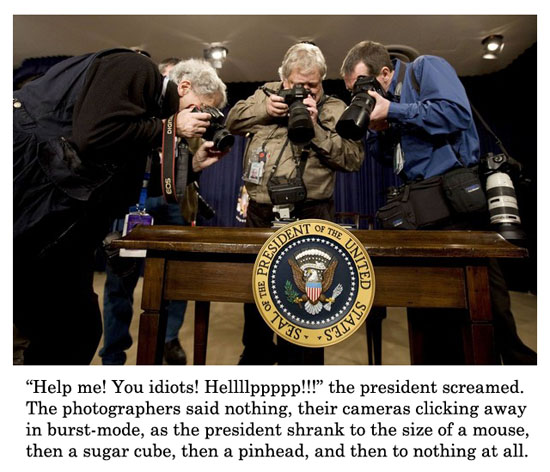
For instance I've used a picture from Dave's website to illustrate this post. If it wasn't for the fact that I was making this particular point right now it's unlikely I'd have attributed where it had come from or anything. That's not just an illustration of precisely how gangsta I am, but also potential rudeness... although not on this occasion. Unless you count stealing his photo without permission, which, granted, some people might see as a breach of the rules. But basically I think that this kind of stealing is alright, so where does that leave us?

Personally I think that it's usually pretty obvious when someone is behaving like an arse and they should just stop it - but it's more important when it comes to political blogging than when you're posting up pictures of cats with post-its stuck to them (important though that endevour is) because anything that draws us away from the points being made or poisons the well of discussion sets political discussion back for no meaningful gain.

Rudeness has its uses, and there are far worse things that can happen to someone than being called a name, or having their words of wisdom deleted because they're too boring, but in my mind green ink has no value at all, and people who use it often find themselves covered in the stuff as the world simply turns quietly on, oblivious to their outrage.

Green Women Bloggers

Having just seen a mini-email discussion about women who blog and are in the Green Party and, simultaneously, not having the time to write a fulminating diatribe on the woes of modern capitalism I thought I'd do the next most constructive thing and list them.

This method has the additional advantage that if I've missed any off my list the unhappy blogger who meets the requirements (member of the Party, in the UK and is a woman) can say - Yo, dude, where's my funky blog palace? I would then add their funky blog palace - tout suite.

As you might expect some are updated more than others, and some serve different functions than others but I thought a heads up might be appreciated.

Caroline Lucas
Cathy Thinks Again
Earthenwitch
Emma Bierman
Flesh is Grass
Gaian Economics
Green Ladywell
Leila Kiersch
Maya De Souza
Philobiblon
Sarah Cope
Shan Oakes
Shirley Ford
Sian Berry
Vicky Wakefield Jarrett
Guardian regulars
Caroline Lucas
Jean Lambert
Jenny Jones
There is also the re-elect Jean Lambert blog.

As I say, please do let me know if I've accidentally missed you off. I might not know your blog, I might not have realised you're in the Green Party or, and it's an outside possibility, I might simply have left you off in error - which would never do.

Wednesday, March 25, 2009

Coming up

This Thursday: Caroline Lucas on Question Time BBC 1 (which will be available on iPlayer)

This Saturday: Put People First demonstration to "welcome" the G20.

This Sunday: The Carnival of Socialism hosted by A Very Public Sociologist

Tuesday, March 24, 2009

Going nuclear: in discussion with Chris Goodall

Quite a few of the readers of this blog will be aware there has been a mini-storm over nuclear power recently, with a group of reasonably high profile environmental campaigners calling for a rethink on the question of nuclear power. One of the threads that helped form the green movement were the anti-nuclear campaigns and organisations like the Green Party take a very clear and uncompromising approach in their opposition to new nuclear power stations.

I thought it would be worthwhile opening up a discussion on this issue with Chris Goodall, who is the Green Party's parliamentary candidate for Oxford West and Abingdon and one of those voices calling for a new approach on nuclear.


CHRIS: Reducing the carbon emissions from electricity generation is vital. The Climate Change Committee showed in December that unless the UK almost wholly decarbonised electricity production we have no real prospect of meeting our emissions reductions targets. I haven’t seen any Greens disputing this.

Today about 95% of our electricity is made using fossil fuels. So in the space of about 20 years we have to utterly transform an industry with annual turnover of about £50bn. This is, to put it carefully, a very substantial challenge.

That challenge is currently becoming more difficult not less. Coal prices have collapsed. Carbon pollution permits now cost a third of what they did a year ago. So coal is the fuel of choice for power generators. As all Greens know, this is the worst possible outcome for climate change.

At the same time as coal revival, renewables have suffered reversals. The big offshore wind projects are all struggling to get financed. Any proposed Severn Barrage will suffer in a similar way. Venture capital is not available for many of the most exciting wave and tidal technologies. It seems to me that Greens need to reassess nuclear because we need all the non-carbon sources of electricity that we can lay our hands upon.

About a third of the UK’s existing power generation capacity is due to close by the end of the next decade or shortly after. If the UK doesn’t get replacement low carbon technologies running by about 2016, the lights will (occasionally) go out. It’s a cliché, but it’s almost certainly true. We will also be forced to keep the old dinosaurs of coal-fired power stations open. In my opinion, it is irresponsible of us not to ask ourselves the question – which is the lesser of these two evils, coal or nuclear? I regretfully conclude that the answer is nuclear. (More details of this argument on Carbon Commentary)

Several people have said to me over the last few days that Green policy is to focus on energy efficiency, principally house insulation. This is good of course, but people may not be aware that very little electricity is used for home or business heating. (Some people off the gas grid use electricity for heating and some factories and warehouses use radiant heating but this is broadly true). Electricity, already about 38% of the UK’s total emissions, is likely to become more important rather than less as we switch to electric cars over the next decade. We are going to need more electricity, not less, and ensuring that this power is made with minimal amounts of CO2 emissions is a vital aim.

I hope I am not being dogmatic about this. I’d love to see a carefully thought-through plan that bases the UK electricity industry around renewables. (My book Ten Technologies to Save the Planet gives one view of how this might be possible). But Greens like me also need to recognize the huge public opposition to onshore wind, the escalating costs of offshore and the very difficult issues of how to connect large scale renewables to the electricity grid. Our rate of progress on decarbonisation of electricity is so slow that I am personally finding it difficult to work out how 400 terawatt hours of electricity is going to be produced each year without nuclear power.


JIM: The first thing I want to say is that I don't think you're being dogmatic and you’ve been far more nuanced on this than the Independent made you out to be. There are a number of points where we disagree though.

We don’t have space to list where we agree so I’m going to take it as a given that we both want to radically increase the amount of energy we get from renewable sources whilst drastically cutting our level of energy consumption. It seems to me the points of disagreement are more about how much we can cut and how significant a contribution renewables can make to our energy mix.

We are also looking at different time scales. I’d say that if we haven’t already made massive inroads into this problem in twenty years time we’re in deep trouble – and whilst we’re waiting for nuclear to come online we’re still contributing to it. One big advantage of renewables over nuclear is how quickly they can be brought online so that we can make near immediate contributions to the cut in our national carbon footprint.

There are long term problems with nuclear power that we cannot simply dismiss. Whilst I see the logic behind regretfully discounting the long term problems of nuclear waste, an inheritance that we are leaving countless generations in order to survive the current crisis, there are other problems that can’t be put aside so easily.

If the pessimists are right then no matter how good we are at cutting our emissions now we will still be subject to unpredictable weather and rising sea levels. The vulnerability of nuclear power stations to climate disaster (or terrorist attack) does not make them safe neighbors. Unfortunately in times like these this is something we have to insure against, by ensuring that our energy sources do not have the capacity to poison the environment still further should the worst happen.

More importantly nuclear is not carbon neutral so we have a problem if we want it to help us decarbonise our economy. The carbon footprint of building and maintaining nuclear power plants has been consistently underestimated in the media and as the uranium supply gets lower the mining footprint increases [1].

Creating a reliance on an uncommon material [2] not found in significant amounts in this country is dangerous indeed, opening ourselves up to severe market fluctuations and the kind of energy blackmail that Russia has demonstrated with its gas supply. The cost of a resource that we cannot rely on in even the medium term as a global energy crisis kicks in is not good forward planning. More than that climate change requires global solutions and we are simply not going to see the whole world taking up nuclear power. We don’t trust most of the countries in Africa, the Middle East, Asia and Latin America to have it – but also there are not the raw resources to sustain a global take up of nuclear in a safe and sustainable manner.

What are we going to do to help China and India meet their energy needs in a sustainable way? How are we going to make the maximum possible contribution to a global reduction in carbon emissions? If we’re not investing heavily in the technology and production of renewable energy to become a major exporter of the cheapest, most effective technologies possible we’ll be putting our own house in order as the planet plummets towards disaster. If we’re not prioritising renewables we could be in danger of taking a far too parochial view of an international crisis.

But you’re right that there are significant obstacles. The energy industry is powerful and obstructive, the financial crisis has heaped further problems upon us and the government is simply committed to doing it anyway. I don’t think we should accept a fait accompli though when nuclear has so many inherent problems in such dangerous times. I don’t have the space for a full discussion on how we overcome these problems, or to deal with all your points, but I would say that if the private energy industry wont play ball perhaps its time to nationalise. If energy, that crucial public resource, is not brought under democratic control and taken out of the hands of vested interests we may well be unable to meet the challenge that faces us anyway.

To my mind if the government is determined to take a bad course of action it’s up to us to help it change its mind. We can’t wait for nuclear, nor allow it to distract us, we don’t have the time when we could be making real advances by focusing on energy efficiency and renewable technology – not just for us, but for the world.


CHRIS: I’m sure that we are not very far apart. I shall regard it as a failure if we see more nuclear power stations in the UK. The risks are as you say. However, I'm very unsure that the UK electorate is willing to pay the price for an energy policy that is reliant on renewables or to accept occasional interruptions to electricity supply.

In the last few weeks I have had several conversations with Oxford Greens who passionately believe that we should avoid both coal and nuclear at all costs. Rather than have electricity generated by these fuels, these people have said we should accept that we will have to make do with much more limited and erratic supplies of electricity for homes and businesses.

My concern is that this stance will be unacceptable to all but a minute fraction of the UK population. By their resolute and principled stance against nuclear, these Greens are implicitly encouraging the use of more coal. When I make this point, my Oxford colleagues don’t disagree with my analysis. It is better to be ethically right, they say, than to compromise on such an important issue. I profoundly disagree.

Sunday, March 22, 2009

Weekending: Cycling, speed limits and the tabloids

If it's the end of the week then we should get down to some weekending;

  • Graham Linehan writes on the bottom dwelling tendencies of the tabloids. The campaign has finally led to an apology. I don't know if that's enough.
  • Is there a difference between activism and organising?
  • There was an interesting piece in the Guardian Weekly by a Venezuelan woman who's benefitted from the social programmes.
  • Hey - calling all cyclists... do you need help planning routes, etc.? Try the new site cycle streets.
  • I thought the interview with Ken Livingstone in Total Politics was quite interesting.
  • There's been hoo ha about the play Seven Jewish Children. You can read it for yourself and make up your own mind here.
Green news that caught my eye;
  • It's Green Party conference this weekend. I've done some roundups here.
  • Cambridge altuist Tim Eiloart has died. Adrian writes of his passing.
  • Jenny Jones spoke at the national launch of the smash the Iran sanctions at the House of Commons. You can listen to her, Yassimine Mather and John McDonnell here.
  • Local boy Tony Juniper in the Ecologist.
  • In the US the Greens have a 26 year old Mayor (of a small village) whose first act is to look into dissolving his own office.
  • In Iceland news this weekend sees the Green Left's conference. The party hopes to retain it's place with the leftist coalition government after April's elections.
  • We have one councillor in Islington but Katie Dawson has still been able to get things done.
  • The New Zealand Greens have been challenging the state's right to spy on who they like.
  • Jean Lambert helps push through legislation through the European Parliament on LGTB discrimination. In Pink News. Also quoted on jobs.
Finally, great footage from the premier of The Age of Stupid, where film makers collar Ed Miliband, the Environment Minister (who the Guardian are taking to task for conflicts of interest). The film seems to be going down very well;

Friday, March 20, 2009

All power to the people

Energy policy has never been more central to the public interest than it is today. It's always been at the heart of the economy and social equality, or lack of it, but today if we continue to use energy in the way we have been it will pose an existential threat to our glorious civilisation.

Yet, as a society, we leave almost every aspect of our energy production in the hands of private corporations, hampering our ability to direct and control this absolutely vital industry. Whilst there are snouts in the trough changing course on energy isn't just made more difficult - it's nigh on impossible.

Of course, I'm for the renationalisation of public utilities in general. Mainly it's the arguments around efficiency, democratic acountability and cutting out the middle man fat cats that I find most persuasive - but with energy there is something far more fundamental going on.

Climate change means we have to fundamentally change the way that we are using natural resources right now. Those with vested interests in the current structures cannot help but act as a conservative force on the radical reforms required. It's impossible for them, even when they agree in theory, to overcome their sectional interests, even when it might mean a loss of profitability in the long run (see Stern).

I genuinely believe that even with the most progressive board they will find it impossible to put the planet before their profits - even if it were legal for them to do so. We wouldn't leave the conduct of a war in private hands, and climate change threatens more lives than any war we've fought in to date.

The example of historic clean air acts proves that government intervention is essential to bring the self destructive tendencies of private enterprise to heel. But whilst robust government legislation would be more than welcome it seems to me that the problem is so urgent and the industries in need of such a comprehensive overhaul that we need to take things far further - to bring energy production in house through the nationalisation of the utility companies.

As we speak the first day of Green Party conference has just finished and I was pleased to see that they passed a motion recognising the need for more democratic control. The motion (on economics C01 amendment 2 for those who want to look it up in the conference guide (pdf)) states that we are for;

"Taking all energy distribution into public ownership and ensuring that energy production becomes a mixture of public and private enterprises... The distribution mains for electricity and gas will be brought into a fully accountable public sector. Energy production would be a mixture of public and private enterprises."
I think this is a very positive and pragmatic motion which, if enacted, would dramatically increase our purchase on what actually happens within the industry allowing energy to be more properly integrated into the wider strategy of saving the world.

Obviously, it talks about a mixed economy and I'd go further than that, but I accept there is a role for the social entrepreneurs (for example) who've set up renewable technology companies or micro-generation businesses and they aren't top of my list for bringing under the People's Commissariat for Power although I do think we have to recognise that they only exist because the government has refused to take the issue of renewable technologies as seriously as the situation has demanded.

PS: some of the attendees of conference are "twittering" follow them here over the next few days.

Thursday, March 19, 2009

Streetview fun

Google's Streetview has come to the UK and it's rather fun. Allow me to illustrate;

Some of these were from google sightseeing. The "nicest" one is from the US. Don't click here if you've no romance in your soul.

Additional;
  • The Guardian takes my lead and lists some highlights.
  • If like me you have the occasional half an eye on twitter this feed is full of streetview spots.
  • This may be a plant but Paddington is waving. The odd thing is go up and down the street and he's just vanished!

Wednesday, March 18, 2009

Electoral Reform

John Cruddas, the as left as you can hope for Labour MP, has been arguing for proportional representation today - which is good timing in the shadow of the European elections which were the first significant elections in this country to be conducted on a proportional basis.

Since the Euros we've seen other bodies like the Scottish Parliament, Welsh Assembly and London Assembly all created using at least partial forms of proportional representation - and in the case of the London Mayoralty a form of STV (where you can rank your first and second candidates). All of these new models have resulted in more collaborative style in politics, and have often led to the electorate being able to make powerful statements.

It's not that long ago that Ken Livingstone won an earthquake on an independent ticket against his old party (as well as the rest of them). He was undoubtedly assisted in that by voters being able to vote for him and Labour simultaneously. The Greens were able to use their own Mayoral candidate last time round to bolster both their assembly vote and advocate Ken for Mayor with some, but not enough, success. It's nurtured a more grown up form of politics that's been fairly alien to the British political system to date.

Likewise UKIP made significant gains at the last Euro elections helped by a system that attempts to represent the views of a region not just winner takes all. Whatever I think of UKIP and their shonky MEPs what is undeniable is that this result was a genuine reflection of the people's will. Compare that to the 1989 Euro elections (conducted under First Past The Post) where the Greens received 2.3 millions votes (15% nationally) but not a single MEP. Literally millions were disenfranchised.

The core to Cruddas' argument is that under our current General Election system parties are forced to concentrate their fire on the 10% of the seats that could swing either way leaving the rest of the country essentially untouched by political campaigning, and unable to effect the outcome of the election. It's a postcode lottery as to whether your vote has any impact at all.

It's certainly the case that where the BNP have made local election gains it has overwhelmingly been in areas that are "safe" Labour seats and have barely seen a local politician in years. Likewise in Cambridge the Greens won their first councillor in a Labour safe seat that had been effectively uncontested for decades.

These are the rotten fruit that should have fallen from the bough long ago. Far from being areas that impudent new comers should be avoiding massive majorities will often indicate support that has been taken for granted and can be won by any alternative that takes the area seriously over the course of a few years.

As far as it goes I'm all for what Cruddas is saying although I think we need to go far further.

I'd be for a wide ranging democratisation of the country's institutions and, crucially, the economy. In terms of other government bodies I'd be for the replacement of the House of Lords with a new second chamber elected on a PR system, preferably open lists, the abolition of our current Head of State and let's not forget the lower rungs too - PR in local elections, with full powers returned to councils, is just as important in ensuring that the citizens of this country have a say over what happens in their local area.

We should also look well beyond representative democracy and examine how citizens can participate more directly. In Cuba citizens who collect a certain number of signatures have a right to address the government directly and to have their demands debated. In Venezuela they have set up fully funded local committees in parallel with councils, who have helped to shape education and social reform in a way that the community can have a direct, unmediated control over.

We need to bring an emphasis onto the role civil society can have in empowering ordinary people. Whether that's the trade unions, community organisations, churches or campaigning bodies there are pre-existing bodies that can be a valuable mechanism for democratisation as long as we go beyond the vacuousness of consultation and contentless inclusion of a couple of community members on some powerless quango.

I could go on - but my point is that we need to look outside of our current institutions in order to bring a more real depth to the word democracy. Yes, I'm very much in favour of the democratic reforms Cruddas is suggesting - but it's pretty thin gruel when you start thinking about how far we could really go before we even begin to challenge the fundamentals of twenty first century capitalism.

Interview: Elaine Morrison

Elaine Morrison is the lead European Parliamentary candidate for the Greens in the Scotland. We've had a super quick chat about Europe, Scotland and climate change;

What do you think the key problems facing Scotland are at the moment?

Scotland has one of the least healthy populations in the world. This is directly related to our high levels of urban poverty. The economic crisis will only exacerbate these twin problems.

In the battle against climate change where do you see the principle challenges for the Green movement, and how do we best effect those changes?

We need to stop making people feel guilty and start making them feel hopeful. Climate change won't be solved by moaning at people about their light bulbs. It will be solved when communities, and countries, come together, with the help of their governments, and build a low carbon economy.

Specifically, What role do members of the European Parliament have to play in these issues?
The EU is crucial. In particular, it has a huge role in reining in corporate power, and ending the 'race to the bottom' both in Europe and around the world. It also negotiates for us at global climate summits. It's crucial that we have MEPs keeping up the pressure to ensure we get the deal that the world needs.

What is the Green approach to the economic crisis?
The economic crisis highlights what's wrong with unfettered capitalist. A green approach is about two key things - investment and democratisation. We need to invest in re-building an economy fit for the 21st century. This means stimulating things we need - green energy, insulation, education and jobs, while recognising that this green growth is not the same as crude GDP growth, which includes financial speculation, illness, and pollution.

It also means that we need to reclaim our economy. The government shouldn't have allowed bankers to gamble away people's investments. We need to rebuild democratically controlled mutuals and building societies, so that we have a say over what money is spent on, and we can make sure it is invested in the services our communities need, not squandered on the currency exchange.

It seems unlikely that this time round there will be a strong socialist vote in Scotland (which I'd guess will largely go to the SNP and the Greens). Are you optimistic about the Green vote in June?
There are loads of reasons to be optimistic about the Green vote in June. We are the only party with sensible things to say about the credit crunch. While Labour, the SNP, and the Tories argue about the details of regulations, they have been in bed with bankers for decades. We just need to get our message across.

You can join her facebook group here, view her website here, or visit the Scottish Greens here.

Tuesday, March 17, 2009

Does the Pope shit on the poor?

We all know that the Pope refuses to use a condom, no matter how much you beg him. He's famous for it. On his African tour he has been speaking on the sex issue saying that "A Christian can never remain silent". Good job the Vatican's got thick walls then I suppose, don't want to keep the nuns awake any more than we have to.

Benedict XVI (pictured here dispensing sex tips) was greeted on the first leg of his tour by Cameroon's President Paul Biya who has been President for almost 27 years, surrounding himself with much the same people for his entire rule. But his aging government has not retained power through murder and torturing political opponents. That would be wrong, it's just their hobby.

However, Biya may be a murderous strongman but this doesn't stop him being a "staunch catholic" and having a hearty welcoming ceremony with the Pope on his arrival. Just because Cameroon is the second worst for journalists in Africa should not blind us to the fact that it clearly isn't the worst then! Hurray for democracy.

Although the Pope could have used the flight over to bone up on Amnesty International's reports on Cameroon he spent most the time telling journalists how many friends he has in the church (oh oh) and defending his decisions over bringing right wing screwballs back into the fold. Isn't the Church full of that sort already? Did the Church really need a top up?

Anyway, when Benedict XVI isn't rubbing shoulders with the local elites he's looking after the interests of the poor and the needy by telling them off for having sex with each other. After all, if he didn't do his best to prevent the AIDS epidemic what would he tell his grand kids? That he just flounced about in a dress all day? For shame.

The other good news is that because the Catholic Church does everything for the benefit of the poorest and most needy in the world they have decided to donate their huge fortunes to the efforts to do good works in the world. That's right - they are selling off the palaces, the huge tracts of land, the art works, emptying out the the Swiss bank accounts, the lot. Well, I expect they'll announce that anytime soon.

They'll get right on to that directly after they've finished with the sex tips. For example, one Vatican official said that in the Church "The right hand doesn't know what the left hand is doing". Maybe that way it feels like someone else is doing it.

Monday, March 16, 2009

Sod off UNISON - pick on the rich

It could have been a really great initiative, but Unison had to spoil it. The struggle for equal pay between genders is a difficult one. Whilst making equal pay between sexes doing the same job was a relatively simple one, in terms of legislation, the gap in pay persists, largely due to glass ceilings and different pay scales between professions.

For example, IT professionals and cleaners are paid significantly different amounts even though both make substantial contributions to the economy (imagine a world without cleaners!). The fact that most IT workers are men and cleaners are often women means that, as is the case with so many professions, it contributes to the gendered gap in pay. It's harder to legislate against and, I'd say, the role of the trade unions in fighting this disparity is all the more important.

So it was very disappointing to read today UNISON's approach to fighting discrimination in Midlothian council. Sticking up for teaching assistants...

"Union representatives argue that it makes no sense for someone with such a responsible, skilled job helping children with special needs to be paid considerably less than someone who digs holes for a living. About 95% of classroom assistants are women, whereas gravedigging and road maintenance are male careers. Historically, councils have paid male employees far more than their female staff – often grouped together as the three Cs, the cleaners, cooks and carers."
Peter Hunter, a legal officer from Unison says "the communication skills needed to speak to disabled children are very great, and these are much more challenging jobs than just digging a hole in the ground".

You can sod right off Hunter.

We don't fight for equality by dissing manual workers who have never, I repeat never, had the respect or status that they deserve in society. The key inequality in society is not between those who eat economy beans for their tea but between them and the rich and powerful.

Both classroom assistants and gravediggers make invaluable contributions to society and for the union to try to boost one group at the expense of the other is something you'd expect of the employers not the union. Unfortunately it's not the first time a union has done the enemy's work for them.

Whilst classroom assistants employed by Midlothian council take home a paltry £9,880, gravediggers (also "represented" by Unison) earn £14,000. How many of them will be living in luxury on that sort of wage? Yes, it's a disparity, but one between low paid workers employed by the government. The solution is not to pull down gravediggers but to raise up the salaries of the everyone on low incomes.

But, what's this? Victory is ours! The Guardian reports;
"Part of the problem lies in the bonus systems many councils have which give men in manual jobs an extra 20%-50% on top of their salary. Women in caring roles have never been allocated extra bonus payments. Midlothian council has promised to remove all bonus payments by the end of June."
Isn't that wonderful? Below average wage workers have had their pay packets slashed! We can all go home, socialism has arrived. Although, if we want to teach manual workers that people who argue for equal pay are actually trying to cut their already small salaries then we're undermining the ability of the unions to achieve anything at all, which would be a very bad thing.

The thing is any union official who characterises a manual worker's job as "just digging a hole in the ground" needs their head examined on their way to collect their P45. Manual workers die earlier, work harder and contribute more to society that virtually any other group in the country. Can the same be said of Peter Hunter? Not by a long shot.

A few years ago I worked as a binman for a bit and it almost killed me. Those guys work extremely hard doing a job that literally prevents society from collapsing. Binmen are also generally regarded as the lowest of the low and have a status in society only marginally higher than stray dogs or rats. The world is on its head and the left should be promoting the status (and pay) of cleaners, gravediggers, posties and every other group of overworked, essential workers.

The fact is that the pay gap between the sexes is extremely significant in the UK and in material terms means that far more working women live in poverty than men. If you take average gross hourly earnings there is a distance of 21.1% between men and women. That's a disgrace but it isn't something that's just inevitable under capitalism. In Italy the equivalent figure is just 4.4%.

Is this because Italy has a radical feminist government? Apparently not. However, Italy has been blessed over the last fifty years with a strong and vibrant left and a well organised, unbeaten trade union movement. It's not they are flawless, or beyond reproach on any issue - but they have fought for and won on issues that we've barely begun to touch.

New Labour are clearly not going to address the gender pay gap so it's no use hoping that someone is going to step in and do the union's job for it. Where we take up any old argument to win on a case by case basis, as with Midlothian, we may well lose the war trying to win a battle.

It's probably a cliche but the old slogan of "unity is strength" is one that the trade union movement is rightly proud of. In Midlothian Unison has severely let it's members down by playing them off against each other and all they have to show for it so far is a cut in pay for manual workers.

Sunday, March 15, 2009

Weekending: RIP Alan Walter

It's that time again, here's this week's weekending, or perhaps I should call it weekend ending as it always seems to go up late Sunday;

  • There was some very sad news this week. Alan Walter died far too young (obit. in the Morning Star). A brilliant campaigner and thoroughly nice chap.
  • Talking of the Morning Star, here's Rupert Read on the bankers.
  • In Radio Four's Ambridge the Serious Fraud Office take white collar crime very seriously - yes - it's fiction. You can bet the Archers Anarchists want him brought to justice and the Ambridge Socialist Manifesto will need to add a new clause.
  • Think the Tories could do with a better slogan? Why not test out a few alternatives.
  • By the way, did you know that God hates figs? Thought not.
A few snippets of Green news;
  • We have a new Green blogger, Shirley Ford. Welcome to the fraternity(?), greenocracy(?), internet-o-sphere.
  • In Sweden they have pirates in the Green Party.
  • In the Czech Republic the Greens have split over the party's participation in the "centre right" coalition government.
  • Lastly the two English Green Party MEP's have issued their end of term report here (pdf). Very interesting reading.
Our video of the week is the brilliant David Mitchell on the financial crisis. Be warned, swearing.

Guest Post: The miners were Shafted

Thanks go to the most excellent Matthew Caygill, who attended a book launch remembering the miners strike, for this guest post.

I was lucky enough to go to the book launch for ‘Shafted: The Media, the Miners’ Strike & the Aftermath’ in Leeds last week and it was a marvellous occasion. People were being turned away. About 100 of us, mostly there by word-of-mouth or email, crammed into a too small and too hot room to remember the 25th anniversary of the miner’s strike. Can it really be 25 years? There was at least one contribution from someone not born at the time and Chris Kitching, who was on the picket lines at 17, is now Secretary of the NUM.

We listened to some Roy Bailey songs and heard Anne Scargill from Women Against Pit Closures talk about some of her experiences from the strike. It was a warmly human and moving event, with stories about some of the good and even funny moments in a hard year, even if the anger at the treatment that the miners got during the strike from the state and from the media was still pretty hot.

The book is fantastic – it looks good, feels good and will do you good. The event was put on by Granville Williams from the Campaign for Press and Broadcasting Freedom and they deserve support as well. They have a web-site here.

There was a strong connection with the present. The woman in the famous photograph from Orgreave, showing the mounted police taking a swing at her head, was there and spoke about what is going on now. One of the contributors to the book is Pete Lazenby from the NUJ. I warmly remember Pete addressing ANL meetings in the late 1970s and his journalism in the miners strike is clearly remembered by miners and activists today. Anne Scargill said it was only his involvement that got her involved. And Pete is key to the current round of NUJ strikes against major redundancies at the Evening Post in Leeds. You can find out about this strike and much else via the NUJ Left. Pete had a blistering letter in The Guardian on Thursday, replying to the craven and stupid lies and distortions made by that paper in its editorial the previous Saturday. Check it out here.

And track ‘Shafted’ down – it really is a very good book.

Saturday, March 14, 2009

Interview: Jose Sagaz on coca

With the war on drugs much in the news over the last couple of days I thought this would be a good opportunity to have a chat with my friend Jose Sagaz on coca and Bolivia.

i) Why do people in Bolivia chew coca? Are they drug addicts?

Basically is part of our culture and tradition as it is the English culture to drink tea, chewing coca is much older tradition and has much deeper role in the society. About if we are drug addicts because we chew coca the answer is no, and I should emphasis that coca is not cocaine.
ii) President Morales quite often talks about the cultural significance of coca, could you explain a little bit more about that?
In the Aymara and Quechua culture we use coca in our sacred ceremonies, we chew the leafs to suppress hunger and for altitude sickness. The coca leave is rich in minerals and vitamins, much needed in our diet.
iii) There has been talk of an increase in cocaine production from Latin America, primarily from Peru and Bolivia. Is the MAS government's position on coca responsible for this?
Yes there was an increase of coca crops and that was a 5% in Bolivia* and 26% in Colombia. The MAS government had been punish by the USA administration, cancelling the trade preferences agreement with the potential result of loosing 20,000 jobs and around $150 million, while Uribes’ government is the second biggest recipient of help from USA after Israel.
iv) In your opinion, why has the US led war on drugs been unable to reduce drug production?
The bottom line is that the US government used the war on drugs as a pretext for repression, violence and to control countries. That is why Bolivia has been punished, because they act as a sovereign country and Colombia with state crimes and terror has been rewarded.
v) How do you think the issue of drugs production should be dealt with?
We should learn from the past strategies that didn’t work which are bullying, killing poor peasants, using the “Drug Wars” to eliminate political opponents, violating humans rights, interfering in affairs of other countries, making illegal chewing coca, not recognizing traditions and customs of indigenous people with policies like “coca cero”.

I strongly believe that each country should fight against drugs. Bolivia is doing it through social control that is the coca growers themselves unionize, which will control and make sure only legal plantations of coca exists, that means the production is controlled and there is not overproduction. The US should reduce the demand of cocaine; US politicians shouldn’t use the illegal trade of cocaine to finance cover-up operations.
*The Election, Economy, War, and Peace (November 25, 2008 By Noam Chomsky)

Thursday, March 12, 2009

Force marriage averted - hurray!

Sorry about printing what essentially amounts to gossip but frankly we get so little good news these days that it's worth highlighting when it appears.

Yes, Bristol Palin's shotgun marriage has been called off now the election is well and truly over. Bristol (18), who gave birth two months ago and is now back at school, had been due to marry Levi, the baby's father, in the summer. Apparently, according to Levi, the couple had decided to split "a while ago".

Thank goodness, one less forced marriage in the world is a very good thing. I wish all three of them the very best for the future, congratulations on a wise decision.

Hat tip Rupa Huq.

The case against sanctions on Iran

Sanctions are not the peaceful alternative to war but, as we have seen in Cuba and Iraq, are in fact a very real and very hostile policy that leads to the hardship and even deaths of ordinary people in the target countries whilst leaving the elites relatively untouched.

As with Cuba, Iraq and Zimbabwe there is very little evidence that sanctions produce progressive change in the countries targeted, but rather the evidence suggests sanctions allow those regimes to tighten their grip, entrenching them in power rather than strengthening democratic forces or enabling positive reforms.

The sanctions have given the Iranian regime a powerful tool that helps it solidify its hold. Where poverty or injustice takes place they can be laid at the door of sanctions and the influence of powerful, foreign enemies rather than the state. The sanctions are seen as a proxy war, furthering the aims of hostile states, rather than being a movement from below seeking solidarity with progressive voices in Iran.

Just as in Palestine where goods are being blocked on the pretence that they could be used for building military infrastructure the repercussions can be devastating - the same construction materials that could be used to erect a bunker are those that are vitally needed to rebuild hospitals and schools. Those parts that could be essential in building nuclear plants in Iran are also essential components in medical equipment, manufacturing and safety devices, for example in aviation.

The regime can smuggle enough goods into the country to use in their nuclear programme if they so choose to, but sanctions have inevitably harmed the health service, job creation and the quality of life of those the West claims common cause with. Sanctions must end if we are to truly hold out a helping hand to those worst effected by the policies of the Iranian regime.

They must also end if we are to seek a normalisation of politics in the Middle East as whole. Far from being a soft tool of diplomacy the sanctions act as a weapon to punish those states who are critical of US foreign policy and serve as an example to those nations that might step out of line in the future. As such the Iranian people are caught in a vice between the aggressive policies of the West and the oppressive nature of their regime at home.

The likelihood of a direct military invasion has significantly lessened since the glory days of George W Bush but that does not mean that US policy has suddenly become the friend of the Iranian people. It also does not mean that the threat of targeted attacks, possibly from Israel, have gone away either. Whilst it's very positive that the US has broken it's thirty year refusal to talk directly to the regime the concrete policies of sanctions and cold war have yet to shift.

Obama is indicating there is a space to create a new openness and we should take that opportunity to push for a lifting of sanctions that do nothing but hurt the poorest Iranians and strengthen their enemy at home. There's nothing wrong with cautious optimism but it's a signal to seize the time rather than a moment to sit back and hope things will turn out for the best.

If we care about creating a space for religious freedom in Iranian, for instance, then we need to remove the regime's trump card - that they are a country in danger and under siege and are forced to repress internal dissent. Whilst France, Germany and the UK are proposing new, harder sanctions they shore up the regime against democratic reform.

Those in favour of sanctions are pushing the failed policies of a new imperialism under the guise of criticism of the reactionary aspects the Iranian state. What they cannot do is demonstrate how sanctions produce positive change nor how they hinder the elites rather than murder the poorest.

Selected Links:

Launch of HOPI's 'Smash the Sanctions' campaign
Monday March 16 2009
With Jenny Jones AM, John McDonnell MP and Yassamine Mather.
House of Commons, Committee Room 6, 6pm, all welcome.

Wednesday, March 11, 2009

Guest Post: Protests against a return to violence

Mark McCormick from the Irish Green Party has very kindly written me a guest post on the silent protests in response to the recent killings by dissident republicans in the north of Ireland.

The killings of two British Soldiers, no older than I, and the killing of a PSNI Officer who left behind a wife children and grandchildren has cast a dark mood throughout our small province of Northern Ireland.

I was actually at the Irish Green Party conference in a small B&B on Sunday morning when I faintly heard the radio broadcast say two soldiers have been shot in Antrim. I thought I must have misheard assuming it must have been an attack in Iraq or Afghanistan... returning to my room I turned on the TV to see the news report and my stomach turned in knots.

I grew up coming out of the troubles thankfully. The Peace Process was what I grew up through and I have lived a very peaceful life so far in Northern Ireland. The thought that some people wish a return to the violence of the past sickens me and so many people young and old throughout our society.

For the first time we seen Peter Robinson of the DUP, Martin McGuiness of Sinn Fein and Hugh Orde of the PSNI stand side by side and condemn this violence. This was one shining beacon coming out of all this. Staunch Unionists and Staunch Republicans coming together to condemn the violence.

Today Silent Protests where organised throughout Northern Ireland with the largest rally in Belfast City Centre. Thousands of people from all faiths, backgrounds and political persuasions stood side by side in silence. It was such a moving moment to stand there and see just how many people were standing with me. It became clear, no one wants a return to the old days of blood and tears. I held a banner which I believe summed up the mood of all people there "Dear Dissidents, Hear our Plea - Please end the Killing Spree."

I don't think the Dissidents will heed our plea. When the two soldiers were shot two pizza delivery men were also shot. At first everyone thought they were caught in the cross fire. To our horror when the Real IRA released a statement they said they purposely shot the pizza delivery men for collaborating with the British Army - collaborating by delivering them pizza. This sort of act shows the mindset of these people. They are trapped in the past, they will never move on.

For this conflict to end we need strong political leadership that will unite the people against those who wish to destroy the peace process that we have worked so hard to achieve so that our children will not have to see the violence we have witnessed the past few days.

Tuesday, March 10, 2009

Shock news: the police are liars

Just to recap on police mendacity around the camp for climate action last year;

Confiscated weapons: toilet roll, camping equipment and board games. The weapons stash (as it was described by the BBC) is pictured right. It's like a game of Where's Wally isn't it - can you spot the WMD children?

Injured cops: top cops blamed protesters for over seventy injuries. Turns out that not a single one of those injuries had been caused by protesters. Boo boos include bee stings and heat exhaustion. The one I like the best was "officer injured sitting in car"... wtf? The BBC shakes its head in a disappointed manner.

Monitoring journalists: first they said they didn't target journalists, then they said it was okay, be cool, today Bobbies say it was wrong. I'm sure they really mean it, after all if it took them this long to come clean they must have thought about it long and hard, having a real change of heart.

The police tried to say they filmed journalists by accident - in the hurly burly of a large, complex protest. But the footage shows clearly that the police camera man knows exactly who he's filming and that they work for ITV, Sky and other broadcasters, taking great interest in the showing of press identification. In fact, he makes it clear his opinions on the freedom of the press to come and go from the protest and journalists are later followed to a restaurant where they file their reports using wifi.

It also appears that the Metropolitan Police may have lied in court about the practice which isn't just naughty - it's imprisonable. Well it would be if the courts cared about policemen lying to them.

Police targeting journalists for surveillance is not cool. Lying about it takes that not coolness and adds an extra pinch of tut. Do watch the Guardian's sample footage of the films the police took, fascinating stuff.

Is it cos they are horrid? Yes. But it's also because they want to justify their actions, and if you pump up the threat in the press - making out protesters are tooled up and are nasty to good, honest coppers by stinging them with bees it allows you to rough them up, intimidate them, make protesters life a misery and generally behave like arseholes.

The police have a material interest to lie because it gives them more scope to abuse their powers - which means we need to introduce a material interest for them to tell the truth - like sacking those who tell pork pies. Apologies really are not enough when it is clearly *policy* to lie to both Parliament and the press. The police can't be trusted to uphold the law until they are subject to it.

Climate campers can be found later this year giving it some to the city whilst the G20 is in town.

Tommy Sheridan to stand in the Euro-elections

Just seen this in today's Daily Record. Tommy Sheridan former Scottish Socialist Party leader, former Big Brother housemate and law school drop out is to stand in the Euro-elections in the Scottish region at the head of the RMT's anti-EU list.

The list, according to rumours, intends to stand in every region in the UK (although probably not the Irish bit come to think of it) as "No to the EU - Yes to Democracy". Bob Crow will probably head the London list.

I say the RMT list but obviously the RMT members haven't made or even been informed of this development and candidates' selection has been in smoky backrooms rather than by any sort of democratic process. Personally if I was an RMT member I'd be pretty pissed off about that, but apparently it's Crow's union to do what he wants with, so away they go.

There will be a number of anti-EU parties at the coming Euro-elections including the organisation Libertas, funded by the Irish businessman who bankrolled the successful anti-EU constitution campaign last year. I suspect none of these ventures are going to make much of a ripple and will do more to harm the UKIP vote than anyone else so I'm not massively worked up about it.

However, I am narked by the way union funds can be spent on a completely new project which takes the union in a fundamentally new direction without even taking it to the members first. Democracy? Not much.

Sunday, March 08, 2009

What do Labour members think?

Luke mentioned a recent survey conducted for Compass on the opinions of Labour Party members so I thought I'd have a quick look to see what state the party membership was in after eleven years of power.

The poll, which gathered the opinions of 907 party members, makes for very interesting reading. Now it's been clear that the Labour Party itself has not had a significant hard left presence for some time (no disrespect to those worthy few who are still sticking it out) so it was with interest to see that of the members taking part in the survey 11% thought of themselves as the most left wing it was possible to be.

Admittedly that is not as many as those who didn't think of themselves as on the left at all but an initially positive figure for those of us of the sinister disposition. However, I suspect this is some new free form use of the term very left wing that I've not come across before.

The survey asked about the performance of various top ranking government Ministers. Those who described themselves as very left wing were the most loyal to ministers than any other grouping. I find it rather curious that the very left wing members of the party were the most enthusiastic for Brown, Darling, Smith, Miliband and Harman. Even Peter Mandelson was the most favoured by this group with 26% saying he was performing "very well" (the highest of any group and 6% higher than for the total survey all together).

Young members were twice as likely as their elders to describe themselves as very left wing which, I have to say, I'm interpreting as the younger the Labour Party member the less likely they are to know what very left wing means as they are also the biggest enthusiasts for Peter Mandelson.

Labour's anti-capitalist current

When asked about capitalism a whopping 13% of Labour members thought it should be abolished altogether with many others saying it should be reformed (carefully or radically) with just 9% saying that it should be left as it is or they didn't know. I look forward to the next manifesto.

In fact there are some parts of the survey that do reflect the traditional left to right axis. If someone has told you they want to abandon capitalism they are more likely to describe themselves as hard left and if a party member says they think capitalism generates prosperity and should be left alone they are most likely to describe themselves as in the centre or on the right.
However, before we get all dizzy I should point out that 12% of those who described themselves as on the right or in the centre thought capitalism should be abandoned. I'm only thankful there's no question as to what they'd like to replace it with.

Actually this is of a piece with some of the other findings. For instance the right were more likely to want an outright ban bankers' bonuses than any other group, 73% of the (self identified) right supported windfall taxes and more than half opposed even a limited sell off of the Post Office. Talking of which 14% of Labour's "far left" thought that either full or partial Post Office privatisation should take place.

What's left?

Now, I'm certainly not saying that people should just stay in their boxes and so I believe a bit of deviation from type is a healthy and good thing but frankly if you describe yourself as on the hard left whilst thinking Jacqui Smith is performing very well and that we should sell off the entirety of the Post Office (going well beyond anything publicly advocated by any cabinet member) then you're wrong. You are not very left wing but rather you are very confused and silly.

This is why it's important to know the content of what someone thinks before taking their word for what their political position is I suppose. If someone describes themselves as a feminist you still don't know what they think about war, porn, sex workers, abortion or who should do the washing up for example. Personally I find the labels people give themselves to be almost completely unhelpful at times.

The most interesting thing about this poll is what Labour members think of their own politics and how out of whack it really is when compared to the other political positions they hold. By my reading those who describe themselves as 'fairly left' at least appear to have the best understanding of their own politics and have kept their heads whilst everyone else has spun away. It's a shame there aren't more questions on policy as I'd be interested to see the break down of responses on the environment, nuclear power, Afghanistan and civil liberties, for example.

But that's not what the poll was about. It looks like Compass commissioned the report in the hope that it would prod the leadership to sound more left, but without influencing actual policy in any significant way. Unfortunately for them (and maybe us too) the most disappointed group are those who think of themselves as on the right of the party - which is rather inconvenient for the sponsors of the poll.